


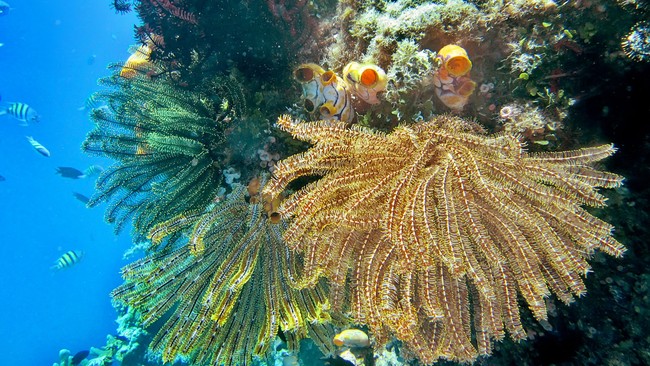
Throughout 2025, researchers from the Center for Biosystematics and Evolution Research (PRBE) at the National Research and Innovation Agency (BRIN) successfully identified 51 new species. The discoveries include 32 new faunal species, 16 new floral species, and 3 new microbial species. Of the total findings, 49 species originated from Indonesia, one microalga from New Caledonia, and one crustacean from Vietnam.
The majority of species discovered in Indonesia are endemic, living only in specific habitats, making them significant for scientific advancement and environmental conservation efforts. These findings further affirm Indonesia’s position as one of the world’s biodiversity centers, still holding vast biological wealth that remains largely unexplored.
Professor Budi Setiadi Daryono of the Faculty of Biology, Universitas Gadjah Mada (Biology UGM), and Chair of the Indonesian Biology Consortium (KOBI), expressed appreciation for the discovery of 51 new species, most of which were found in Indonesia. He noted that collecting primary data is a crucial step in environmental exploration and serves as a reference for ecosystem preservation.
“This is what makes us pleased: species identification is becoming more precise, and the data are increasingly valid and verified. For those of us working in biodiversity, this is exactly what the government should encourage through exploration activities,” he said in an interview on Friday (Feb. 13).
Most of the discoveries are endemic species found only in specific locations, giving them strategic value in supporting Indonesia’s biodiversity conservation efforts. The presence of these endemic species underscores the importance of ongoing biodiversity exploration and documentation to identify Indonesia’s biological wealth before it faces environmental degradation.
Professor Daryono emphasized that documentation is a critical step in determining the conservation status of species and in preventing potential extinction caused by unmonitored ecosystem damage.
“The danger is when we have not yet recorded the data while the ecosystem is already damaged; we cannot determine whether a species has become extinct because we lack the data,” he explained.
The Dean of the Faculty of Biology further stated that biodiversity distribution in Indonesia is not confined to forest areas; in fact, a significant portion is found in marine regions. Given that Indonesia’s territory is largely water-based, marine biodiversity data collection must become a top priority, as existing data remain limited and have not been fully explored.
According to Professor Daryono, comprehensive documentation is essential not only for preserving marine ecosystems but also for uncovering biological resource potential that can be sustainably utilized, including for scientific development, health, and industry. Therefore, marine biodiversity exploration and identification must be supported through sustained research and strong conservation policies.
“Marine biodiversity is hidden gold. Once the data are complete, we must promote sustainable conservation and explore its potential benefits for future industrial development,” he said.
Amid the threat of extinction due to environmental degradation, these discoveries offer fresh momentum for scientific advancement and biodiversity conservation.
In developing the Indonesian Biodiversity Index, he explained that at least eight main indicators are required, including species population census, population estimates, population completeness, population index, biomass, catch per unit effort, and other supporting indicators such as proxies. These main indicators play a crucial role in assessing the condition and trends of biodiversity over time.
“The data are used to determine species status, whether they are threatened or extinct. In addition, the index can show population trends so that appropriate management measures can be identified,” he said.
To date, biodiversity data for compiling the Indonesian Biodiversity Index (IBI) are available across various institutions, including ministries, research agencies, and universities, but they have not been integrated and remain difficult for the public to access.
The establishment of KOBI aims to collect, manage, and compile these data into a national biodiversity index that can be used to monitor the status and trends of biodiversity in Indonesia.
Professor Daryono revealed that between 2020 and 2024, a total of 16,312 biodiversity records were documented, comprising 1,912 families, 4,606 genera, and 7,904 species. Collaboration between KOBI and UGM represents a strategic step in advancing national biodiversity data development.
“Indonesia’s biodiversity data actually exist across various institutions, but they are not yet integrated. Through KOBI together with UGM, we are working to consolidate and manage these data so they can become a national biodiversity index,” he said.
Professor Daryono hopes that biodiversity data development in Indonesia will continue to be strengthened through government support, particularly for exploration and data collection in under-documented areas, including marine regions. He emphasized that comprehensive biodiversity data can serve as an essential foundation for conservation policies and sustainable development.
He also underscored the importance of collaboration among the government, academia, and other stakeholders to compile biodiversity data and safeguard ecosystems.
“We hope that existing biodiversity data will continue to be enriched, both through secondary data and primary data from exploration. The state needs to support scientists and environmental advocates so that Indonesia’s biological wealth can be fully revealed and preserved,” Professor Daryono concluded.
Author: Cyntia Noviana
Editor: Gusti Grehenson
Post-editor: Zabrina Kumara Putri
Photograph: Antara