


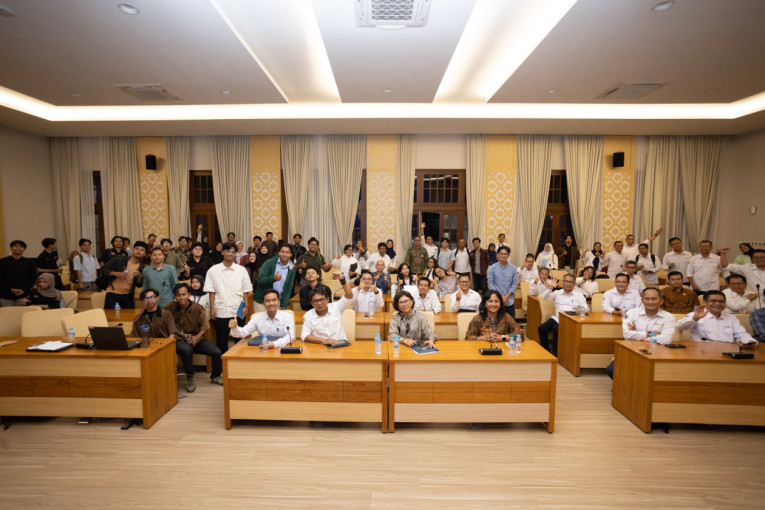
Efforts to improve governance quality in higher education require a dialogue mechanism grounded in strategic study and empirical evidence. In this context, student policy analysis becomes an important tool for identifying issues in services and learning experiences. This need for synergy between analysis and policy was the focus of the Rectorate Hearing organized by Universitas Gadjah Mada Advocacy Forum (Formad UGM) on Monday (Nov. 24) at the UGM Central Office.
The forum was attended by university leadership, including UGM Rector Professor Ova Emilia, as well as Vice-Rectors responsible for education, student affairs, research, human resources, and planning.
Among the student representation were various student organisations such as UGM Communication Forum (FORKOM UGM), the Student Representative Council of the Board of Trustees (MWA UM UGM), the Strategic Analysis Division of the UGM Student Executive Body (Anstrat BEM KM UGM), and the Student Executive Bodies (BEM) of each faculty.
Various Student Activity Units, such as Jamaa’ah Salahuddin, the Catholic Student Association, the Christian Student Association, and BPPM Balairung, also attended the forum.
The rector expressed hope that this forum, held for the first time, could be held regularly.
“Hopefully, we can hold this routinely every four months. So at least there will be three meetings a year that can unite all components at UGM,” she said.
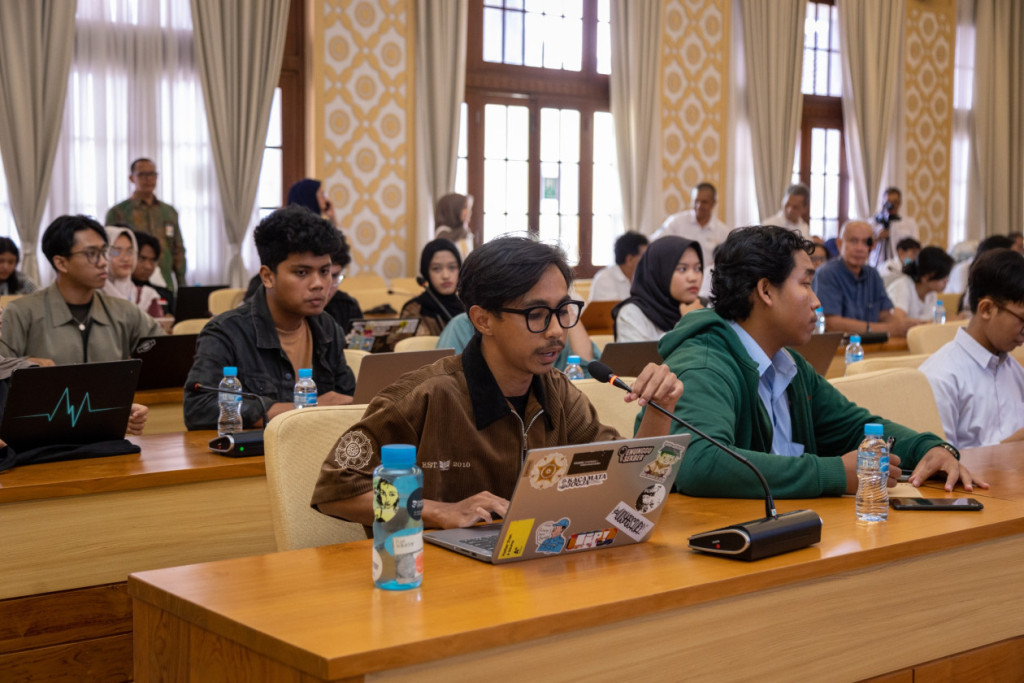
The rector also gave high praise to the student presentations, which were supported by data and empirical evidence.
“I am very proud and pleased with the students’ input, because you used evidence. This is an extraordinary capital. You did not bring empty data, but concrete data that can be processed, such as parking-related data with equipment and so on. So I think this is very good,” said Rector Emilia.
Regarding the implementation of real solutions, she noted that this joint discussion may lead to mutually beneficial outcomes.
“Previously, you presented many solutions and possibilities. Through this forum, we will further discuss the potential implementation of those solutions,” Rector Emilia added.
New Student Tuition Fee (UKT)
The transparency of setting the Single Tuition Fee (UKT) for new students in the 2025/2026 academic year was a central focal point of the discussion.
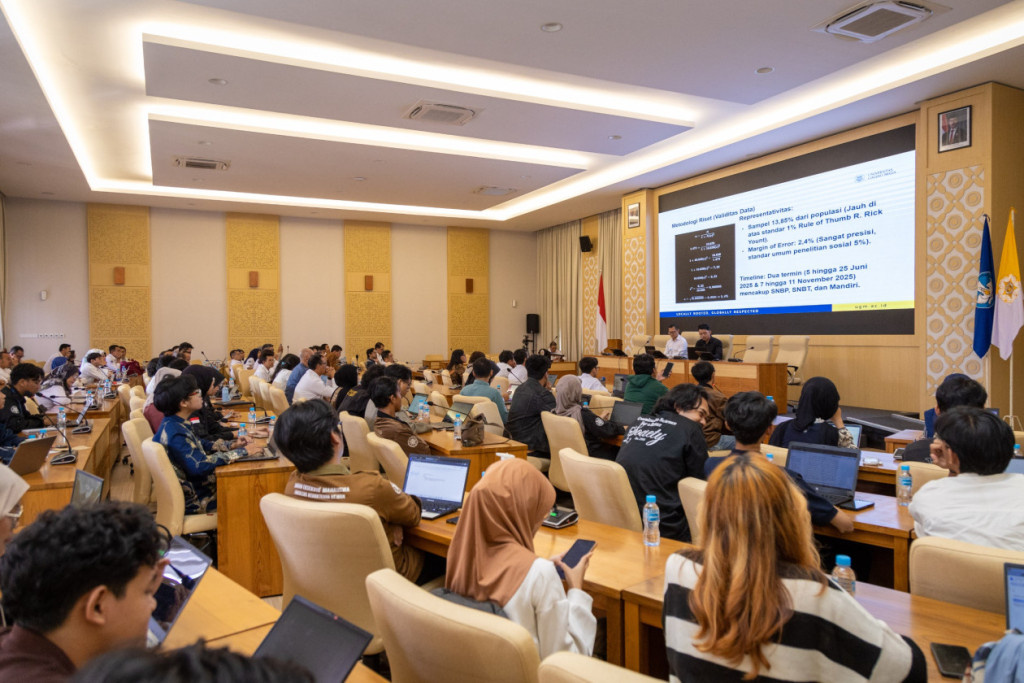
Based on Formad UGM’s policy review involving 1,472 students, a strong indication of non-conformity was found.
Specifically, 61.5% of respondents assessed that the assigned UKT did not meet their expectations, and 54.9% felt that the amount did not align with their family’s financial capacity.
The high rejection rate of UKT appeal applications exacerbated this finding.
The Coordinator of Formad UGM, Batara Gemilang, revealed that, of the 632 students who objected and submitted appeals, only 138 were accepted.
“The rejection rate is extremely high when applying for appeal; only about 138 people or 21.8% were accepted, while the majority, 78.2%, were not,” said Gemilang, highlighting systematic problems in granting financial relief.
Gemilang also added that there were technical obstacles complicating the process, namely issues with the token system for submitting appeals.
“Often, new students did not receive a token when they wanted to submit an appeal. For example, on 17 July, when we (Formad) opened reporting for appeal system issues, within 5 hours, there were as many as 141 students experiencing system problems,” he explained.
These technical obstacles, Gemilang continued, implicitly forced students to pay the set tuition fee without the opportunity to appeal.
The absence of this option denied students the opportunity to obtain financial relief, forcing them to accept the assigned fee.
According to him, this decision was taken solely to ensure their status as registered students at UGM.
Responding to this issue, UGM Vice-Rector for Human Resources and Finance, Professor Supriyadi, appreciated the students’ data-driven findings and strong arguments.
“We strongly support transparency. Some time ago, we communicated with student representatives, and we will immediately follow up to provide the data as requested,” he stated.
Regarding the UKT satisfaction survey and the malfunctioning token mechanism, Professor Supriyadi explained that both issues have been included in the university’s follow-up plan.
“We very much hope for active participation from the students’ side. We will prepare a special mechanism that will involve student participation in a survey about their payment process and conditions,” he said.
Furthermore, in response to the forum’s suggestion to expand the UKT categorization from 5 tiers to 6 tiers, Professor Supriyadi explained that the idea is under deep analysis.
He emphasized, “The constructive input from students is very good. It will later be used as one of the bases for analysis in decision-making.”
Parking and Campus Transportation Policies
A representative from MWA UM UGM bodies, Aprie, criticized the rushed implementation of the parking policy, arguing that it failed to set proper priorities because it was not accompanied by adequate alternative transportation.
“The parking policy was inappropriate in setting priorities. The policy was too hasty without providing adequate replacement transportation,” Aprie said.
Data collected by the 2025 Parking & Transportation Issue Rectorate Hearing Team, composed of Formad UGM, MWA UM, Jamaah Salahuddin, and LEM FIB UGM, showed that 190 respondents considered campus buses inadequate.
The main complaint was the uncertainty of wait times, up to 45 minutes. As a result, students experienced a triple burden: travel time delays by up to 50%, physical fatigue, and stress that disrupted their study focus.
The Vice-Rector for Planning, Assets, and Information Systems, Dr. Arief Setiawan Budi Nugroho, responded by stressing the importance of data accountability.
Dr. Nugroho rebutted the claim of long student waiting times by referring to the university’s transparent internal system.
“Right now, we have a system that allows everyone to check the data directly. I check this headway almost daily. The latest data shows a headway of almost 90 minutes. In one day, the bus turns 22 to 24 times. Its headway is 20 minutes. This data can be monitored directly through Simaster VNext in a transparent manner,” he explained.
Nevertheless, Vice-Rector Nugroho said the rectorate is open to further study and discussion with students.
“I am very open to further study to discuss in detail in an effort to achieve the green campus concept we aim for in the future,” he concluded.
Management of GIK UGM, Sports Facilities, and Student Organization Secretariat
The renovation of UGM Innovation and Creativity Hub (GIK UGM), proposed to become UGM’s ‘new face’, was one of the main focal points during Rectorate Hearing 2025.
The primary concerns included the relocation of UKM secretariats, budget overruns in construction, and delays in meeting completion targets.
Beyond construction issues, practical obstacles also hindered student activities.
These included a lack of clarity in room-rental information and, most seriously, unilateral cancellations of room bookings just before events because they were suddenly reallocated for partner activities.
Attendees considered such practices to contrast starkly with a UGM public relations article published on 29 August 2025, which stated that GIK use was intended entirely for downstreaming educational achievements toward industry and fostering students’ talents.
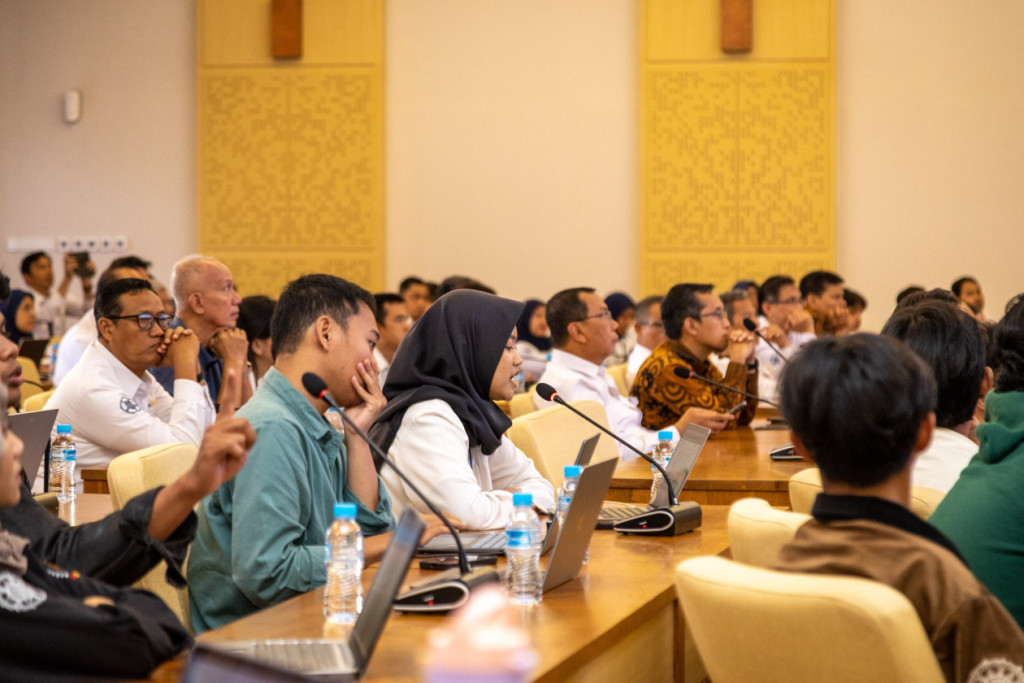
In response to the delayed development and parts of GIK still fenced off and dark, Vice-Rector for Research, Business Development and Partnerships, Dr. Danang Sri Hadmoko, explained that the current condition is due to the construction entering its second phase, the finishing stage and facility completion.
“Indeed, there are parts that are dark and still fenced. This is because at this time we are proceeding with the second phase of construction, which is for finishing, completing (facilities), and so forth. If everything goes smoothly, by mid-2026, it will be handed over 100% by the Ministry of Public Works to UGM,” he said.
GIK UGM’s Director, Dr. Alfatika Aunuriella Dini, expressed appreciation for the students’ feedback, especially regarding the use of space. She explained that initially, the use of event quota space was subject to operational fees.
However, after the first audience in May, management changed the policy to make the student event quota free.
“After the first audience, the management changed the policy for student event quota use to be free. Until now, several student organisations have made use of it,” she said.
She added that GIK UGM provides two types of room quotas for student organisations: regular room quotas and event quotas.
Director Dini acknowledged, based on her observations, that regular quotas do carry restrictions on certain types of activities at GIK UGM.
“For the regular quotas, indeed, there are certain activities that naturally cannot be held at GIK UGM, such as party bands and such,” she added.
Director Dini emphasized that GIK UGM is striving to provide a range of programs, not just facilities. Through this forum, she asked for further input.
“We hope that the students can provide suggestions on what student organisations need so that the facilities can be used widely by students and specifically by student organisations,” she concluded.
Author: Aldi Firmansyah
Editor: Triya Andriyani
Post-editor: Lintang Andwyna