


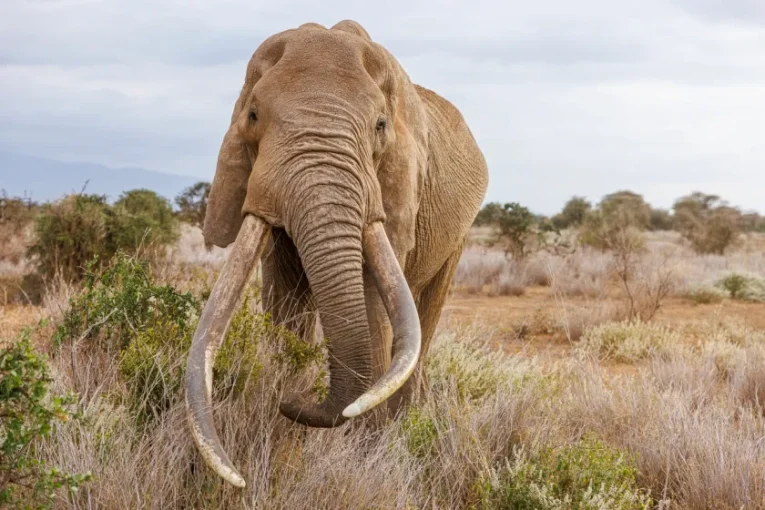
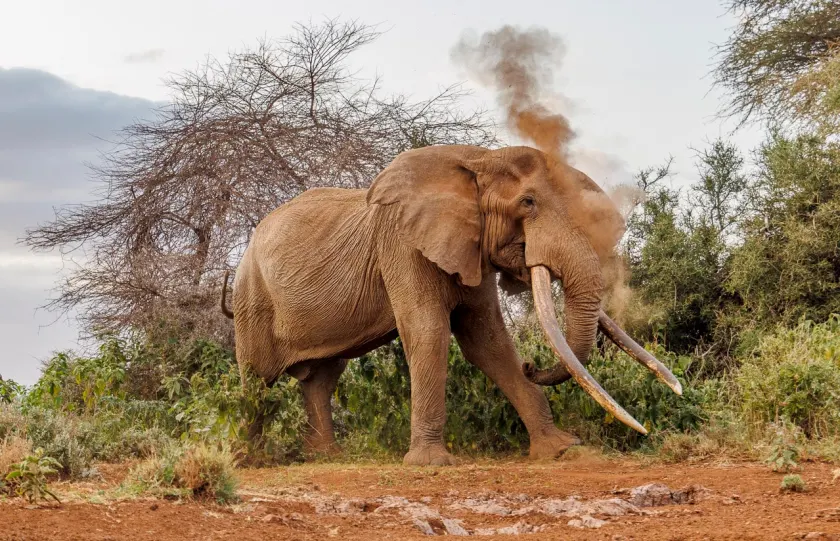
The death of Craig the elephant on Saturday (Jan. 3) at Amboseli National Park has become a source of mourning for the people of Kenya and wildlife observers around the world. The male elephant died at 54, providing evidence of Kenya’s success in protecting elephants from poaching. In addition to his long lifespan, Craig’s tusks remained intact, each weighing up to 45 kilograms.
Raden Wisnu Nurcahyo, a Professor of Parasitology at Universitas Gadjah Mada (UGM), expressed his condolences and appreciation that there are still countries capable of preserving elephant habitats. According to Professor Nurcahyo, Craig’s condition (having long tusks throughout his life) represents an extraordinary achievement.
“This means that with such long tusks, his life appeared to be comfortable. We can assume that throughout his life, he lived in a safe and protected habitat, free from threats, with sufficient food availability,” said Professor Nurcahyo on Monday (Jan. 19).
According to him, Craig’s death at 54 reflects the success of elephant conservation programs in Kenya. He further explained that Amboseli National Park is frequently visited by tourists, demonstrating that many visitors still care deeply about wildlife.
Wildlife, he said, can remain a tourism attraction without being disturbed, as long as there are no riding activities or forms of exploitation.
“They are simply photographed or observed at close range. This should serve as an important lesson for tourism managers in Indonesia who display elephants as tourist attractions, as many elephants still experience inappropriate treatment,” he emphasized.
In Indonesia, Professor Nurcahyo noted that the Ministry of Forestry, particularly through the National Parks and the Natural Resources Conservation Agency (BKSDA), has implemented commendable programs.
One of them is the Sumatran Elephant Training Center (Pusat Latihan Gajah/PLG) located in several National Parks, such as Way Kambas (Lampung), Bukit Barisan Selatan (Bengkulu), Padang Sugihan (Palembang), Bukit Tigapuluh (Jambi), Tesso Nilo (Riau), and Saree (Aceh).
These centers aim to rescue elephants from poaching, forest fires, or human-elephant conflict so they are not killed, and then rehabilitate them.
“However, the main issue remains the threat to wild elephant populations in their natural habitats,” he explained.
He added that elephant habitats in the wild are increasingly shrinking due to illegal logging, ivory poaching, disease, and land conversion for oil palm plantations and mining. This situation has been exacerbated by flooding disasters that occurred last November in Aceh, North Sumatra, and West Sumatra.
These disasters not only caused human losses but also threatened elephant habitats. There were even reports of elephants dying as a result of flash floods.
“Indeed, the only solution is for them to live comfortably in truly protected National Parks,” he stated.
Regarding lifespan, Professor Nurcahyo mentioned that many elephants in Indonesia, particularly those in PLG facilities, are typically around 30 to 40 years old. However, the greatest challenge lies in health issues.
Generally, elephants placed in PLG depend on the feed provided by managers. At the same time, healthcare costs, such as deworming medication for such large animals, are extremely expensive, and budgets are often limited.
“As a result, many elephants die from chronic parasitic infections. Based on my research, many elephants contract diseases from livestock owned by residents who enter conservation areas. In addition, young elephants are also vulnerable to EEHV (Elephant Endotheliotropic Herpesviruses),” he explained.
Professor Nurcahyo emphasized that achieving old age like elephants in Africa is actually possible. According to him, elephants can live up to 70 years in the wild.
“In Asia, the natural lifespan is around 60 years, but in zoos it is generally shorter, around 20–30 years, due to stress and limited space,” he explained.
According to him, the government needs to strengthen elephant conservation programs by protecting habitats, as elephants are wild animals that require vast spaces, proper feed management, routine health checks, separation from livestock, and, most importantly, assurance of animal welfare by prohibiting exploitation and attractions that cause stress.
“For elephants in PLG facilities or captivity, food security must be ensured. This can be done by cultivating feed or grazing them so elephants can move freely and feed naturally,” he added.
Finally, he stressed the importance of protecting the environment and nature as elephants’ original habitats by halting the opening of new land for oil palm plantations, mining, settlements, or roads that fragment elephant habitats.
Law enforcement must also be firm. Otherwise, habitats will continue to shrink, and natural disasters such as flash floods will persist due to forest destruction.
“Those who violate the law must be punished. If not, elephant habitats in the wild will continue to diminish. Without strict law enforcement, people will easily clear land for oil palm plantations again, leading to further disasters,” he concluded.
Author: Leony
Editor: Gusti Grehenson
Post-editor: Rajendra Arya
Photographs: njwight.com