



Diabetes Mellitus (DM) is a disease that requires serious attention, not only among older adults but also in younger age groups. Indonesia is currently ranked among the top 10 countries with the highest number of diabetes cases worldwide. Beyond medical treatment, diabetes care also requires clinical hypnosis as part of psychological support, as individuals with DM must undergo long-term treatment.
“In reality, individuals with DM often experience psychological problems such as negative emotions, stress, anxiety, and emotional exhaustion. However, the number of mental health professionals remains limited,” said doctoral student of the Faculty of Psychology, Universitas Gadjah Mada (Psychology UGM), Martaria Rizky Rinaldi, during her open doctoral examination on Wednesday (Jan. 14) at Room A-203, Psychology UGM.
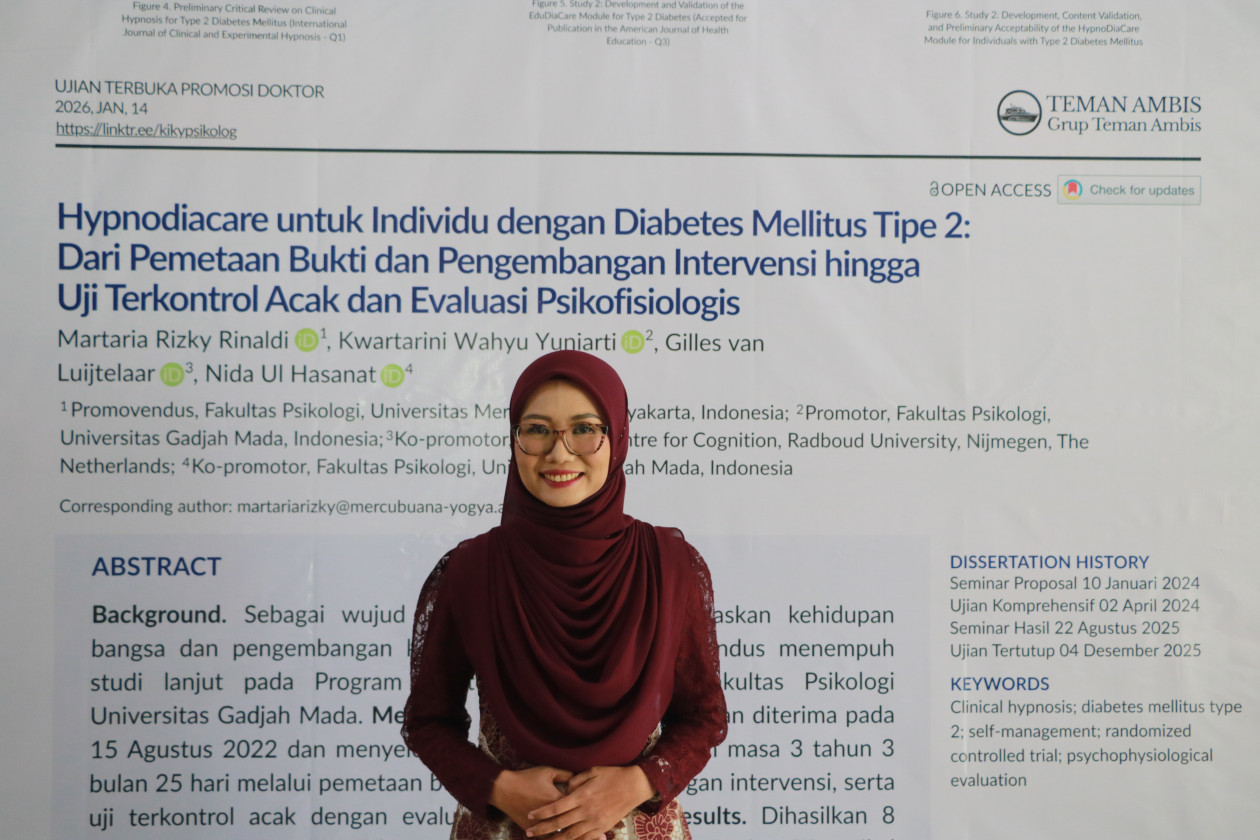
In her dissertation, entitled “Hypnodiacare for Individuals with Type 2 Diabetes Mellitus: From Evidence Mapping and Intervention Development to Randomized Controlled Trials and Psychophysiological Evaluation,” Martaria Rizky Rinaldi (familiarly known as Kiky) explained that patients with type 2 diabetes mellitus require strict self-care, emotional regulation, and self-management.
“So far, diabetes management has largely focused on self-management education, which is known to be cognitively beneficial in terms of knowledge, but does not deeply address psychological or emotional aspects,” she explained.
Furthermore, Kiky revealed that through Clinical Hypnosis methods, relaxation and positive emotions can be enhanced, while anxiety and stress can be reduced.
However, she emphasized that a gap persists due to the lack of integration between Clinical Hypnosis and self-management education.
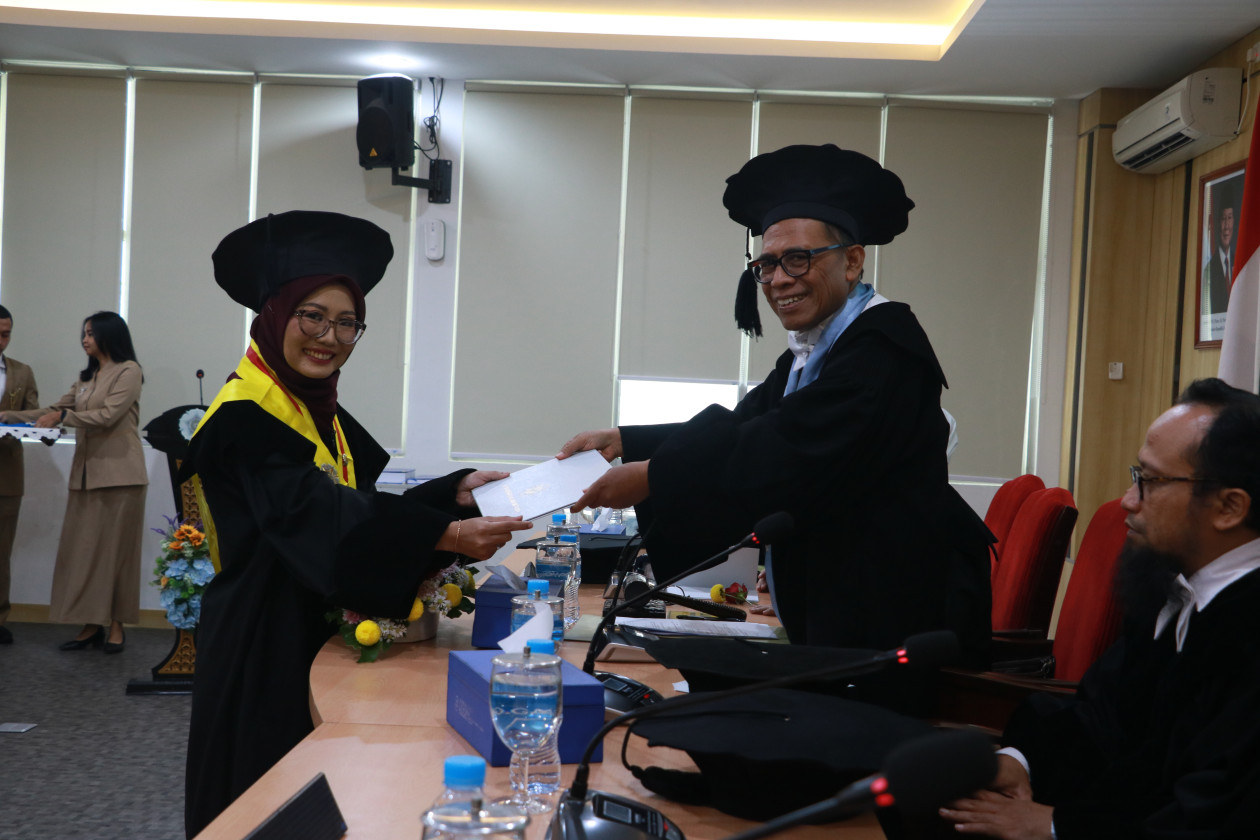
Her research on Hypnodiacare integrates self-management education with Clinical Hypnosis. The self-management education referred to includes knowledge on self-care practices such as dietary behavior, medication adherence, and physical activity.
Meanwhile, Clinical Hypnosis is a therapeutic approach that uses relaxation techniques and suggestion to address emotional and motivational issues.
The results of the study indicate that, mentally, patients felt calmer, experienced more stable emotions, and showed increased motivation to seek treatment and maintain a healthy lifestyle.
“Physically, there were also measurable changes in brain wave patterns (alpha, beta, and theta) which indicate deep relaxation, as well as improvements in cardiac regulation,” she stated.
Based on these findings, Kiky concluded that Hypnodiacare has been proven beneficial as a complement to medical treatment in helping diabetes patients better manage their condition.
“Clinical Hypnosis combined with self-management education offers a new intervention model to support medical care,” she concluded.
Author: Leony
Editor: Gusti Grehenson
Post-editor: Rajendra Arya
Photographs: Psychology UGM