


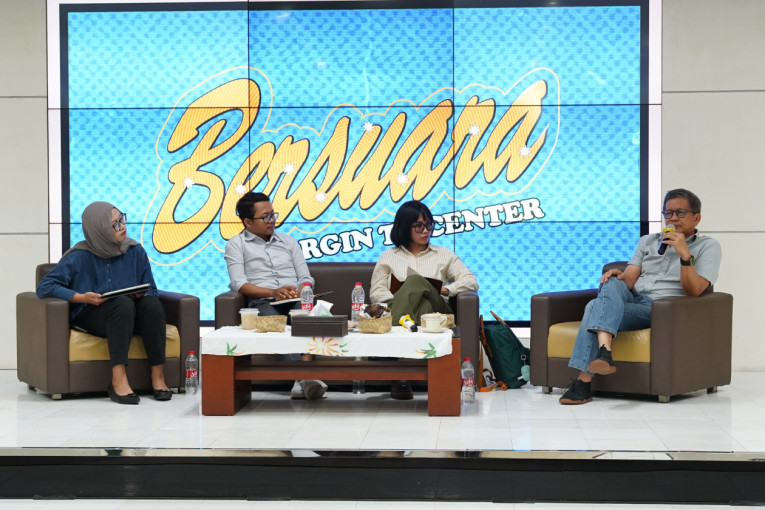
Education and democracy share an inseparable relationship. In an ideal scenario, democracy should open space for equality and freedom for all citizens. However, the reality of education in post-reform Indonesia still leaves many issues, ranging from low democratic awareness to social inequalities and power relations that are not yet fully equal. These issues were discussed in the Bersuara Talkshow with the theme “Education in Post-Reform Indonesia as a Mirror of the Quality of Democracy,” held at the Auditorium of the Faculty of Social and Political Sciences, Universitas Gadjah Mada (Fisipol UGM), on Friday (Nov. 21).
Joko Susilo from the Nalar Institute explained that the allocation of 20% of the national budget (APBN) for education is not fully dedicated to direct educational services. Most of the budget is still absorbed by operational aspects.
According to him, this condition indicates that the dynamics of higher education after the reform are strongly influenced by political economy, leading the state to gradually relinquish its responsibilities. The impact is most felt by low-income groups, students, and academic workers.
“The challenges faced are not only in the aspects of access and budget but also in terms of geographic inequality and socio-economic group disparities,” he clarified.
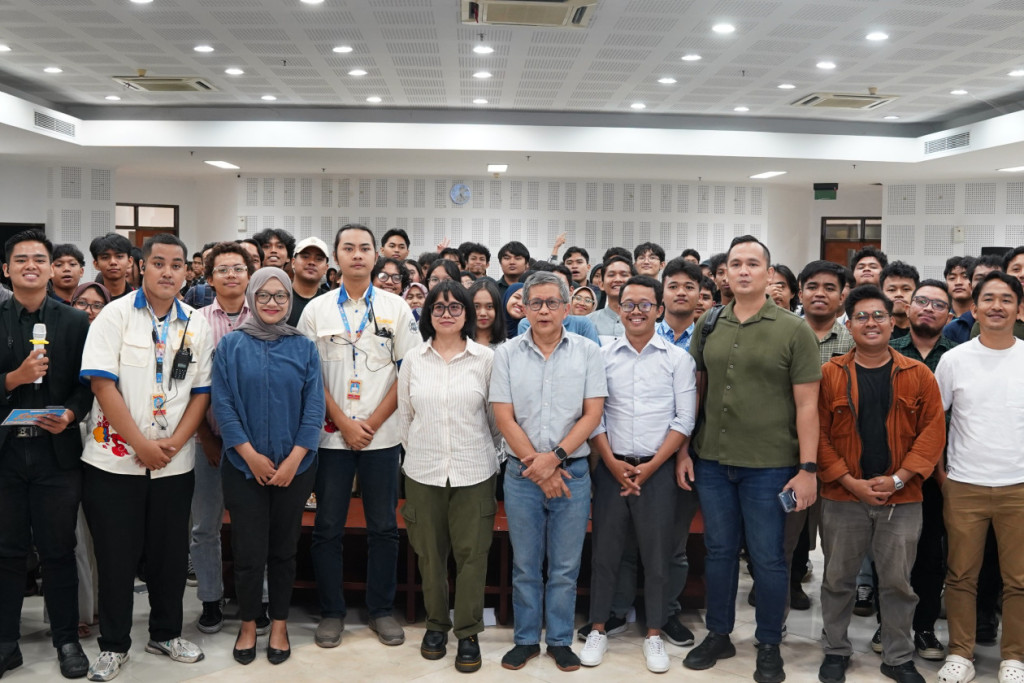
Political observer Rocky Gerung emphasized that the essential purpose of education is freedom. However, feudalism that still operates within the social system hinders the growth of critical thinking.
He argued that a critical curriculum will not be effective without a society capable of dialectics and argumentation.
“As long as there is no argumentative society, education can’t function in producing change; as long as there is no argumentative society, there is no democracy,” he stressed.
Gerung also pointed out the need for an alternative curriculum that places freedom and equality at its core, in line with technological developments such as AI.
He cited the French curriculum born out of the French Revolution, which emphasizes the values of liberty, fraternity, and equality.
“So we must unravel again the parts of thinking inherited from our parents so that they can align with our daily interests,” he asserted.
Meanwhile, TEMPO journalist Shinta Maharani noted that Indonesian education is still far from inclusive. Gender or disability-based discrimination still occurs, and only around 3% of universities have a Disability Services Unit.
She added concerns regarding the new Criminal Procedure Code (KUHAP), which is seen as discriminatory toward persons with disabilities and potentially threatens minority groups, because it expands state control.
“Democracy should guarantee that the majority does not misuse its power to oppress minority groups. Thus, majority decisions in a democracy must consider all perspectives and strive to protect minorities from the tyranny of the majority,” the journalist added.
Author/Photographer: Jesi
Editor: Triya Andriyani
Post-editor: Lintang Andwyna