


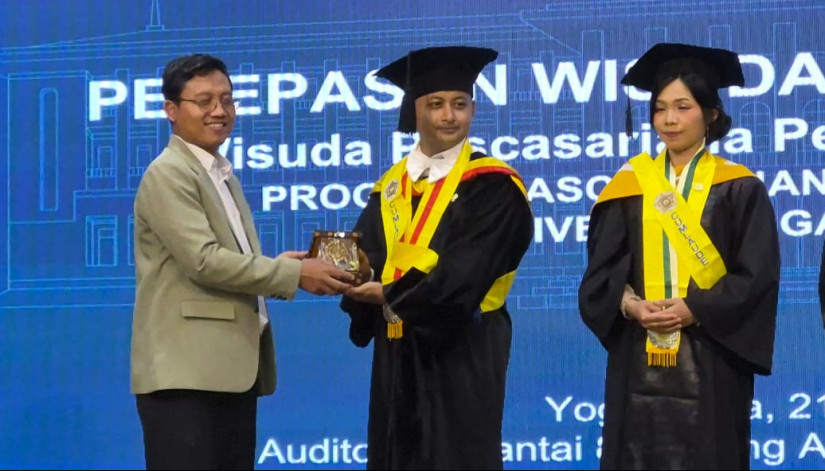
The Faculty of Pharmacy at Universitas Gadjah Mada (Pharmacy UGM) has once again produced a graduate with the shortest study period. The achievement was attained by a graduate of the Doctoral Program in Pharmaceutical Sciences, Made Krisna Adi Jaya, who completed his studies in just 2 years, 4 months, and 8 days. This duration is significantly shorter than the average doctoral study period of 4 years and 6 months. In addition to being named the fastest graduate at the Postgraduate Graduation Ceremony Period II held on Wednesday (Jan. 21), Krisna also earned a perfect grade point average (GPA) of 4.00.
Krisna, who currently serves as a pharmacy lecturer at the Faculty of Mathematics and Natural Sciences, Universitas Udayana, Bali, expressed his gratitude for being recognized as the fastest graduate and for achieving the highest honors GPA.
For Krisna, earning a doctoral degree was not merely an academic requirement or a professional obligation. Rather, his decision to pursue doctoral studies was driven by a personal motivation to contribute more significantly to the advancement of pharmaceutical science.
“The doctoral program provides me with space to bridge pharmaceutical practice with the development of more systematic evidence-based practice,” he said on Tuesday (Feb. 3).
This motivation encouraged Krisna to conduct dissertation research focusing on hypoglycemia screening related to drug therapy. He proposed a practical, evidence-based solution that can be directly implemented for patients.
Observing inaccuracies in outpatient screening processes, Krisna identified the need to develop and implement a screening instrument to assess severe hypoglycemia risk and assist pharmacists.
Hypoglycemia is a condition in which blood glucose levels fall below normal limits and frequently occurs in patients with diabetes as a side effect of drug therapy.
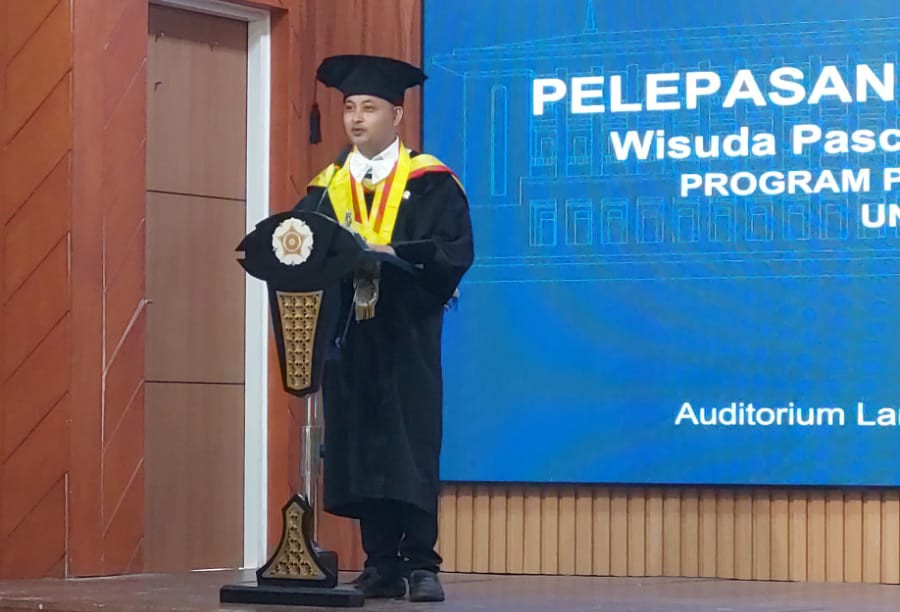
In addition to helping pharmacists identify diabetic patients at higher risk of severe hypoglycemia, the findings also aim to prevent such incidents through a structured and applicable assessment system.
“My main goal is to present a practical, evidence-based solution that can be directly implemented to improve patient safety,” he explained.
As an academic with multiple responsibilities, Krisna found it challenging to balance academic demands with professional obligations.
According to him, one of the greatest challenges during his doctoral studies was maintaining equilibrium between academic requirements, professional work, and personal responsibilities.
“The complexity of the research, such as instrument development, methodological validation, and field implementation, required consistency, precision, and strong time management,” he said.
With financial support from the Beasiswa Pendidikan Indonesia (BPI), the Ministry of Higher Education, Science, and Technology, as well as institutional support from Universitas Udayana, he sought to build a research discipline, maintain intensive communication with his promoter and co-promoter, and continuously develop his research methodology and data analysis skills independently.
He emphasized that this achievement would not have been possible without upholding the values of academic integrity, consistency, and the societal relevance of knowledge.
“I believe that knowledge must be developed honestly and responsibly, and directed toward creating real impact for society,” he concluded.
Author: Ika Agustine
Editor: Gusti Grehenson
Post-editor: Zabrina Kumara Putri
Photographs: Made Krisna Adi Jaya