


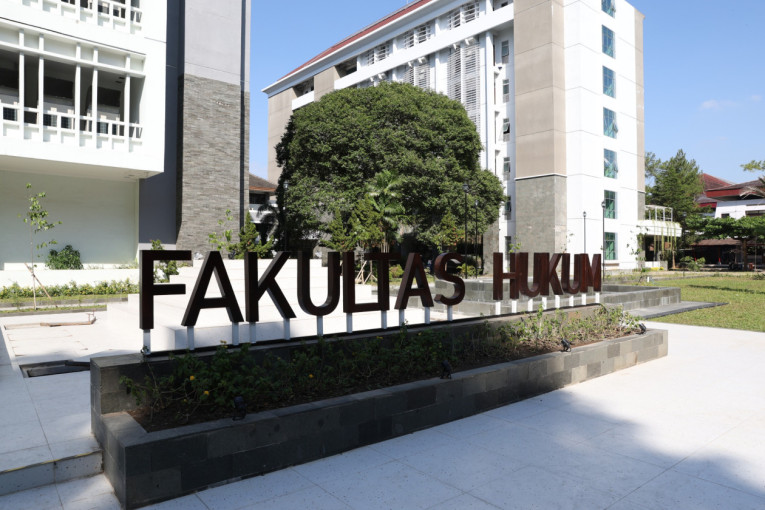
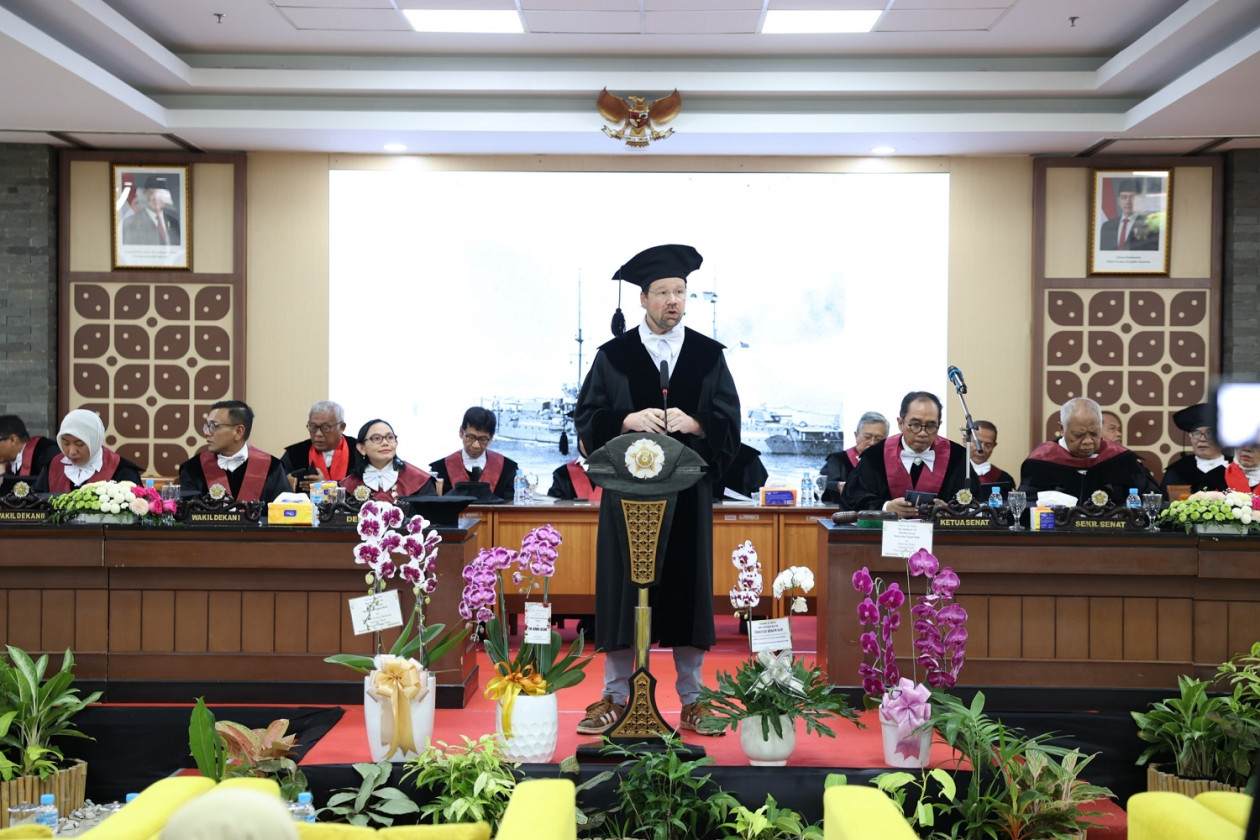
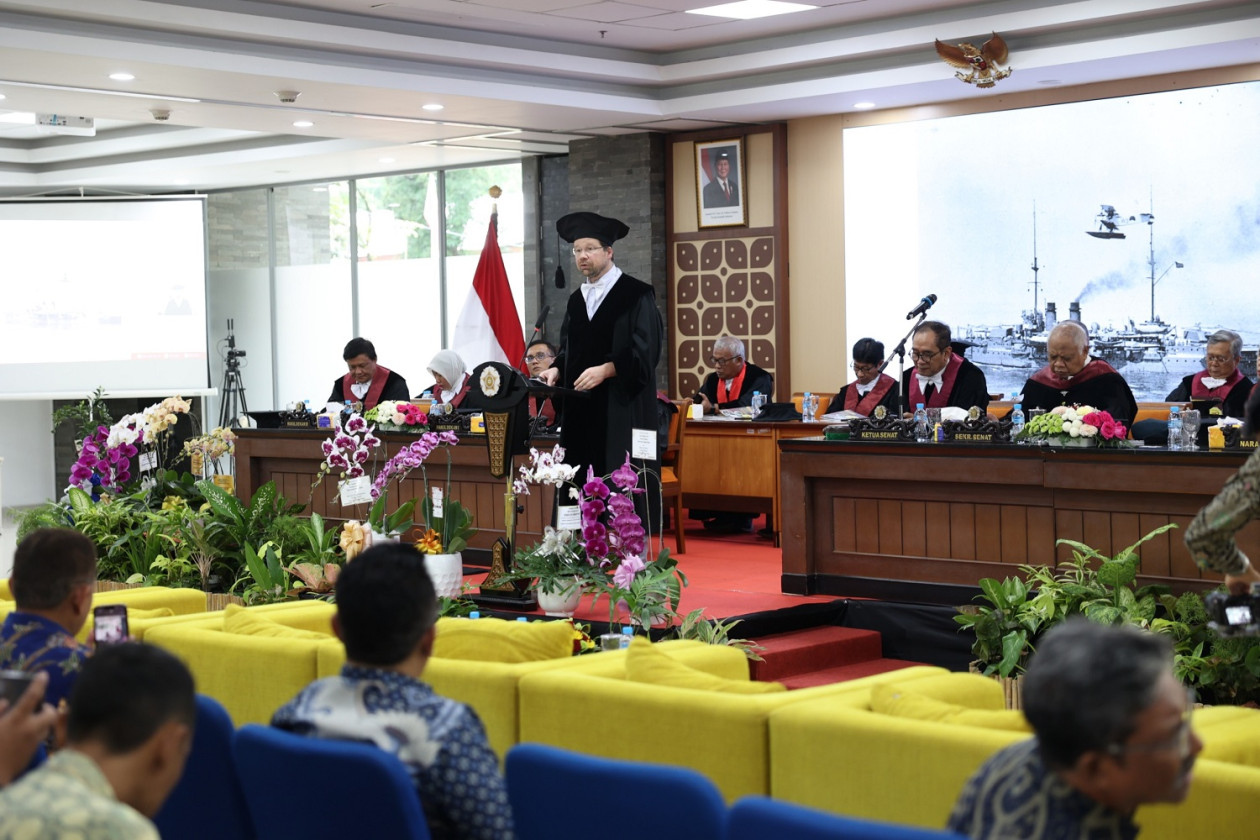
The Faculty of Law at Universitas Gadjah Mada (FH UGM) celebrated its 80th Dies Natalis and 16th Lustrum by holding an Open Senate Meeting themed “Constitution for the People: Unraveling Structural Injustice and Realizing Agrarian Justice” at FH UGM Auditorium on Friday (Feb. 13).
In addition to the annual report delivered by the Dean of FH UGM, Dr. Dahliana Hasan, the meeting also featured a keynote lecture by Professor Ward Berenschot of the University of Amsterdam & KITLV Leiden.
UGM Rector, Professor Ova Emilia, conveyed congratulations on the faculty’s 80th Dies Natalis and 16th Lustrum, which this year carries the theme “Constitution for the People: Unraveling Structural Injustice and Realizing Agrarian Justice.”
According to her, at the age of 80, FH UGM carries a mission to develop a scholarly ecosystem through various academic studies on agrarian issues.
“UGM certainly encourages flagship research programs as well as trans- and interdisciplinary impact-driven research developed by the Faculty of Law community to address national challenges. The UGM Faculty of Law gives particular attention to realizing agrarian justice,” she said.
On that occasion, the rector also congratulated the faculty on its international achievement in early 2026, as ranked in the Times Higher Education World University Rankings (THE WUR) by Subject 2026, where it ranked first nationally and placed 201–250 globally in law.
“Finally, through this Dies Natalis commemoration, may we continually renew our spirit to contribute through the tridharma of higher education, especially in realizing national welfare and development justice,” she stated.
Dean of FH UGM, Dr. Dahliana Hasan, stated that all progress achieved by the faculty to date is the cumulative result of sustained efforts and leadership, as well as the contributions of predecessors who laid a strong foundation for the faculty’s advancement. On this occasion, she also presented the faculty’s achievements in 2025 and its development plans for the coming year.
In addition to reporting on Academic and Student Affairs, the dean also highlighted progress in Cooperation and Alumni Relations, Finance, Infrastructure and Facilities, Human Resources, Research and Publication, Community Service, and Technology and Information Systems.
Dr. Hasan noted that FH UGM consistently maintains academic quality by implementing the Tridharma of Higher Education. This is reflected in national and global rankings in 2025; based on the QS World University Rankings by Subject 2025, the faculty maintained third place nationally and ranked 201–250 globally.
Furthermore, FH UGM also achieved recognition in the Times Higher Education (THE) by Subject rankings, placing 201–250 globally while maintaining first place nationally.
“This achievement demonstrates the Faculty of Law’s consistency in maintaining and improving the quality of education, research, and community service at both national and international levels,” she said.
A total of 214 cooperation initiatives were undertaken by FH UGM throughout 2025. She acknowledged that all these partnerships involved active collaboration with numerous partners during the year.
“There were 97 active partners, both domestic and international. In addition, 117 collaborative activities were organized by departments, research centers, and LO/LSO units,” she explained.
International collaborations were also strengthened throughout 2025 through the signing of memoranda of understanding with several partners, including Durham Law School at Durham University, the Hong Kong Association for International Communication of Higher Education Limited, and Maastricht University.
Students of FH UGM also achieved notable accomplishments throughout 2025, winning awards in various regional, national, and international competitions.
“We recorded 123 achievements from 129 national competitions and 23 medals from 26 international events. These accomplishments reflect continuous improvement in students’ quality and competitiveness compared to previous years, supported by the active role of the entire academic community and sustained efforts to develop students’ competencies and skills,” she elaborated.
Meanwhile, in his keynote address, Professor Berenschot stated that Indonesia’s independence did not fundamentally dismantle the country’s legal architecture. Despite legal reforms and decolonization efforts, including the adoption of a new Criminal Code, Indonesia’s legal system, he argued, remains influenced by colonial legacies.
“Some changes have occurred, but unfortunately, the law still appears to facilitate resource extraction and accumulation by elites at the expense of ordinary people,” he said.
At the peak of the 80th-anniversary celebration, the UGM Law School Award was presented to three distinguished individuals: Professor Otto Hasibuan (alumni-contributive figure category), Aat Rahmawati (sustainable-pioneer figure category), and Vincen Kwipalo (justice-advocate figure in Papua category).
Author: Agung Nugroho
Post-editor: Rajendra Arya
Photographer: Firsto Adi