


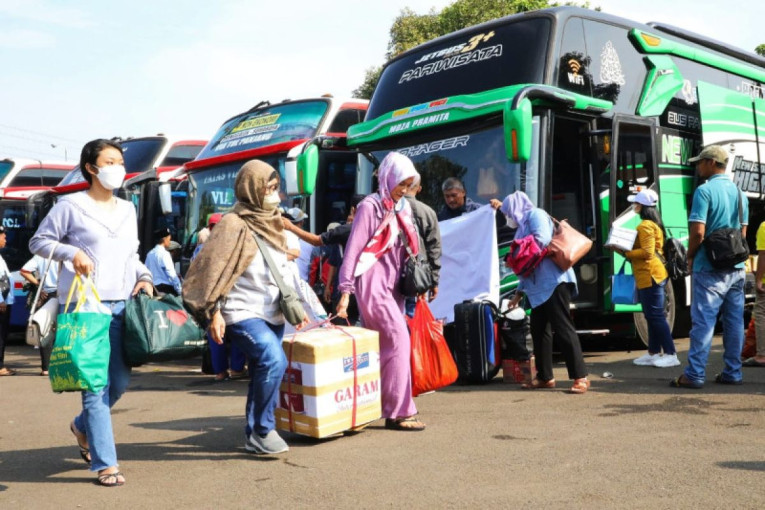
The tradition of mudik, or Eid homecoming, has become a common practice ahead of the Eid al-Fitr holiday. Recognizing this tradition, both the government and private sector have organized free homecoming travel programs. The initiative is considered helpful in enabling people to return home safely and comfortably, while also providing social benefits for vulnerable groups who genuinely need support.
A lecturer at the Faculty of Economics and Business, Universitas Gadjah Mada (FEB UGM), Hengki Purwoto, said the total number of homecoming trips nationwide is around 144 million. Although the capacity of the free homecoming program is very small compared to the total national homecoming travel, it is still considered beneficial.
He explained that the largest share of homecoming travel occurs on the island of Java, reaching approximately 70–80 million movements, while the capacity of the free homecoming program from the Greater Jakarta area to Java and Sumatra is only around 15,000 people, or about 0.01 percent.
“So proportionally, it is indeed very small,” he said at FEB UGM on Monday (Mar. 9).
Hengki explained that, proportionally, about 50 percent of the homecoming flow from the Greater Jakarta area is directed toward eastern Java, including Central Java, East Java, the Special Region of Yogyakarta, Bali, and Nusa Tenggara.
A smaller portion of travelers head to Sumatra, while some regional travel also occurs in Kalimantan and Sulawesi. The free homecoming program generally facilitates routes from the Greater Jakarta area to Java and parts of Sumatra, using buses and trucks to transport two-wheeled motorcycles.
“The role of this free homecoming program may not be very large, but the issue becomes important because of the high risk of accidents on routes from the Greater Jakarta area to Java,” said the researcher, who actively studies infrastructure policy, particularly in transportation.
According to Hengki, the free homecoming program targets low purchasing power groups, such as factory workers and micro, small, and medium enterprise (MSME) actors, who usually travel long distances home by motorcycle. Through this program, these groups can travel by bus instead, thereby reducing the risk of accidents.
Is the long-running program efficient? Hengki said efficiency can be measured by comparing social benefits and social costs. In any case, he explained, the benefits of the free homecoming program help address negative externalities such as traffic accidents, congestion, and excessive pressure on road infrastructure, bridges, and terminals. Efficiency can be calculated by comparing the cost of organizing the free homecoming program with potential health care costs and infrastructure damage.
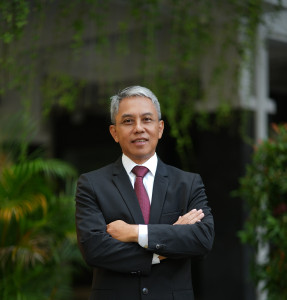
He further explained that if the program contributes to reductions in accident rates and fatalities, as well as in infrastructure damage, these outcomes can be converted into economic value. If the social benefits exceed the cost of organizing the free homecoming program, estimated at around Rp2 billion, then, despite its relatively small scale, the program has the potential to be efficient because its social benefits outweigh the fiscal costs.
Hengki considers the free homecoming program a relatively appropriate intervention compared to strict fare controls, which could disadvantage transportation operators.
“In other words, the government can maintain the sustainability of transportation businesses while at the same time protecting vulnerable groups,” he said.
As a policy recommendation, he emphasized that homecoming travel management should be integrated into sustainable regional transportation management. In the short term, the government could intervene by implementing fare limitations and adjusting holiday periods so they are not too short. This would help reduce the concentration of homecoming travel during the Eid holiday period.
In the medium term, the government needs to strengthen intermodal transportation facilities, including the development of integrated ticketing systems across modes.
In the long term, more comprehensive improvements are needed, including expanding transportation fleet capacity, fostering a favorable industrial climate for transportation businesses, strengthening infrastructure, and developing supporting businesses, such as ticketing and insurance companies.
“Public transportation must become the backbone. Therefore, service planning must include simultaneous improvements in both quality and quantity so that each year we do not face repeated fiscal burdens with the same pattern,” he concluded.
Reporter: Kurnia Ekaptiningrum / FEB UGM Public Relations
Author: Agung Nugroho
Post-editor: Jasmine Ferdian
Photo: Antara and FEB UGM Documentation