


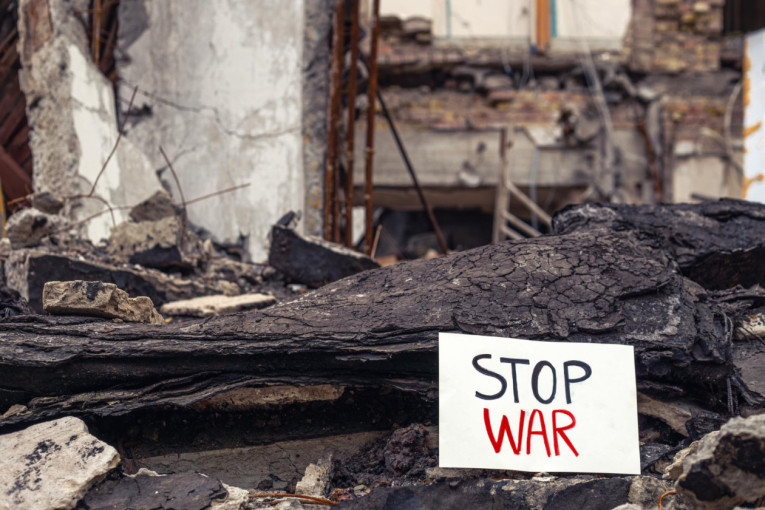
War is often seen as an inseparable part of human history. Countries across the world have rarely been free from war, particularly in efforts to expel colonial powers. Even today, war seems unending. The ongoing conflict in the Middle East, for instance, was triggered by a United States–Israel attack on Iran that killed Iran’s Supreme Leader Ayatollah Ali Khamenei in late February. Meanwhile, the world is still grappling with the Russia–Ukraine war, the Gaza conflict, and various other conflicts across regions.
However, is war an innate human trait present from birth, or is it a product of social and historical development? A lecturer in the History Study Program at the Faculty of Cultural Sciences (FIB UGM), Satrio Dwicahyo, argues that war results from a combination of human dimensions.
“There are biological, psychological, and social interaction aspects. War and violence in general are a combination of these dimensions, differing only in degree,” he explained on Tuesday (Apr. 7).
From a historical perspective, these factors continue to evolve and interact with other aspects, such as technological advancement and changes in social structures. According to him, these developments can both facilitate and inhibit the occurrence of war.
Responding to debates about the roots of human aggressiveness, whether inherited from primate ancestors like chimpanzees or whether early humans lived peacefully, Satrio views these perspectives as complementary. He believes that from the beginning, humans have known both violent and nonviolent ways of managing conflict.
“Humans use violence to survive, but at the same time develop peaceful mechanisms. In many cultures, including Eastern perspectives, both coexist,” he said. He added that humans may never fully escape the potential for war, but can strive to reduce such tendencies.
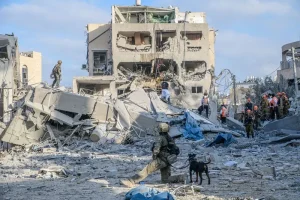
In the context of modern conflict, Satrio highlighted the significant role of technology. He explained that technological advances have reduced distances in warfare, allowing wars to be conducted without direct engagement on the battlefield.
“War has transformed into a remote activity. This has the potential to remove the element of humanity, as perpetrators no longer face their opponents directly,” he noted.
He further argued that this phenomenon has given rise to the “gamification of war,” in which conflict is conducted as if it were a game, thereby reducing its moral burden.
Beyond technology, group identity and solidarity also play roles in conflict. However, according to Satrio, these factors tend to be more fluid compared to interests in natural resources. He cited shifting alliances in history, such as the changing relationship between the United States and the Taliban over several decades.
Despite the persistence of global conflicts, human civilization continues to seek ways to reduce the likelihood of war. Various mechanisms, including diplomacy, international exchanges, and the establishment of international organizations, represent institutionalized efforts toward peace.
“International organizations such as the United Nations serve as efforts to restrain war through international norms and laws. However, solutions that are relevant in one era may not be effective in another,” he explained.
He emphasized that war has existed since the earliest stages of humanity, making its complete elimination difficult.
“The direction is not total cessation, but evolution in how war is conducted. It may improve, but there is always the possibility that it could worsen,” he concluded.
Author: Jelita Agustine
Editor: Gusti Grehenson
Post-editor: Jasmine Ferdian
Photo: Freepik and Getty Images