


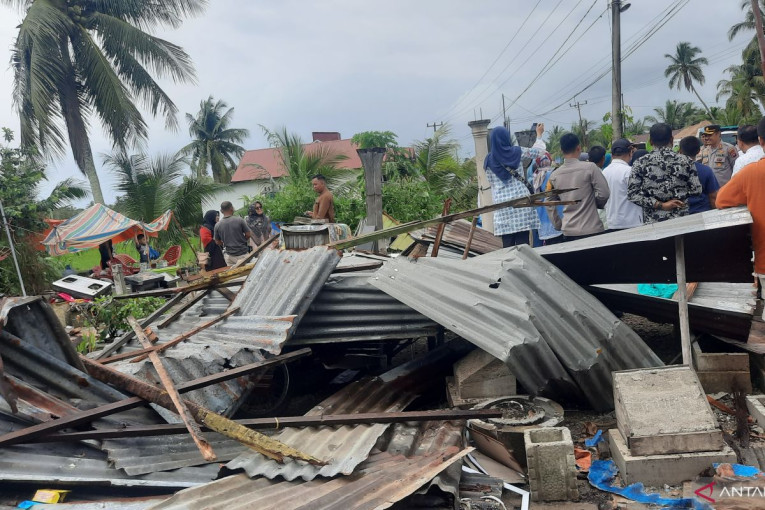
Electricity and telecommunications networks, along with fuel supplies, remain major challenges in several disaster-affected areas in Aceh, North Sumatra, and West Sumatra. These disruptions have hampered recovery efforts and disaster response, including delays in victim evacuation.
In several affected locations, long queues of residents seeking fuel remain visible at public fuel stations in Aceh, North Sumatra, and West Sumatra. The fuel crisis has not only affected residents who need to travel, but also responders searching for disaster victims and distributing aid to affected areas. Limited fuel supplies have also forced some heavy equipment and logistics transportation to operate below capacity.
Energy Economics observer at Universitas Gadjah Mada (UGM), Dr. Fahmy Radhi, said there is little that PLN, Pertamina, and Telkom can do in the aftermath of flash floods and landslides. Under normal conditions, he noted, the supply chains of all three institutions have proven capable of reaching various regions, including remote areas.
“However, following flash floods and landslides, supply disruptions occur mainly due to infrastructure damage that has destroyed the usual access routes relied upon by these entities,” he said at the UGM campus on Friday (Dec. 12).
Dr. Radhi explained that without infrastructure repairs, any measures taken by Pertamina, Telkom, and PLN can only be temporary solutions. The issue, he stressed, is not budget constraints or efficiency, but the extensive disruption of infrastructure access that hinders aid distribution.
“The central government, in this case the Ministry of Finance, has in fact provided unlimited funding. The problem is that the infrastructure access needed for aid distribution has been cut off, so time is required to repair infrastructure and reopen access,” he explained.
Dr. Radhi acknowledged that widespread infrastructure damage has slowed aid distribution and victim assistance. He added that infrastructure repairs, as a top priority, would take at least a month to complete.
“However, infrastructure is crucial because it will open up many access points and significantly support the delivery of aid and the handling of victims,” he concluded.
Author: Agung Nugroho
Post-editor: Salma
Photograph: Antara