


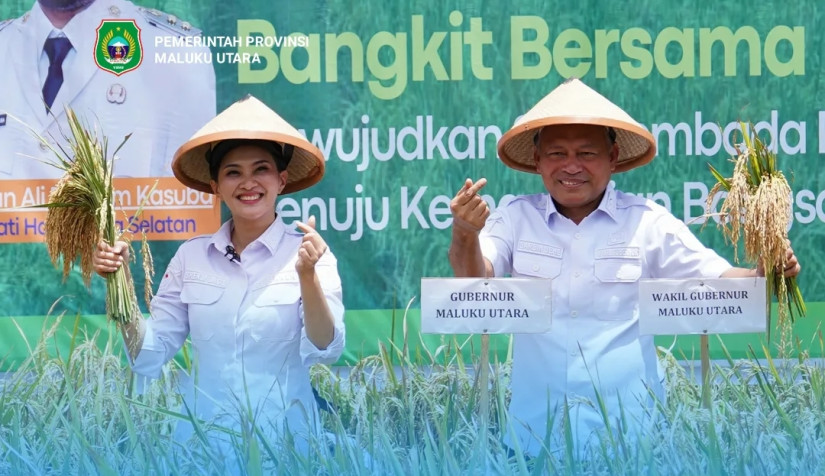
The Gane Transmigration Area has long served as a vital agricultural production center, supplying not only North Maluku but also reaching Sulawesi, Maluku, and even Papua. From the expansive rice fields and plantations in the region, various key commodities are produced, including rice, coconuts, horticultural crops (chili, tomatoes, and vegetables), and cattle, all of which support the livelihoods of thousands of farming families. Despite limitations in infrastructure and basic services, both transmigrant and local communities continue to maintain land productivity and build inter-island trade networks.
The area once hosted a major harvest event attended by the Governor of North Maluku, Sherly Tjoanda. The Gane Transmigration Area reaffirmed its position as one of the province’s principal food hubs through the “Trans Gane Food Barn Festival – Horimoi Otaumoi”, held on November 8 to 29, 2025, in Sumber Makmur Village.
The festival was initiated by the Patriot Expedition Team of the Center for Security and Peace Studies, Universitas Gadjah Mada (TEP PSKP UGM), in collaboration with transmigrant communities and residents. It served not only as a celebration of agricultural abundance but also as a platform to strengthen solidarity and food self-reliance in the transmigration area.
Mohammad Ghofur, representing TEP PSPK UGM, stated that the festival further emphasized Sumber Makmur Village’s strong potential to become the food barn of South Halmahera.
As a food-producing region, Sumber Makmur demonstrates an extraordinary spirit of perseverance and reinforces recognition of Gane’s farmers’ hard work as a key pillar in advancing regional food independence.
“Carrying the spirit of Horimoi Otaumoi reflects togetherness, mutual support, and communal cooperation. The Food Barn Festival was designed as a series of activities for all ages and social segments. These activities also serve as a medium to strengthen bonds between transmigrants and residents, as well as a platform to acknowledge the contributions of small farmers who have long worked in silence,” said Ghofur on Tuesday (Dec. 2).
The highlight of the “Trans Gane Food Barn Festival – Horimoi Otaumoi” took place on November 29, 2025, through an event called “Gubug Rasai,” which literally means a communal discussion hut. The hut symbolizes the simplicity of farmers gathering after long hours of labor in the fields, a shaded place to share stories.
Meanwhile, the term Rasai originates in the Tobelo, Galela, Makeang, and Ternate communities and refers to a sense of brotherhood that transcends biological ties. The concept conveys not only familial bonds but also deeper spiritual and social values grounded in belonging, trust, and mutual responsibility among people sharing the same land.
“Rasai affirms that true kinship is not limited to blood relations, but includes those who walk together, offer help, and support one another through joy and hardship. This value forms the foundation of togetherness amid the ethnic, religious, and cultural diversity of the people of North Maluku,” explained Ghofur.
Beyond entertainment and various competitions, the Food Barn Festival featured training sessions and thematic workshops on agriculture and livestock. The topics included more efficient management of rice and horticultural fields, improvement of cattle quality and health, post-harvest processing, and strengthening the institutional capacity of farmer groups and village cooperatives.
Through these training programs, TEP PSPK UGM and local facilitators aim to ensure that capacity-building for farmers and livestock breeders aligns with strengthening their bargaining positions within the food supply chain.
The collaboration between TEP PSPK UGM, the Trans Gane community, and relevant stakeholders is expected to serve as a model for inclusive, community-driven development, where transmigrants and residents are positioned as key actors rather than mere program recipients.
The Food Barn Festival is anticipated to become an important starting point for strengthening a just, inclusive, and sustainable local food ecosystem, ensuring that Gane’s food barns remain resilient for generations to come.
Author: Agung Nugroho
Post-editor: Rajendra Arya
Photograph: Aksesnews.com