


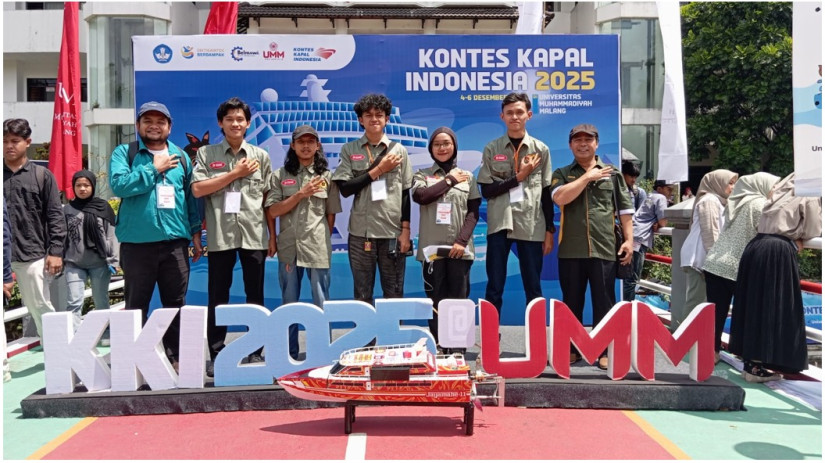
The Gamantaray Team of Universitas Gadjah Mada (UGM) once again achieved a proud milestone after securing First Place in the Electric Remote Control (ERC) category at the 2025 Indonesia Ship Contest (Kontes Kapal Indonesia/KKI). The competition was held from Dec. 3 to 7, 2025, at Universitas Muhammadiyah Malang, East Java. This victory not only marks the resurgence of UGM’s achievements in national maritime competition but also demonstrates the strength of interdisciplinary student research within the university.
The Indonesia Ship Contest (KKI) is an annual competition that brings together students from universities across Indonesia to innovate in maritime technology. The event is organized by the Directorate of Learning and Student Affairs (Belmawa) under the Directorate General of Higher Education.
In this year’s competition, Gamantaray UGM fielded three ship prototypes, Gamanave, Jayamahe, and Safinah One, with Gamanave emerging as the flagship vessel that secured the gold medal in the ERC category.
UGM Director of Student Affairs, Dr. Hempri Suyatna, expressed his pride in the team’s achievement. He conveyed his appreciation for the hard work and dedication of the Gamantaray team in attaining a national-level accomplishment.
“Congratulations to the Gamantaray team. May this achievement continue to be sustained,” he said on Thursday (Dec. 18).
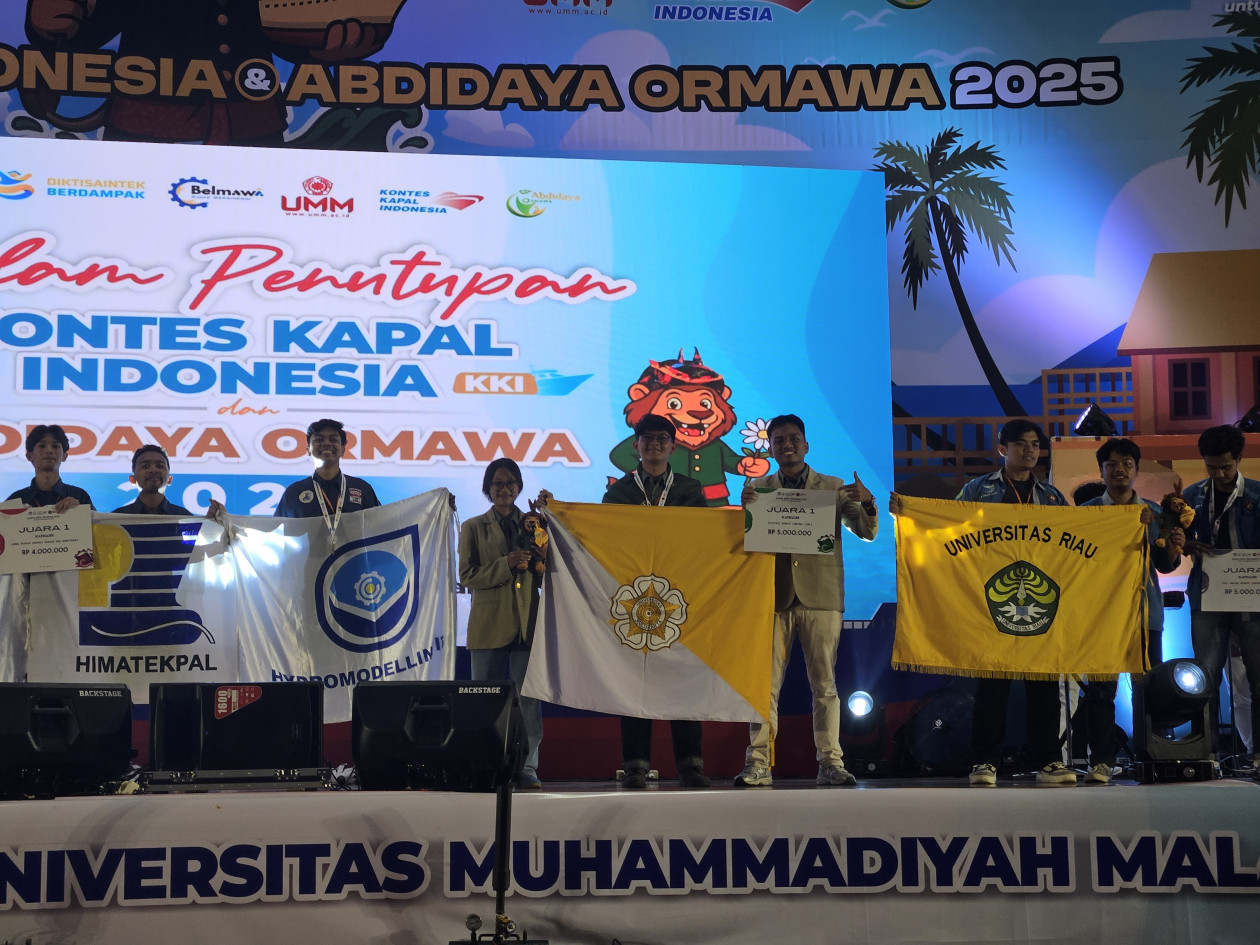
Gamantaray, an acronym for Gadjah Mada Marine and Naval Technology Advanced Research Activity, is a maritime research community that actively competes at both national and international levels. The team operates across faculties and disciplines in developing ship innovations.
Gamantaray Chairperson Muhammad Dafi Putra Radian explained the strategic role of coordination among sub-teams in the research process. His role as chairperson is to facilitate and lead the sub-teams, ensure that research progresses well, and maintain a balance between the technical and operational departments.
He explained that the Gamanave vessel became the center of attention for its energy efficiency and sustainability concept. Designed as an efficient and environmentally friendly ship, Gamanave delivered superior performance through the use of more energy-efficient batteries that enabled a longer operational range than other teams.
Through well-prepared research, the team formulated an effective competitive strategy. The manufacturing process itself posed challenges in terms of precision and consistency.
“In manufacturing, patience and accuracy are essential to ensure the vessel is free from defects and remains aligned with the design. Another challenge is finding trial schedules so we can evaluate performance data before the competition,” he said.
According to him, another equally important factor is conducting extensive trial-and-error.
“Competition conditions often differ from trial conditions, so we must be ready to anticipate all possibilities,” he added.
Despite securing first place, he noted that the Gamantaray team continues to improve vessel quality through ongoing evaluation. He emphasized the importance of team cohesion.
“We learned a lot from mistakes in previous competitions and addressed them one by one. This has improved our vessel’s performance in every competition. Strong technical capability must be supported by solid non-technical skills,” he explained.
Following this victory, Gamantaray is preparing to move on to international competitions. The team plans to participate in a global contest in mid-next year, with the vessel currently in the manufacturing stage.
“We are increasingly motivated to improve ourselves and deliver our best performance,” Radian concluded.
Author: Jelita Agustine
Editor: Gusti Grehenson
Post-editor: Rajendra Arya
Photographs: Gamantaray Team