


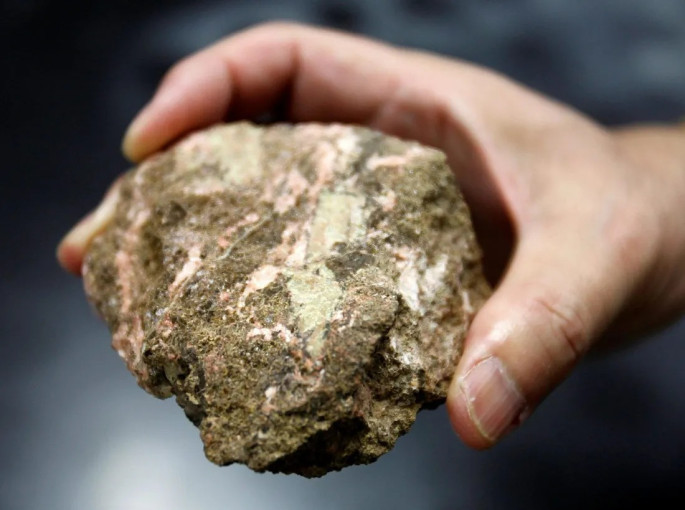
Indonesia has the potential to develop its natural resources in rare-earth elements; these minerals can be used in fighter jet engines, commercial aircraft, and missile systems. Rare earth elements are utilized in electronics, underwater detection systems, missile defense, tracking devices, satellite power generation, and communications. To develop this, the government has established the Mineral Industry Agency to conduct research and development.
It is estimated that eight locations with rare-earth potential are spread across Sumatra, Kalimantan, and Sulawesi. These findings strengthen Indonesia’s position in the increasingly strategic global minerals landscape amid shifting geopolitical dynamics.
A lecturer at the Department of Geological Engineering, Faculty of Engineering, Universitas Gadjah Mada (FT UGM), Dr. Lucas Donny Setijadji, explained that research on rare earth elements in Indonesia has been ongoing for quite some time.
He first conducted research on rare-earth elements in 2008 through an Indonesia–Japan collaborative project funded by the Japan International Cooperation Agency (JICA).
“Among researchers, this mineral is not a new issue; rather, it has involved a long research journey,” said Dr. Setijadji on Monday (Feb. 18).
According to Dr. Setijadji, global momentum shifted when China restricted exports of rare earths. The policy triggered concerns among industrialized countries, particularly Japan, which heavily relies on rare-earth supplies for its technology and manufacturing sectors.
“Since then, rare earth exploration has intensified worldwide. Japan has become one of the main promoters of research, including in the ASEAN region and Africa, through research funding and scholarships,” he explained.
Dr. Setijadji emphasized that Indonesia possesses substantial potential, but it is important to distinguish between potential and reality.
Unlike commodities such as gold and copper, which are already produced on a massive scale, rare earth elements in Indonesia remain at the exploration and economic feasibility testing stages. Furthermore, he noted that Indonesia has yet to issue a specific mining business permit for rare earth elements.
According to him, the government has adopted a precautionary approach because this commodity is regarded as a strategic national asset that must be managed in accordance with Article 33 of the 1945 Constitution. Meanwhile, neighboring countries such as Vietnam, Laos, and even Myanmar have already begun producing rare earth elements.
“Indonesia may appear relatively behind, but this is also due to the government’s cautious policy stance,” he remarked.
Regarding the establishment of the Mineral Industry Agency (BIM) to coordinate research and strategic mineral policies, Dr. Setijadji stated that BIM’s presence signals the government’s recognition of university research as a crucial component in managing critical minerals.
One finding currently receiving serious attention is the potential for rare earths in the area surrounding Mamuju, West Sulawesi. The region is considered the most prospective location and is planned to host a national downstream rare earth pilot project.
Dr. Setijadji noted that UGM has a strong research track record in the area. One of the researchers who identified the Mamuju potential is an alumnus of UGM’s Department of Geological Engineering who completed both his master’s and doctoral studies in the region.
“Initially, this area was studied due to radioactive anomalies identified by Badan Tenaga Nuklir Nasional (BATAN). Over time, it was discovered that the rare earth content there is among the highest in Indonesia,” he explained.
However, Dr. Setijadji cautioned that the greatest challenge lies not only in resource discovery but also in mastering extraction technology.
“Rare earth elements are often associated with radioactive elements and exhibit different mineral characteristics at each location, requiring highly specific processing methods,” he said.
Although the level of economic feasibility has not yet been fully studied, beyond findings in the Bangka Belitung Islands, regions in Kalimantan and Sulawesi are now showing new prospects with diverse geological characteristics. According to him, mineral resource exploration is a long and collaborative process.
“UGM should be proud to have contributed since the early stages. Moving forward, we hope Indonesia will truly be able to process rare earth elements independently,” he concluded.
Author: Hanifah
Editor: Gusti Grehenson
Post-editor: Jasmine Ferdian
Photograph: Reuters