


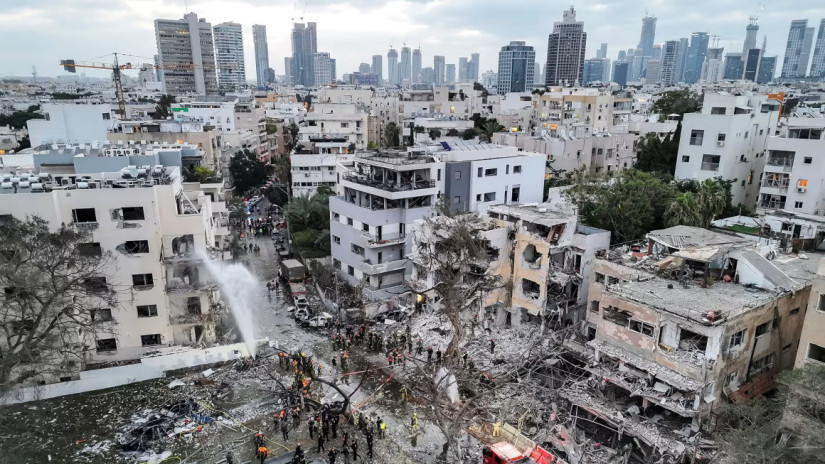
Amid ongoing debate over the Agreement on Reciprocal Trade (ART) and economic sovereignty, public attention has also turned to Indonesia’s decision to join the Board of Peace (BOP) initiated by the United States. The move coincides with the escalation of the Iran–Israel conflict, which has triggered rising global tensions. This situation has raised questions about the consistency of Indonesia’s long-standing “free and active” foreign policy principle. In this context, two Professors from Universitas Gadjah Mada underscore the importance of reassessing the direction of Indonesia’s foreign policy and its implications for national interests.
Professor Dafri Agussalim from the Faculty of Social and Political Sciences Universitas Gadjah Mada (Fisipol UGM) stated that both the conflict and Indonesia’s membership in the BOP carry broad implications for the country’s global standing. According to him, international perceptions of Indonesia may shift when political decisions are made amid open conflict. Professor Dafri explained that Indonesia’s decision to join the BOP coincided with military attacks, creating perceptions of partiality.
“By entering what could be seen as a trap set by Trump and Israel through our BOP membership, once we joined, Israel launched its attack. This is a serious blow to our foreign policy,” he said on Monday (Mar. 2).
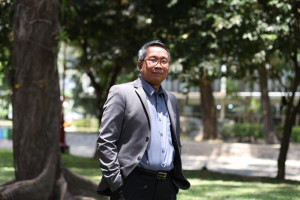
According to Professor Dafri, Indonesia’s position as a non-aligned country is now being questioned internationally. He noted that credibility as a mediator requires maintaining a clear distance from the parties involved in the conflict. In conflict resolution theory, a mediator must be perceived as neutral and possess a strong reputation to gain the trust of both sides.
“At the very least, we have moved away from our foundational position as a non-aligned state,” he emphasized.
Professor Dafri further highlighted what he views as an overly centralized foreign policy decision-making process. He explained that strategic policies tend to rely heavily on presidential decisions as the dominant actor, while ministries and academic research are not optimally involved.
In his view, strategic policies should be grounded in strong academic studies and robust data before decisions are made. He stressed that an evidence-based policy approach is essential to prevent decisions from being driven solely by intuition.
“I have repeatedly emphasized the importance of evidence-based policy,” he stated.
From this geopolitical dimension, the impact extends to the national economy. Professor Agus Sartono of the Faculty of Economics and Business, Universitas Gadjah Mada (FEB UGM), observed that the Iran–Israel conflict has the potential to exert serious pressure on the energy sector. He explained that rising oil prices would directly affect transportation and production costs.
“The first thing we must anticipate is the supply of fuel, because the implications are far-reaching,” he said.
Professor Agus noted that the economic impact may not yet be fully felt, as energy import contracts are arranged several months in advance. However, within three to six months, price pressures could begin to affect cost structures across various sectors. He warned that higher production costs could strain businesses and disrupt export-import activities.
“It may not be felt now, but in the next three months it could become apparent,” he explained.
He also cautioned that Indonesia’s dependence on imported consumer goods and energy heightens vulnerability during global turbulence. Professor Agus emphasized the need to diversify export markets and strengthen domestic economic resilience. Without well-prepared mitigation strategies, external pressures could affect employment absorption and fiscal stability.
“We must diversify our export markets so that we are not dependent on a single country,” he said.
From geopolitical considerations to economic implications, both academics underscored the importance of prudence in responding to global dynamics. Foreign policy decisions and responses to international conflicts are closely intertwined with national economic stability.
In a time of uncertainty, consistency in upholding the free and active principle and strengthening economic foundations is crucial. This moment serves as a reminder that national sovereignty is being tested not only by trade agreements but also by rapidly evolving geopolitical dynamics.
Author: Triya Andriyani
Post-editor: Zabrina Kumara
Photo: CNN World