


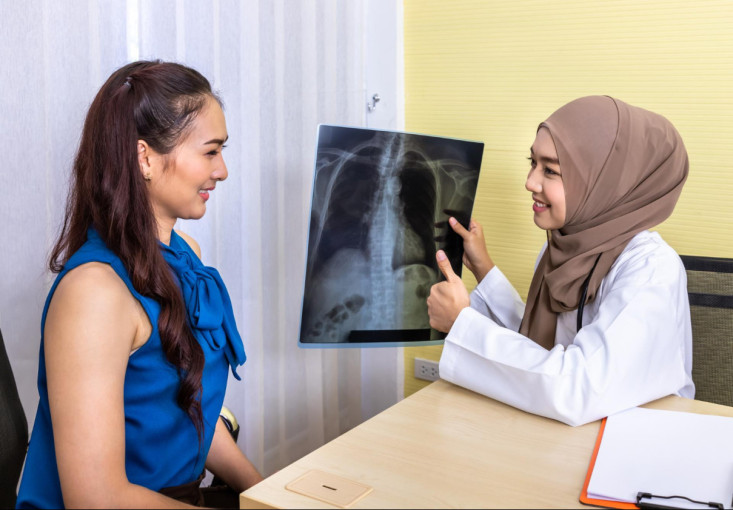
Tuberculosis (TB) remains one of the most pressing public health challenges in Indonesia. Data from the Ministry of Health estimates that TB cases reach approximately 1,090,000 per year. With cases continuing to rise, Indonesia ranks second globally for the highest number of TB cases after India. Despite numerous efforts, the persistently high estimated number of cases and the fact that many remain undetected indicate that this issue requires not only medical intervention but also broader social, educational, and structural approaches.
A lecturer at the Faculty of Medicine, Public Health, and Nursing of Universitas Gadjah Mada, Dr. Rina Triasih, highlighted the significant gap between the estimated number of TB cases and the number of cases successfully identified in Indonesia. She explained that this gap is a key indicator that case detection efforts remain suboptimal, leaving many patients outside the health care system and potentially perpetuating disease spread within their communities.
According to Rina, TB cases in Indonesia are estimated at around one million, yet only several hundred thousand have been medically identified and recorded to date. She emphasized that this discrepancy is not merely a data issue but reflects real challenges in the field, including low public awareness of seeking medical examination at the onset of symptoms, limited access to health care facilities, and insufficient public literacy in recognizing TB symptoms.
“The prediction reaches one million, but the cases confirmed by doctors only reach several hundred thousand. There are still many TB patients out there who have not been detected or treated by medical professionals,” she said on Monday (Apr. 6).
Rina further explained that undiagnosed patients have a high potential to become new sources of transmission. This situation has contributed to the continued increase in cases, particularly after the COVID-19 pandemic. According to her, this rise may be caused by either an actual increase in cases or improved government effectiveness in identifying previously hidden cases.
“During COVID, the number of TB cases detected was low, but post-COVID it has increased,” she noted.
As part of the Center for Tropical Medicine at Universitas Gadjah Mada, Rina has been involved in developing the Active Case Finding (ACF) strategy, a method of proactively identifying cases within communities. This program, initiated by Zero TB Yogyakarta in 2020 under UGM’s coordination, involves directly approaching communities using mobile X-ray facilities to detect TB in both symptomatic and asymptomatic individuals.
“We go to the patients rather than waiting for them to come to hospitals or community health centers,” she explained.
She added that this method has proven effective in detecting cases that previously went unnoticed. Over time, the program has also begun receiving government support through the provision of better equipment and facilities.
On the other hand, significant challenges also arise from drug-resistant TB cases. Rina explained that this condition occurs when treatment is not completed, allowing the bacteria to mutate. As a result, this type of TB requires more complex treatment with a longer duration and a greater number of medications.
“Usually, after two months, patients already feel better. Because they feel healthy, they stop treatment, and this creates the risk of developing drug-resistant TB,” she said.
She stressed that TB control cannot focus solely on medical aspects. Social factors such as stigma, education level, economic conditions, and living environments also play major roles in the spread of the disease.
“For example, when TB patients return to homes that are overcrowded and poorly ventilated, the people inside are likely to be infected as well, and TB cases persist,” she explained.
For this reason, Rina emphasized the importance of innovative educational approaches that directly engage communities. She suggested that education should not rely solely on conventional media such as posters or flyers but should also adopt more interactive methods, such as involving TB survivors in talk shows or conducting repeated awareness campaigns that are easy for the public to remember.
In addition, Rina underlined Indonesia’s geographic challenges, which create disparities in access to health services, especially outside Java Island. This condition poses obstacles to equal TB detection and treatment across regions.
As a strategic measure, Rina recommended a comprehensive approach through three main pillars: Search, Treat, and Prevent.
“Search means finding patients and detecting them quickly. Treat means providing adequate treatment until full recovery. Prevent means carrying out preventive measures and education,” she concluded.
She expressed optimism that through collaboration among various stakeholders and the massive implementation of this strategy, the target of TB elimination by 2030 can be achieved.
Author: Zabrina Kumara
Editor: Gusti Grehenson
Post-editor: Rajendra Arya
Photo: Freepik