


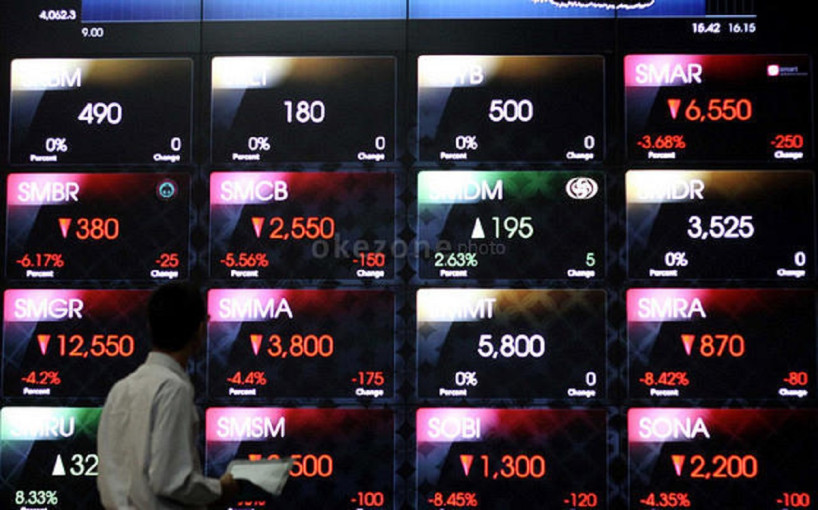
The Composite Stock Price Index (IHSG) experienced a sharp decline in late January 2026. After reaching an all-time high of 9,134.70, the index plunged by approximately 8% in a siJan. 29ng session on January 29, 2026. The situation triggered a trading halt due to intense selling pressure, and the severe volatility shook the Indonesia Stock Exchange.
Professor of Finance at the Faculty of Economics and Business, Universitas Gadjah Mada (FEB UGM), R. Agus Sartono, responded to the market downturn. According to him, the significant decline in the IHSG (often referred to as the January Effect) stemmed from a crisis of confidence in the transparency of Indonesia’s capital market, which subsequently triggered a chain reaction among global investors.
The situation was exacerbated by a decision made by Morgan Stanley Capital International (MSCI), a global investment research firm that provides stock indices and portfolio analysis for institutional investors worldwide.
“MSCI implemented an interim freeze by suspending its assessment of Indonesian stocks, which ultimately shattered short-term growth expectations,” he explained on Wednesday (Feb. 4).
He further noted that MSCI took this step after identifying insufficient data transparency regarding beneficial ownership structures and the high concentration of ownership in several large-cap stocks. Broker codes and domicile codes were concealed during trading hours.
In addition, several stocks under monitoring were potentially subjected to a full call auction mechanism, making price formation opaque due to the lack of visibility into buy and sell order queues.
This uncertainty, he said, prompted massive net selling by foreign investors, amounting to IDR 6.17 trillion on Jan. 28, 2026, followed by continued selling of approximately IDR 4.63 trillion on Jan. 29, 2026.
“These factors exerted pressure on the IHSG and turned the Indonesia Stock Exchange (IDX) into a thin market, making it susceptible to stock price manipulation,” explained the lecturer from the Department of Management, FEB UGM.
As a result, the resignation of the IDX President Director on Jan. 30, 2026, is widely viewed as an act of accountability for the extreme market turbulence, which further destabilized the market.
Rather than improving conditions, the situation deteriorated after Mahendra Siregar stepped down as Chairman of the Board of Commissioners of the Financial Services Authority (OJK), followed by the resignation of Inarno Djajadi as Chief Executive for Capital Market, Derivative Finance, and Carbon Exchange Supervision at OJK on the same date.
“This situation will only place additional pressure on the market,” he remarked.
Explaining why market reactions were so swift, Professor Sartono stated that the bottom line of investment in real and financial assets is fundamentally based on expectations of an asset’s ability to generate future free cash flows. At the same time, investments are expected to generate returns on invested capital that exceed the cost of capital.
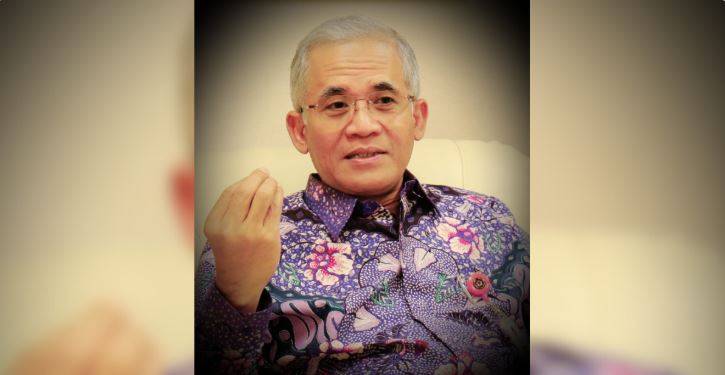
In his view, MSCI’s decision raised investor concerns because stock prices no longer reflected their true value. There were fears that transactions were merely artificial, conducted by investors acting as extensions of majority shareholders, despite weak corporate fundamentals.
“This cannot be ignored, as retail transaction volumes are very small and investors may simply be following the crowd. Studies conducted by my supervised students at FEB UGM also show the presence of FOMO (Fear of Missing Out) behavior, where investors trade stocks merely by imitation, without sufficient knowledge to properly assess investments, particularly in the securities sector,” he elaborated.
Professor Sartono concluded that the selling pressure that led to the IHSG’s sharp decline was driven by market expectations of potential future liquidity losses. This situation encouraged herding behavior, in which domestic investors also rushed to offload their assets to avoid greater losses. Rather than easing pressure, such actions further deepened the index’s fall.
“This IHSG decline is not merely a technical fluctuation, but rather a reflection of global market demands for higher governance standards. In this context, OJK and IDX face an urgent and substantial task to improve free float regulations and beneficial ownership disclosure to restore investor confidence,” he stated.
For him, the capital market serves as a medium for long-term investment financing. Through Initial Public Offerings (IPOs), companies can raise capital to support growth. Meanwhile, stock indices in developed countries are often used as indicators of economic development, as stronger corporate performance contributes to higher tax revenues, job creation, increased per capita income, improved purchasing power, and reduced poverty.
Nevertheless, Professor Sartono urged the government, through OJK, to review regulations that allow companies with negative free cash flow to conduct IPOs. He considered this step crucial to preventing improper corporate actions, noting that the IPO experiences of several startups with negative cash flows (once oversubscribed due to excessive prospect framing) became harsh lessons when share prices plunged sharply in the secondary market, leaving investors with significant losses.
Addressing these issues, he emphasized the critical importance of public disclosure of information. The root of the problem, he argued, lies in transparency, which is essential to maintaining market trust. The more advanced a stock exchange becomes, the stricter its listing requirements should be to protect all stakeholders.
Public companies are therefore expected to present comprehensive, transparent, and standardized financial information, supported by credible accounting professionals and rating agencies.
Accordingly, public education on corporate valuation should be intensified to safeguard investors’ interests and ensure that investment decisions are not driven solely by euphoria. Given current conditions (characterized by relatively high unemployment, slowing credit growth, and rising deficit risks), investors must refocus on corporate fundamentals and closely monitor economic indicators.
“It appears that a transition back to a Free Cash Flow (FCF)–based approach is a strategic necessity to restore market credibility. FCF can also help prevent potential manipulation of financial performance,” he said.
Professor Sartono views FCF as more rational and as a better indicator of a company’s ability to ensure sustainability. Unlike net income, which can be easily manipulated through accounting policies, free cash flow represents the cash available to shareholders after operating expenses and capital expenditures are met.
“This is crucial, as it provides a clearer picture of future growth potential. Investors can also be more cautious when they observe negative FCF amid positive accounting profits. This can serve as an early warning signal of irregularities or an unsustainable business model,” he explained.
In his view, FCF-based valuation methods such as Discounted Cash Flow compel both investors and analysts to assess a company’s genuine ability to generate cash independently. Equally important, the FCF approach forces management to be more transparent in its use of cash.
The market crisis reflected in the IHSG’s sharp decline in late January 2026 underscores the importance of an information-efficient capital market. IDX and OJK are expected to ensure that all listed companies comply with regulations and fully disclose information, despite the high costs such compliance may entail.
“Transparency and integrity are the main foundations of trust. Without transparency, the capital market will remain vulnerable to speculative shocks, and its role as a source of long-term financing for the national economy will be undermined. Building trust requires hard work and time. We may suffer losses from the late-January 2026 market crisis, but we must not lose trust, integrity, or reputation,” he concluded.
Reporter: FEB UGM/Kurnia Ekaptiningrum
Author: Agung Nugroho
Post-editor: Rajendra Arya
Illustration: Okezone.com