


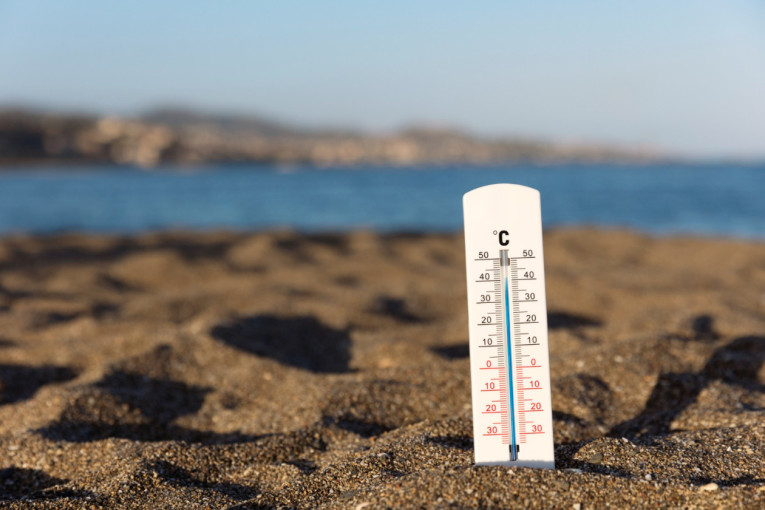
The impacts of climate change are becoming increasingly evident across Indonesia. After the Indonesian Meteorology, Climatology, and Geophysics Agency (BMKG) recorded 2023–2025 as the three hottest years in modern observation history, the World Meteorological Organization (WMO) also warned that the global average temperature during 2026–2030 is projected to range between 1.3 and 1.9 degrees Celsius above pre-industrial levels. This trend is expected to heighten the risks of extreme weather, droughts, and floods, as well as threats to food security and public health.
Dr. Emilya Nurjani, a lecturer in the Department of Environmental Geography at Universitas Gadjah Mada (UGM), said these conditions indicate that Indonesia has entered a climate crisis that requires swift and integrated action.
“The impacts of climate change in Indonesia have become increasingly severe, disrupting human life to the extent that the situation can be described as a climate crisis, one that demands immediate action,” said Dr. Nurjani during an interview on Monday (Jul. 6).
She explained that the international community had agreed to limit global warming to no more than 1.5 degrees Celsius through the Paris Agreement in 2015. However, a decade later, that target remains out of reach.
“The continued rise in global temperatures demonstrates that carbon emission reduction efforts undertaken by countries around the world have not yet been sufficient to significantly slow global warming,” she said.
Dr. Nurjani noted that rising air temperatures increase water demand, accelerate evaporation, and heighten the risk of drought. At the same time, rainfall patterns have become increasingly unpredictable, causing shifts in the onset of both the rainy and dry seasons. The intensity of extreme rainfall has also increased, raising the likelihood of floods, landslides, strong winds, and high waves.
“These changes directly affect many sectors, particularly agriculture, which is facing shifts in planting schedules, a higher risk of crop failure, the resurgence of pest outbreaks, and declining productivity,” she explained.
In the short term, she said increasingly extreme climate conditions can lead to more public health problems, greater demand for water and energy, and reduced agricultural productivity. In the long term, the consequences are far more complex, including weakened food and water security, ecosystem degradation, sea level rise, and mounting social and economic losses.
For this reason, climate change risk considerations should be an integral part of preparing Regional Spatial Plans (RTRWs) and Detailed Spatial Plans (RDTRs). Dr. Nurjani explained that development that fails to account for environmental carrying capacity can increase carbon emissions while reducing carbon sequestration, thereby intensifying the urban heat island effect, diminishing water infiltration capacity, and increasing flood risk. These impacts are driven by widespread deforestation, unplanned urbanization, development in flood-prone areas, settlements on steep slopes, and the loss of water catchment areas.
Conversely, she emphasized the need to implement spatial planning based on environmental carrying capacity by integrating climate mitigation and adaptation strategies while advancing nature-based solutions through the development of blue and green infrastructure. “I believe this approach can significantly strengthen regional resilience to the impacts of climate change,” she said.
To address these challenges, Dr. Nurjani underscored the importance of collaboration among government, academia, the private sector, and communities through both mitigation and adaptation measures. These efforts include reducing greenhouse gas emissions through decarbonization, expanding renewable energy use, restoring mangrove and peatland ecosystems, developing water storage infrastructure such as retention ponds, implementing climate-responsive spatial planning, and improving climate literacy and community capacity to cope with disaster risks. “Addressing climate change requires both mitigation and adaptation, reducing the causes of climate change while minimizing its impacts,” Dr. Nurjani concluded.
Author: Cyntia Noviana
Editor: Gusti Grehenson
Post-editor: Zabrina Kumara
Photo: Magnific