


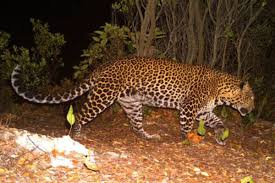
The Javan leopard (Panthera pardus melas) is now the only remaining big cat on Java Island after the Javan tiger was declared extinct. As an apex predator, its presence serves as a key indicator of forest ecosystem health. However, population decline and habitat fragmentation have placed this endemic species in the Critically Endangered category according to the International Union for Conservation of Nature (IUCN). This condition puts the Javan leopard in an increasingly precarious position and demands urgent attention across multiple sectors.
Lecturer at the UGM Faculty of Biology and wildlife DNA forensics expert, Dr. Dwi Sendi Priyono, stated that the decline in the Javan leopard population should no longer be viewed as an ordinary phenomenon.
He emphasized that being an endemic species with a small population makes it highly vulnerable to demographic instability, genetic pressure, and human-related threats.
“An integrative response, ranging from habitat protection, conflict mitigation, law enforcement, community engagement, to scientific monitoring, is urgently needed to prevent further decline and potential local extinction,” Dr. Priyono said on Tuesday (Nov. 24).
The Javan leopard population is estimated at only around 319 individuals, with fewer than 50 adults.
The situation is further complicated by the species’ presence in non-protected areas, resulting in a mosaic distribution.
Dr. Priyono explained that obtaining accurate population data remains a challenge due to the species’ elusive nature.
A comprehensive Java-Wide Leopard Survey (JWLS) is currently underway using camera traps and genetic analysis.
“That is a comprehensive monitoring method,” he noted.
Several major factors continue to accelerate the species’ decline, including habitat loss due to land conversion, human-wildlife conflict, and illegal poaching and trade involving body parts of the carnivore.
A decline in prey availability also poses a serious threat, as some prey species, such as wild boar, have been affected by the African Swine Fever (ASF) outbreak.
“Other contributing factors include decreasing prey availability due to overhunting or disease outbreaks among prey species,” Dr. Priyono explained.
In response to these challenges, Professor Priyono stated that the most effective conservation strategy is an in situ approach at the landscape level, considering that Javan leopards coexist with humans.
This effort requires protecting key habitat patches, strengthening networks of protected areas, and managing non-protected landscapes to remain functional as wildlife habitats.
He also highlighted the importance of strengthening law enforcement capacity, enhancing scientific monitoring, and ensuring evidence-based planning.
“So, in situ conservation strategies must be prioritized, while ex situ measures serve as complementary options when necessary,” he said.
In closing, Dr. Priyono underscored that saving the Javan leopard requires multisectoral and long-term conservation efforts.
Collaboration among academics, law enforcement agencies, area managers, and local communities is essential to prevent the extinction of Java’s most iconic predator.
“This, the largest carnivore on Java, must not meet the same fate as the Javan tiger or the Bali tiger, which we can no longer witness directly as part of nature’s gifts to Indonesia,” he said.
Author: Alena Damaris
Editor: Triya Andriyani
Post-editor: Lintang Andwyna
Photograph: Antara