


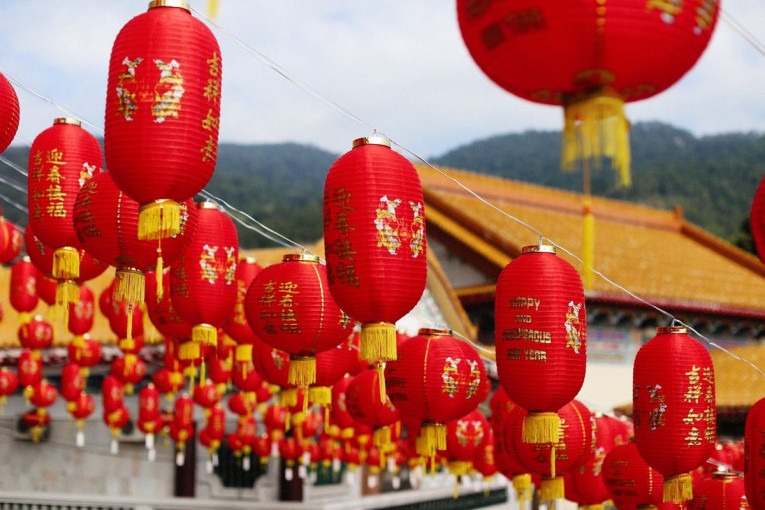
The Lunar New Year is known for marking the largest annual migration in China. In 2026, an estimated 9.5 billion interregional trips are expected, including homecoming travel and tourism activities. The 40-day peak travel period of the 2026 Spring Festival began on February 2 and will continue for the following 40 days.
The Lunar New Year holiday in China is longer than other public holidays, allowing people to make the most of the occasion by gathering with their families. This momentum provides an opportunity to revive a sense of togetherness that may have weakened as family members migrate to different places.
An observer of identity and multiculturalism and lecturer at the Religious and Cross-Cultural Studies (CRCS) Program at Universitas Gadjah Mada, Dr. Evi Lina Sutrisno, explained that Lunar New Year celebrations in Indonesia began to be widely promoted during the Reformasi era under President Abdurrahman Wahid. Festivities such as carnivals, lion dance performances, and cultural festivals were actively organized during that period.
Later, under the leadership of President Megawati Soekarnoputri, the Lunar New Year was officially recognized as a national holiday, enabling many Chinese-Indonesian communities to celebrate in various ways. Other ethnic groups have also contributed to enlivening the celebrations.
“The Lunar New Year is a multicultural celebration, particularly as a people’s festival,” she said on Friday (Feb. 27).
Lina noted that the Lunar New Year festivities continue for 15 days, culminating in Cap Go Meh. This year, Cap Go Meh falls on March 3, 2026. The celebration marks the full moon festival and concludes the Lunar New Year series.
Cap Go Meh symbolizes the completion of prayers and hopes offered at the beginning of the new year. In Indonesia, the largest Cap Go Meh celebration takes place in Singkawang, West Kalimantan, featuring a cultural fusion festival between Chinese and Dayak traditions.
“In Singkawang, there are sword and knife festivals as well as extreme performances, most of which are carried out by the Dayak community,” she said.
Lina further explained that Chinese culture is closely associated with the Chinese zodiac, which consists of 12 animal symbols in Chinese astrology that represent annual cycles, with each year linked to a specific animal. Each zodiac sign is combined with one of the Five Elements (Wu Xing): Wood, Fire, Earth, Metal, and Water. In the Chinese calendar, 2026 is symbolized as the Year of the Fire Horse.
The Lunar New Year also contains spiritual elements. Many Chinese communities believe in zodiac compatibility, prompting them to perform spiritual activities and offer prayers at the beginning of the year. Therefore, some observe the Ciswak ritual, a tradition intended to ward off misfortune, dispel negative energy, and purify oneself. The Ciswak ritual is usually conducted collectively at temples.
“In the Year of the Fire Horse, those whose zodiac signs are considered less fortunate will perform Ciswak,” she explained.
From Lina’s perspective, the Horse symbolizes dynamism, energy, and strength. Fire represents passion but can also signal conflict or even disaster. Thus, the Year of the Fire Horse serves as a reflection to remain spirited, active, and resilient in facing various challenges, conflicts, and opportunities.
“My hope for this year is that we remain enthusiastic and steadfast. Even though the global situation is far from stable and political conditions may be uncertain and unpredictable, we must stay firm, maintain our spirit, and draw positive energy from the horse and fire to face these circumstances,” she concluded.
Author: Jesi
Editor: Gusti Grehenson
Post-editor: Jasmine Ferdian
Photo: Pexels