


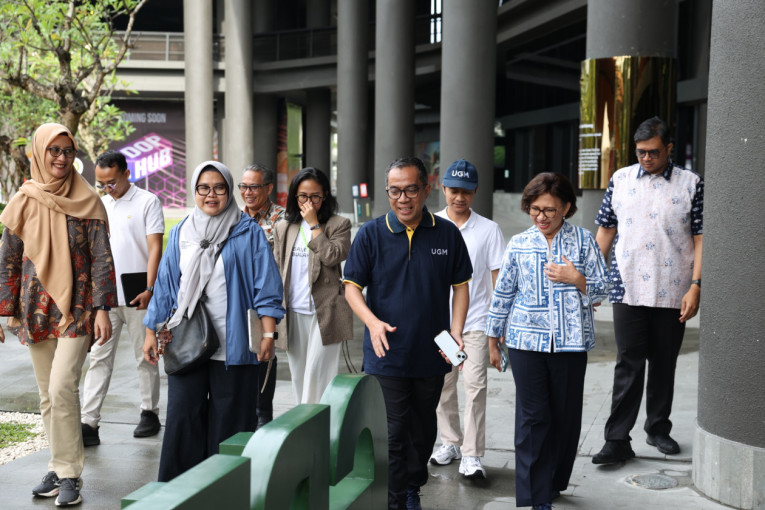
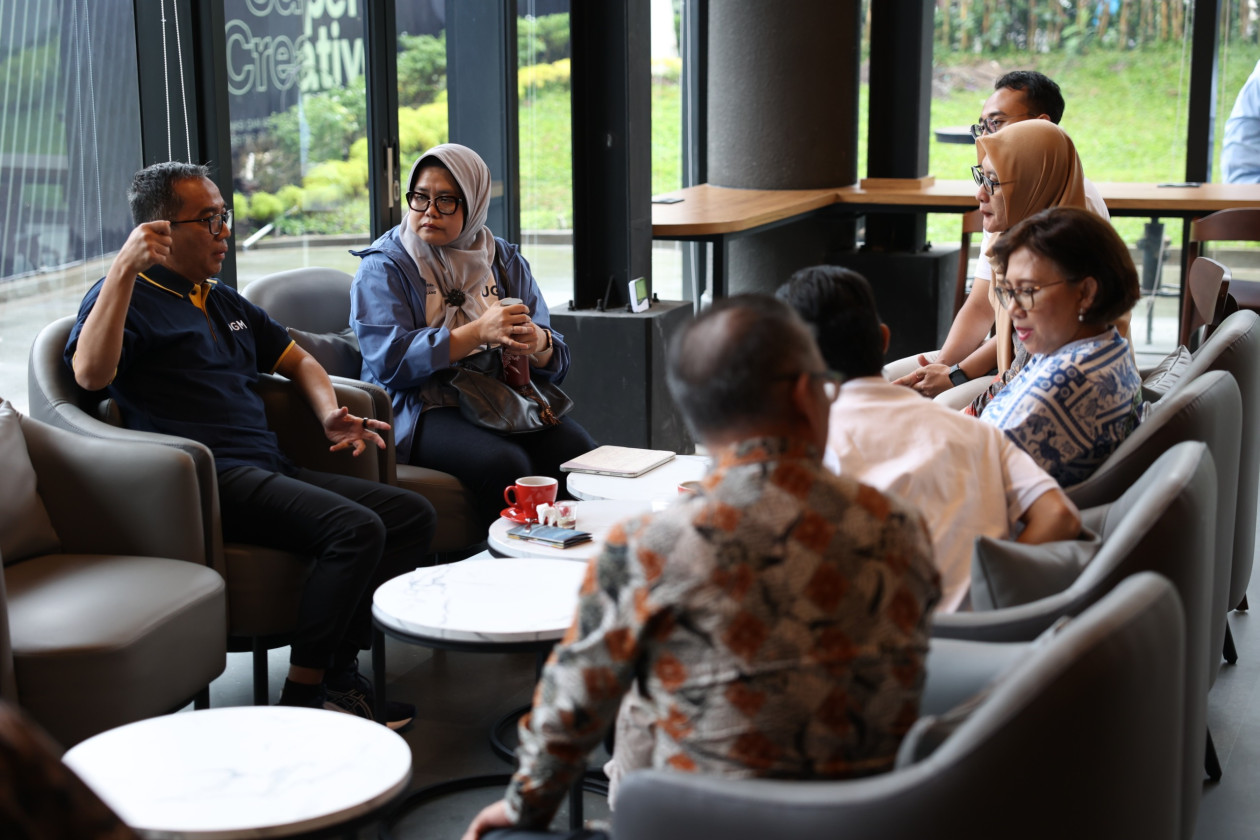
Minister of Higher Education, Science, and Technology, Professor Brian Yuliarto, began his working visit to Universitas Gadjah Mada (UGM) on Friday morning (Feb. 13) with a morning walk around the Gelanggang Inovasi dan Kreativitas (GIK). Accompanied by the Rector and university leadership, the Minister toured GIK to directly observe the development of an innovation ecosystem and research collaboration that is open not only to the UGM academic community but also to industry partners. The occasion also provided space for dialogue on strengthening the role of higher education institutions in advancing science and technology that deliver tangible benefits to society.
Professor Yuliarto also observed the overall development of UGM’s infrastructure and academic atmosphere. He noted the campus’s dynamic and open environment, supported by strong human resources.
A conducive learning environment, he emphasized, serves as a vital foundation for enhancing graduates’ global competitiveness. Strengthening research and innovation, he added, must go hand in hand with the development of institutional quality.
“UGM is excellent. I am truly impressed to see a campus that is already so advanced, comparable to top universities abroad,” he said.
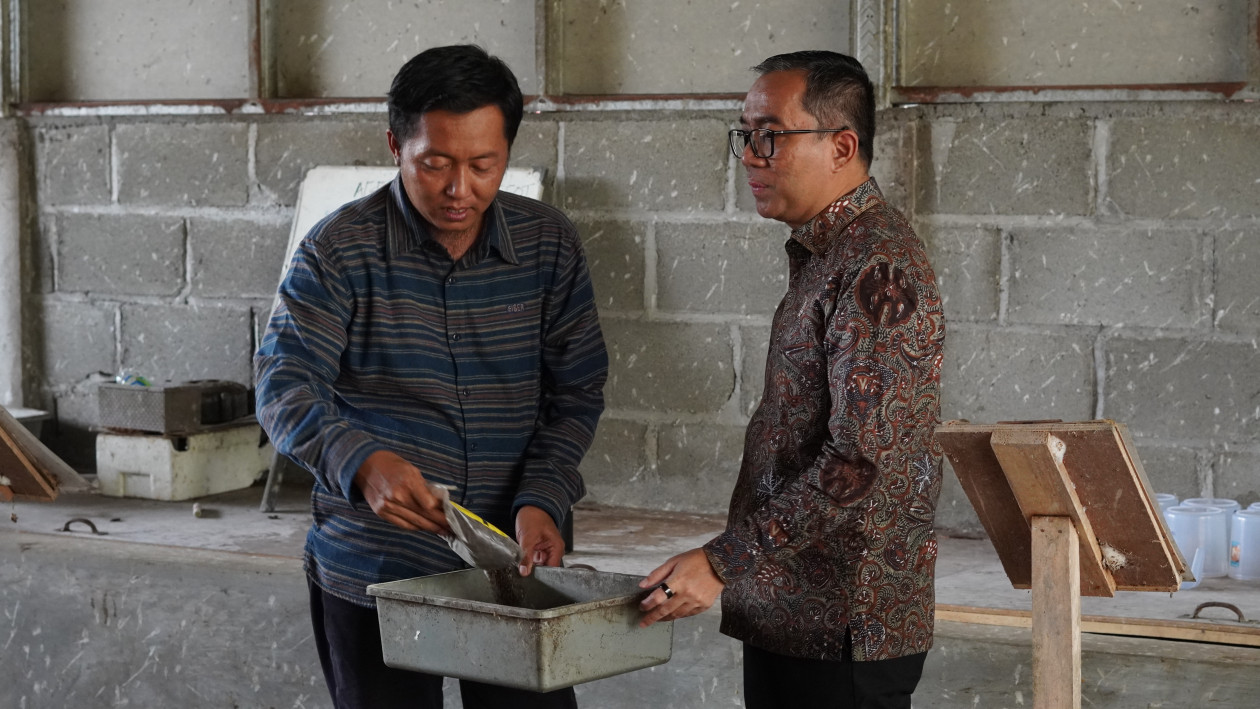
The minister continued his visit to the Pusat Inovasi Agroteknologi (PIAT) to review the integrated waste management system implemented by UGM. The facility forms part of the university’s commitment to science- and technology-based environmental management.
All waste generated on campus is processed through a single integrated system, from sorting to final treatment. The scheme is designed to enable the university to address its waste challenges independently and sustainably.
“Everything is sent here to be processed and treated. As a result, 100 percent of waste on campus is handled within the campus,” Professor Yuliarto explained.
He expressed appreciation for the facility and system, which he described as comprehensive and well-managed. Professor Yuliarto noted that the management model integrates technology, governance, and environmental education cohesively.
The availability of supporting equipment and systematic management reflects the institution’s commitment to building sustainable practices. According to him, consistency is key to ensuring continuous improvement in management quality over time.
“Hopefully, we can further enhance the quality so that modern waste management can truly serve as a model,” he remarked.
Addressing students, Professor Yuliarto encouraged them to make the most of the academic environment that has been established. He emphasized the importance of courage in exploring one’s potential and fully utilizing campus facilities. The support of lecturers, professors, and collaborative networks, he said, constitutes significant capital for student development.
The opportunity to study at an institution with a strong reputation should be accompanied by a spirit of achievement and meaningful contribution.
“Students who have been admitted to UGM, please make the most of this excellent campus environment. Wishing continued success to UGM students,” he concluded.
Author: Triya Andriyani
Post-editor: Zabrina Kumara Putri
Photographs: Firsto and PIAT UGM