


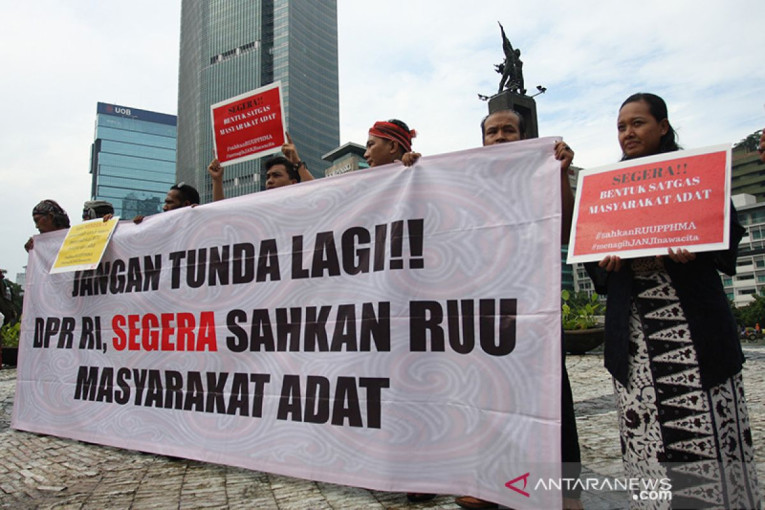
The commemoration of National Indigenous Peoples Day on March 13 serves as an opportunity to highlight once again the recognition and protection of indigenous peoples’ rights in Indonesia. In many regions, issues related to control over customary territories, such as customary forests and communal lands, continue to emerge.
Amid these challenges, strong regulations are considered essential to protect indigenous communities and their living spaces. To date, the Indigenous Peoples Bill (RUU Masyarakat Adat), which has been discussed for years, has yet to be passed. This situation raises questions about the state’s commitment to providing stronger protection for indigenous peoples.
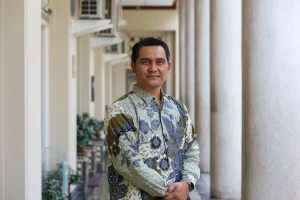
A lecturer at the Faculty of Law, Universitas Gadjah Mada (FH UGM), Dr. Yance Arizona, believes that the passage of the Indigenous Peoples Bill is highly urgent. He explained that discussions surrounding the regulation have been ongoing for a very long time without certainty.
According to him, the state has a constitutional obligation to protect indigenous peoples as part of its citizens. Strong regulations are necessary to ensure that protection does not stop at normative recognition.
“I believe the Indigenous Peoples Bill must be passed immediately because discussions about it have been ongoing for more than 16 years,” he said on Friday (Mar. 13).
Yance further noted that indigenous communities continue to face various forms of injustice in the management of natural resources. He argued that the expansion of extractive projects often results in the appropriation of indigenous peoples’ living spaces. In several cases, indigenous communities have even faced criminalization while defending their territories. This situation demonstrates the need for stronger legal protection from the state.
“The Indigenous Peoples Law is a constitutional mandate for the government and DPR to protect all citizens, particularly indigenous communities that still frequently experience discrimination, criminalization, and the seizure of their living spaces,” he said.
In addition to inadequate regulation, Yance believes that the current legal system remains influenced by outdated paradigms in natural resource management.
According to him, legal approaches developed during the colonial period continue to shape the state’s view of the traditional rights of indigenous peoples. As a result, recognition of customary territories often occupies a weaker position compared to economic interests. This condition can be seen in various policies that have yet to fully provide real protection for indigenous communities.
“Existing regulations have failed to protect indigenous peoples’ rights because our legal system still carries strong colonial influences,” he explained.
Yance added that current regulations remain partial and fragmented. The process of recognizing indigenous communities often involves lengthy, complex procedures. In many cases, indigenous groups must go through multiple administrative stages to gain recognition of their territories. These complex processes ultimately hinder efforts to protect indigenous rights.
“Existing regulations are partial and fragmented, creating complicated procedures for indigenous communities to obtain recognition and protection of their rights,” he said.
According to Yance, this situation contrasts sharply with the ease with which corporations obtain business permits. He explained that companies often receive faster access to natural resource management. In some cases, economic interests even involve political elites, creating potential conflicts of interest. Such circumstances may lead to the neglect of the state’s responsibility to protect indigenous communities.
“This stands in stark contrast to how the government facilitates corporations in carrying out their business activities,” he said.
Conflicts between indigenous communities and companies, Yance noted, often begin at the early stages of business licensing. He explained that indigenous peoples are often not involved in decision-making processes affecting their territories. In fact, the land granted to companies has often been passed down through generations within indigenous communities. The absence of mechanisms requiring indigenous consent has become one of the roots of agrarian conflict.
“There is no FPIC (Free, Prior and Informed Consent) mechanism ensuring that indigenous communities have received information and given approval before business permits are granted,” he explained.
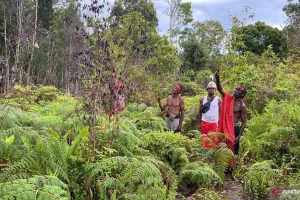
Yance also highlighted the state’s limited role in resolving conflicts between indigenous communities and companies. According to him, the government often allows conflicts to persist without a clear resolution. Land granted to companies often lacks a truly clear legal status. This condition can trigger prolonged agrarian conflicts in many regions.
“Land granted to companies is not clean and clear, which makes it a time bomb for agrarian conflicts that can erupt at any moment,” he said.
In addition, he believes corporate awareness of respecting human rights still needs to be strengthened. In the global context, companies are encouraged to implement Business and Human Rights principles through mechanisms such as Human Rights Due Diligence.
This approach aims to prevent human rights violations in business activities related to natural resource utilization. However, to date, there has been no regulation that explicitly requires companies to implement such policies.
On the other hand, Yance expressed hope that discussions on the Indigenous Peoples Bill would be conducted in a more open and participatory manner. He believes that the House of Representatives (DPR) and the government need to ensure the direct involvement of indigenous communities at every stage of the regulation’s drafting.
According to him, outreach efforts should also reach various regions so that indigenous communities can understand and provide input on the proposed law. Policymakers are also encouraged to present more innovative solutions by learning from the weaknesses of existing regulations.
“From a procedural standpoint, the DPR and the government must ensure meaningful participation in the drafting of the Indigenous Peoples Law so that it truly becomes a breakthrough in empowering indigenous communities to achieve justice and social welfare,” he concluded.
Author: Triya Andriyani
Post-editor: Jasmine Ferdian
Photo: Antara and Public Relations Documentation