


Floods that have struck several regions in Sumatra have left behind landscape damage and increased the vulnerability of affected areas to subsequent disasters. These events underscore the close interconnection between ecological issues and spatial planning in determining regional safety. In such circumstances, evaluating forestry and spatial planning policies becomes an urgent necessity. The post-disaster period offers a critical opportunity to reorganise the relationship among development, forest protection, and community safety.
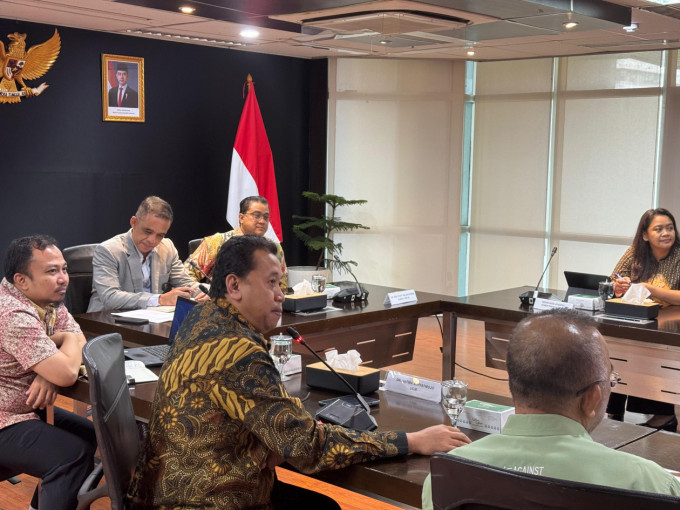
This issue was raised during an inter-ministerial and inter-agency discussion reviewing the direction of development policies, held at the Coordinating Ministry for Infrastructure and Regional Development on Wednesday (Dec. 17), with the participation of an academic from the UGM Faculty of Forestry, Dr. Hatma Suryatmojo.
In the forum, he shared direct perspectives on the interlinkages between permit revocation, forest restoration, and future spatial planning.
“In yesterday’s inter-ministerial and inter-agency discussion, we identified overlapping forest area policies with plantation and mining permits that need to be jointly addressed,” he said on Sunday (Dec. 21).
Dr. Suryatmojo, who is commonly known as Mayong, noted that these findings are closely related to the government’s policy to revoke 22 forest utilisation business permits. This step is viewed as a rapid response to reduce the risk of further disasters, particularly those triggered by extreme climate conditions.
According to him, halting such activities can reduce disturbances to forest ecosystems that have long contributed to landscape changes.
“The revocation can reduce the escalation of damage, but it must be followed by evaluation and monitoring to ensure environmental sustainability and area safety are maintained,” he explained.

However, revoking permits does not automatically resolve the problems of already degraded ecosystems. Post-disaster spatial planning often faces the reality of damaged forests both within and outside designated forest areas.
According to Dr. Mayong, ecosystem recovery must be understood as a shared, cross-sectoral responsibility.
“Restoration is a collective necessity so that area functions can once again support human life and protect downstream regions,” he said.
Dr. Mayong emphasised that when restoration has not yet become the primary foundation, new risks may emerge in former forest utilisation permit areas. Various disaster risk maps are already available and continuously updated by relevant institutions.
The challenge lies in using these data to draft new spatial plans.
“Disaster risk maps should be the main reference in preparing new spatial plans so that vulnerable areas can be promptly restored,” Dr. Mayong stressed.
In such situations, post-disaster policies are often required to move quickly.
According to Dr. Mayong, this rapid response is necessary to prevent further risks, but it must still be followed by more fundamental measures. Reassessing vulnerable areas, strengthening law enforcement, and increasing public awareness are inseparable components.
“Community awareness and preparedness play a crucial role in reducing disaster impacts in high-risk areas,” he noted.
To ensure that rapid responses do not remain merely short-term measures, structural reforms are deemed imperative.
Dr. Mayong highlighted the importance of comprehensively remapping area conditions. Areas that should remain forested need to be promptly restored, while high-risk zones should be avoided for residential development.
“Housing should be kept away from risk-prone areas such as floodplains and river buffer zones,” he asserted.
Policy reforms will lose their significance if they are not accompanied by close oversight during implementation.
Field monitoring, law enforcement, and the strengthening of human resources must be enhanced to ensure effective area protection. The use of technology is also key to ensuring protection efforts are effective and that disaster risks are reduced.
“Good policies must be followed through with thorough supervision and enforcement so that area protection truly works,” Dr. Mayong concluded.
Author: Triya Andriyani
Post-editor: Rajendra Arya
Photographs: Dr. Hatma Suryatmojo