


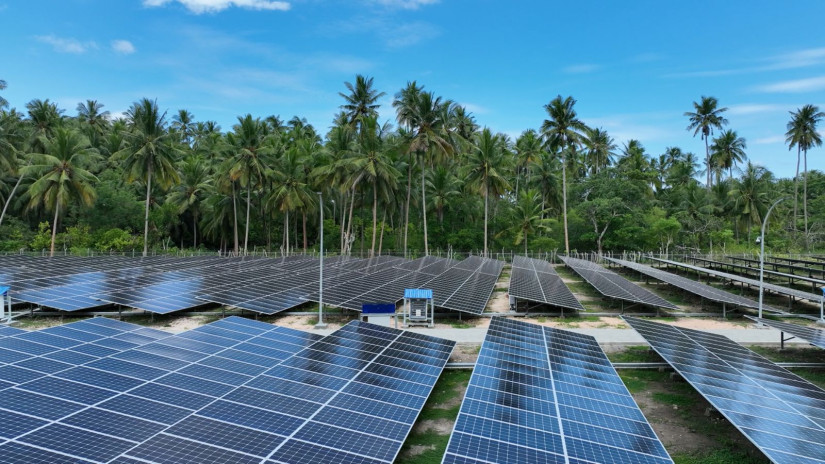
A report from Kementerian Energi dan Sumber Daya Mineral (Ministry of Energy and Mineral Resources/ESDM) states that Indonesia’s new and renewable energy (NRE) mix reached 15.75 percent in 2025. However, this achievement still falls short of the adjusted target of 17–19 percent.
The main contributors include hydropower plants (7,587 MW), bioenergy (3,148 MW), geothermal energy (2,744 MW), and solar power plants (1,494 MW). Solar power capacity growth has been driven largely by private consumer installations, not projects included in the Electricity Supply Business Plan (RUPTL) of Indonesia’s state electricity company PLN.
Ahmad Agus Setiawan, S.T., M.Sc., Ph.D., a lecturer at the Department of Nuclear Engineering and Engineering Physics, Faculty of Engineering Universitas Gadjah Mada (FT UGM), expressed appreciation for the public’s growing awareness of the importance of renewable energy, as reflected in the installation of solar power systems by individuals and companies. Nevertheless, he emphasized that consumers must remain attentive to government regulations and policies to ensure alignment.
“I appreciate that our younger generation has recognized the importance of new and renewable energy, as evidenced by the increasing capacity of privately installed solar power systems,” he said on Friday (Feb. 20).
Regarding the limited addition of solar power capacity from government projects, Dr. Setiawan, who is commonly known as Aas, reminded the government not to focus solely on achieving numerical energy mix targets. Instead, these targets must be accompanied by firm commitment and concrete implementation in the field.
“The government must demonstrate its commitment through tangible execution and greater effort on the ground,” he stated.
According to Aas, developments in renewable energy in neighboring countries should be taken seriously and not overlooked. Such progress can serve as an evaluation benchmark for Indonesia’s renewable energy development.
“We must not misinterpret signals of renewable energy progress in other countries in ways that could disadvantage us,” he said.
Furthermore, Aas stressed the need for consistent government commitment in developing renewable energy and expanding its utilization for consumers and industry. Stronger on-the-ground implementation could potentially attract greater interest and attention from foreign investors.
“We must continue to move forward and develop various technologies, ranging from basic and appropriate technologies to the most advanced innovations,” he emphasized.
Author: Jesi
Editor: Gusti Grehenson
Post–editor: Zabrina Kumara
Photo: pln.co.id