


A team of Universitas Gadjah Mada (UGM) students once again achieved international recognition by winning first place in the prestigious International Student Competition in the Essay category. The competition was organized through an international collaboration involving three countries: Universitas Muhammadiyah Buton (Indonesia), Nueva Ecija University of Science and Technology (NEUST), the Philippines, and Universiti Malaysia Kelantan (UMK), Malaysia, and was held on Jan. 15, 2026.
The competition, which took place from October to November 2025, carried the theme “Voices of Change: Creativity, Innovation, and Humanity for a Sustainable Future,” bringing together innovative ideas to address future sustainability challenges.
In the essay competition, the UGM student team consisting of Pandu Sukma Hastyadi (Chemistry Program), Hanafi Nur Yasin (Chemistry Program), and Thoha Fatahillah (Engineering Physics Program) submitted an essay entitled “Virly (Virtual Reality Chemistry Laboratory): Reimagining the Lab as a Catalyst for Education Equality and Scientific Competitiveness in Southeast Asia.”
Team leader Pandu Sukma Hastyadi explained that the essay was inspired by their concern about persistent disparities in access to science education facilities in developing countries.
The team examined data from the Programme for International Student Assessment (PISA) scores in several ASEAN countries, including Indonesia and the Philippines, which still lag significantly behind developed nations.
According to Hastyadi, this gap is largely due to limited student access to adequate laboratory facilities in schools.
“Many schools in remote areas of Indonesia and neighboring countries do not have chemistry laboratories due to high equipment costs and safety risks. As a result, students only learn theory without hands-on practice, which contributes to low levels of scientific literacy,” he said on Thursday (Jan. 22) at UGM.
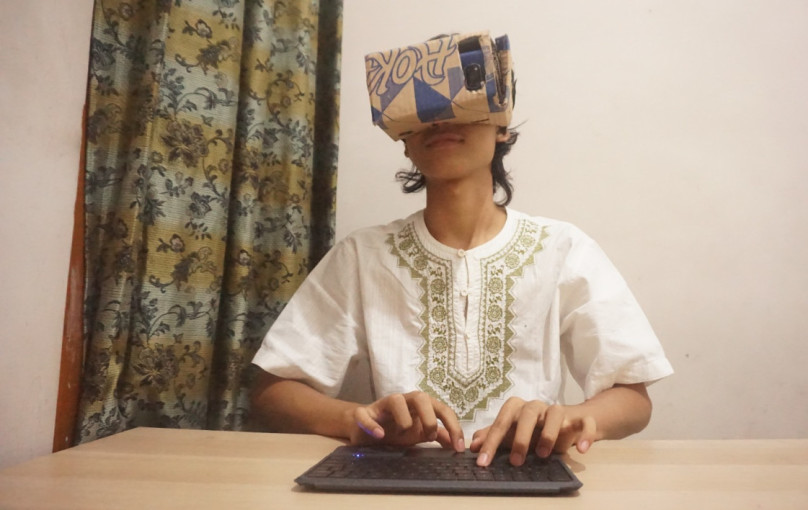
To address this disparity, Hastyadi explained that the team proposed an innovation called Virly, short for Virtual Reality Chemistry Laboratory. The main strengths of Virly lie in its accessibility and sustainability.
The device uses Google Cardboard-based virtual reality (VR) headsets, with lenses made from recycled cardboard waste and used plastic bottles, helping to reduce production costs.
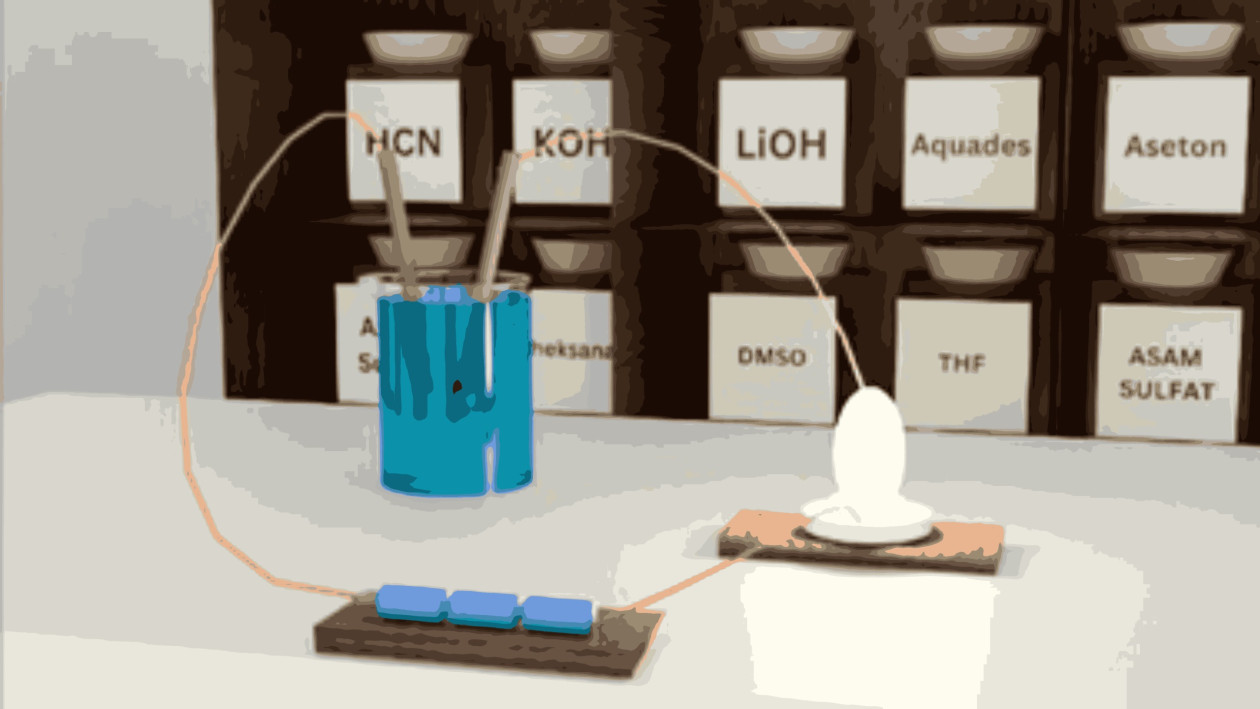
Virly’s production cost is around IDR 15,000 per unit, enabling students in Indonesia to conduct complex chemistry experiments such as titration, distillation, electrolyte testing, and acid-base analysis virtually using Android smartphones and simple controllers.
As a chemistry student, Hastyadi emphasized that sustainable innovation is increasingly essential in today’s modern world.
“Such innovations must be developed optimally while still taking environmental conditions into careful consideration,” he said.
Hanafi Nur Yasin, a team member, expressed hope that Virly would make it easier for students to conduct experiments.
“This innovation is affordable and supports environmental sustainability by utilizing waste materials. Through the application, students can repeat experiments multiple times without the risk of breaking glassware or being exposed to hazardous chemicals,” he explained.
This victory further demonstrates UGM’s ability to compete at the international level. The work aligns with the challenges of the Industrial Revolution 4.0 and Society 5.0 by emphasizing the role of technology as a humane solution to social problems.
The team hopes that the innovation can be further developed so that Virly receives greater attention from education policymakers.
“We hope that Virly can be implemented in real terms to help millions of students across Southeast Asia gain equal access to quality science education, thereby enhancing the region’s competitiveness in the future,” concluded Thoha Fatahillah.
Author: Diyana Khairunnisa
Editor: Gusti Grehenson
Post-editor: Rajendra Arya
Photograph: UGM Virly Team