


The Indonesian government has set an economic growth target of 5.4 percent for 2026. Achieving this target will not be easy amid mounting pressure from economic losses from ecological disasters at the end of 2025, estimated at IDR 68.67 trillion and potentially reducing the national gross domestic product (GDP) by 0.29 percent. Meanwhile, the labor market is currently dominated by informal workers, accounting for 57.8 percent of the 146.54 million-strong labor force.
These challenges are compounded by uncertainty in the investment climate and declining energy supplies, both of which pose serious threats to economic stability.
Such pressures underscore that achieving the economic growth target does not rely solely on macroeconomic stability, but also requires a strong government role in addressing the structural problems faced by the public.
Economics lecturer at the Faculty of Economics and Business, Universitas Gadjah Mada (FEB UGM), Dr. Denni Puspa Purbasari, believes that the 5.4 percent growth target for 2026 will be difficult to achieve due to increasingly limited fiscal and monetary policy space.
This constraint, she said, has become a major obstacle to reaching the government’s targeted growth level, especially as the fiscal burden continues to grow following the impacts of ecological disasters.
According to Dr. Purbasari, global geopolitical uncertainty and the trade policies of major economies such as the United States could also affect national economic stability.
In the financial sector, she noted that bank credit growth, which is projected at only around 9 percent, further limits the momentum for economic expansion in 2026.
“It will be difficult to achieve due to various factors, including disasters in Sumatra, Trump’s tariff policies, and limited structural policies whose implementation has yet to produce a significant impact, all of which are narrowing fiscal and monetary space,” she said in an interview on Monday (Jan. 5).
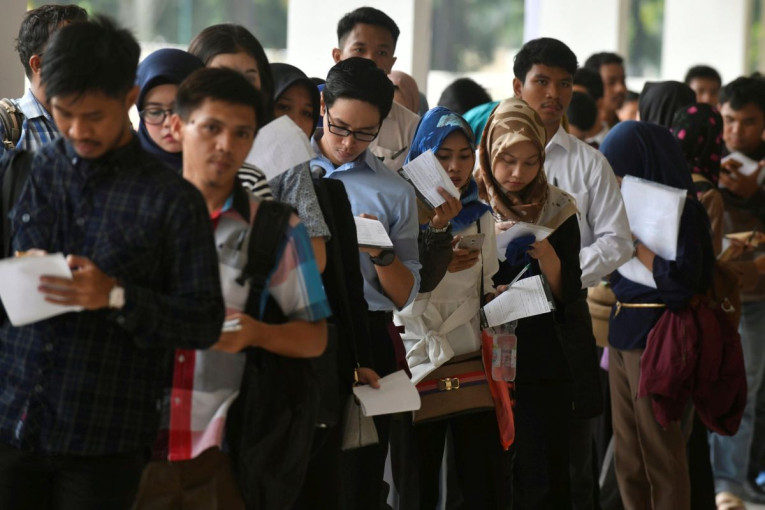
Dr. Purbasari emphasized that the main challenge lies in achieving full employment, which guarantees job availability for the entire labor force. Job creation, she stressed, is the key, as labor is the most fundamental resource inherent to every individual, including vulnerable groups.
However, labor only gains economic value when absorbed into productive employment. Through job creation, people can earn income to meet their basic needs. For this reason, she underscored the need for active government involvement in creating a business climate that stimulates economic activity.
“The government’s task today is to create a healthy business environment so that more enterprises can grow,” she explained.
She further argued that the government must directly create employment opportunities by utilizing available fiscal resources and should not rely solely on market mechanisms to generate jobs organically.
Nevertheless, she cautioned that government intervention must be carefully implemented to avoid budget inefficiencies that could ultimately prove counterproductive.
Job creation, she said, needs to be designed on a national scale to absorb a large number of workers, rather than through narrow programs targeting specific qualifications with limited impact.
“Once the major task is addressed, then we can think about attracting investors to create high-wage jobs. Do not start with the specific before addressing the general. Politically, that is unwise, and technologically, it lacks scale and takes too long to deliver national results. We are talking about tens of millions of workers, not hundreds of thousands,” she explained.
If left unresolved, Dr. Purbasari warned of serious social risks arising from widespread anxiety across age groups due to limited job opportunities.
Fear of unemployment, as well as concerns among those already employed about job security, could reduce purchasing power, leading people to save rather than spend. According to her, this could trigger a downward spiral that leads to prolonged economic slowdown.
Furthermore, she noted that declining incomes could trap households in debt and further undermine public welfare. Therefore, the government must carefully determine policy priorities and ensure consistent implementation to safeguard economic stability.
She stressed that all policies should have clear objectives, accompanied by firm reward and sanction mechanisms.
“What remains is to set priorities, define clear goals, design reward-and-punishment mechanisms, and execute them. Perhaps some private-sector work practices can be adopted,” Dr. Purbasari concluded.
Author: Cyntia Noviana
Editor: Gusti Grehenson
Post-editor: Rajendra Arya
Photograph: Kompas