


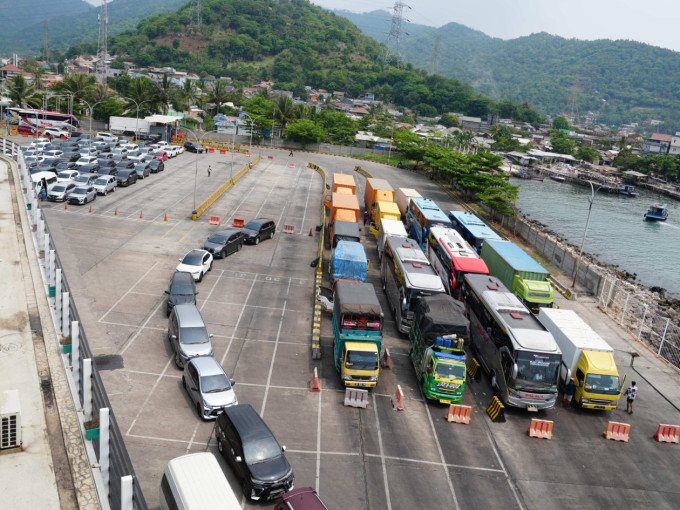
The results of the Public Satisfaction Index Survey on Transportation Services during the 2025 Christmas and 2026 New Year (Nataru) holiday period indicate a very high level of public satisfaction. The survey, conducted by the Center for Transportation and Logistics Studies of Universitas Gadjah Mada (Pustral UGM), shows that the Public Satisfaction Index (PSI) reached 87.43 out of 100, placing it in the “Very Satisfied” category. The survey involved 9,999 respondents across 26 selected provinces, with 90.9% giving positive assessments: 43.9% stating they were “Satisfied” and 47.0% saying they were “Very Satisfied.”
The survey findings were presented by Professor M. Zudhy Irawan, Chair of the Research Team, at the UGM Graduate School (SPs UGM) on Tuesday (Jan. 6).
He explained that the survey captured public perceptions during the period of Dec. 24 to 30, 2025, across six groups of transportation modes: road-based public transport, air transport, railway transport, sea transport, private transport (cars and motorcycles), and river, lake, and ferry transport (ASDP).
The survey employed a stratified multistage sampling method, with final samples drawn by accidental sampling and a 2.5% margin of error. Data collection was carried out at 188 transportation nodes, including rest areas, terminals, ports, train stations, and airports.
Professor Irawan noted that four main aspects served as indicators of public assessment.
First, infrastructure, including physical readiness of roads, terminal buildings, and supporting facilities.
Second, facilities regarding the quality of the public transportation fleets.
Third, transportation management includes the reliability of traffic flow arrangements and departure schedules.
And the last is the policy regarding the firmness and clarity of regulations implemented by the government during the holiday period.
“These results reflect intensive inter-agency coordination in ensuring smooth outbound and return travel flows during Nataru. A focus on improving transportation management and strengthening infrastructure has proven effective in significantly boosting public trust. The achievement of a score of 87.43 is not merely a statistic, but a reflection of hard work and cross-sector collaboration,” he said.

Based on the analysis, the survey results indicate a potential economic impact from population mobility during Nataru amounting to Rp40.29 trillion, consisting of Rp20.32 trillion from the transportation sector and Rp19.98 trillion from non-transportation sectors.
The escalation of this economic impact is predicted based on the total number of travelers during Nataru 2025–2026, which the Ministry of Transportation estimates at 119.5 million people.
Based on these findings, the research team issued improvement recommendations for each transportation mode.
“For road-based public transport, recommendations include improving the quality of fleets and terminals, implementing more adaptive traffic engineering measures (contra flow and one-way systems), optimizing the role and function of Nataru command posts, improving rest area management, and expanding free homecoming programs. For air transport, evaluations of ticket pricing and delay handling are needed, along with optimizing extra flights in terms of routes, timing, and occupancy, as well as strengthening the role and function of airport Nataru command posts,” he explained.
For railway transport, Professor Irawan said policies could be directed toward adjusting discounts and capacity based on demand patterns, adding peak-period services based on data, and strengthening integration of first- and last-mile services.
For sea transport, policy directions include improving the targeting of discounts and free tickets, enhancing port safety and comfort, and optimizing the role and function of Nataru command posts at ports.
Meanwhile, for private transport, improvements are expected in real-time information-based traffic management, the optimization of one-way and contraflow systems, the regulation of freight transport, and the enhancement of travel-supporting facilities.
“For ASDP services, improvements are expected in punctuality and route distribution, passenger comfort on vessels, and the strengthening of digital reservation and queue systems at ports,” he added.
Responding to the survey results, Director of Traffic and Transportation at the Ministry of Transportation, Rudi Irawan, stated that in organizing Nataru operations, the Ministry of Transportation has collaborated closely with stakeholders and related institutions, ensuring that the policies adopted are well-synergized.
Intensive preparations were undertaken to formulate policies that prioritize safety. Four main factors were emphasized: security, safety, synergy, and collaboration, with attention to even minor details to minimize unforeseen risks through early anticipation.
Stakeholders were encouraged to share a common understanding of humanely implementing Nataru policies so the public can better understand and stay informed about them.
“The PSI results serve as a basis for policy improvements at the Ministry of Transportation, with the hope that the index will increase in the coming years. Policies that received lower satisfaction ratings will be improved so their benefits can be felt more optimally by the public,” he said.
Darmaningtyas, a transportation observer, stated that amid declining public purchasing power, the government was, in fact, very well prepared in providing Nataru transportation services this year.
If mobility levels dropped, he said, multiple factors were at play, including the close timing of the Lunar New Year and Eid holidays, as well as unfavorable weather conditions. Therefore, the high level of user satisfaction is understandable, as transportation service capacity was still adequately met.

Public policy observer Agus Pambagio expressed a similar view. He agreed that policies regulating freight transport at ferry crossings need improvement. Safety aspects, particularly in land transportation, must receive greater attention and anticipation.
He also emphasized the need to improve traffic management at rest areas to minimize congestion on toll roads.
According to him, establishing passenger manifests for bus transportation is necessary as a data foundation for policy planning. He expressed concern that the Directorate of Safety within the Directorate General of Land Transportation had been eliminated during this period.
“I believe social media plays a significant role in influencing travelers, which can potentially lead to overestimation of travel volumes,” he said.
Professor of Transportation from the Department of Civil and Environmental Engineering, Faculty of Engineering (FT UGM), Danang Parikesit, assessed that the survey format needs to be standardized to allow annual comparisons of results.
Methodologically, he noted differences between objective-based approaches (performance) and subjective-based approaches (perception), which need to be integrated to produce more comprehensive conclusions.
“For example, whether high-performance achievements truly align with system efficiency. Survey results should also be disaggregated by respondent characteristics and passenger journeys from origin to destination, including touchpoints and pain points, to identify critical travel segments. Perspective surveys and social listening analysis using data mining can also be conducted as part of the verification process. More aggressive media narratives are needed, as not all policies have been fully felt by the public,” he concluded.
Author: Agung Nugroho
Post-editor: Rajendra Arya
Illustration: Majalah Lintas