


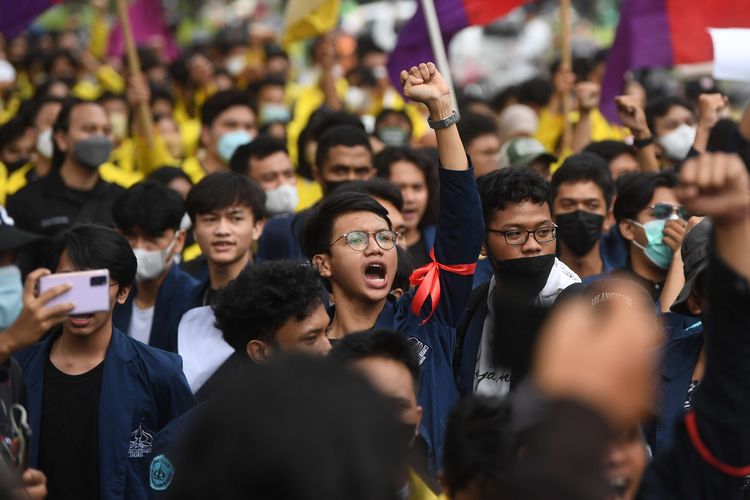
The proposal to hold regional head elections (Pilkada) through the Regional House of Representatives (DPRD) has drawn negative public reaction. The discourse is widely regarded as lacking a strong foundation and benefiting only certain groups. According to a survey conducted by Kompas Research and Development, only 5.6 percent of the public supports the proposal. In contrast, 77.3 percent firmly demand that sovereignty remain directly in the hands of the people.
Dr. Mada Sukmajati, a lecturer at the Department of Politics and Government, Faculty of Social and Political Sciences, Universitas Gadjah Mada (Fisipol UGM), argued that the narrative of high election costs promoted by political parties is an assumptive argument unsupported by scientific data.
He noted that claims suggesting elections via DPRD would be cheaper and reduce political corruption must be openly tested through simulations.
“These narratives and arguments are not supported by data. The arguments put forward by political parties, such as high costs, the assumption that Pilkada through DPRD would prevent political corruption, or that it would synchronize national and regional development plans, are merely assumptions. There is no data and no simulation to support them,” he explained on Monday (Jan. 19).
Dr. Sukmajati further indicated the presence of mens rea, or hidden intent, behind the closed-door election mechanism. He views the proposal as a systematic effort to entrench the power of certain groups.
“I believe the public is also suspicious. The mens rea behind this idea is to strengthen oligarchy and a cartel-like political system, including an attempt to recentralize development planning,” Dr. Sukmajati said.
Rejecting the cost-efficiency argument, Dr. Sukmajati presented findings from a collaborative study conducted by the Department of Government (DPP), Fisipol UGM, KITLV Leiden, and the University of Ahmedabad on campaign financing in the 2024 regional elections.
He revealed that data from 14 regencies/cities and seven provinces showed that political dowries paid by candidates to secure nomination tickets accounted for around 10 percent of campaign expenditures. Meanwhile, vote-buying allocations reached 26 percent.
“From these data, we can see that even under direct elections, candidates already allocate around 10 percent for political dowries. If elections are conducted through DPRD, the question is whether the proportion of political dowries would actually increase,” Dr. Sukmajati asked rhetorically.
Furthermore, Dr. Sukmajati expressed concern that elections conducted through DPRD would not eliminate illicit political costs, but merely shift the point of transaction.
“Rather than disappearing, allocations for vote buying may instead be redirected toward political dowries or to purchasing support during the election process within the DPRD,” he added.
Beyond cost-related issues, Dr. Sukmajati also warned of serious consequences for the quality of local democracy that could stifle the political careers of younger generations and marginalized groups.
“When regional heads are elected through DPRD, they effectively become subordinate to the council. Opportunities for young people, marginalized communities, or even ordinary citizens become extremely limited, as competition is confined to elite circles,” he said.
As an alternative, Dr. Sukmajati proposed more progressive solutions than reverting to an old system. He emphasized the importance of improving governance rather than overhauling the electoral mechanism entirely.
“The solution lies in strengthening campaign finance mechanisms to ensure transparency and accountability. Another option is to implement asymmetric direct regional elections, although the indicators for this approach still need to be carefully developed,” Dr. Sukmajati concluded.
Author: Aldi Firmansyah
Editor: Gusti Grehenson
Post-editor: Rajendra Arya
Photograph: Radar Sriwijaya