


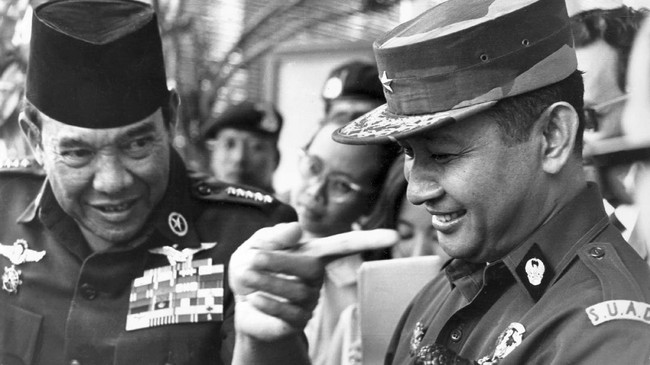
Sixty years have passed since the issuance of the March 11 Order (Supersemar), which marked the beginning of the New Order regime. To this day, numerous speculations and issues continue to circulate among the public regarding the existence of this presidential order, including the whereabouts of the original Supersemar document and various unverified theories, such as claims that President Soekarno was pressured into issuing the order at the time.
A historian from Universitas Gadjah Mada (UGM), Dr. Sri Margana, explained that Supersemar initially emerged in response to the political turmoil of 1965. The letter contained instructions to secure the country’s situation, which was considered highly critical at the time. This was even acknowledged by President Soekarno in his speech on August 17, 1966. In the speech, Soekarno expressed gratitude to Soeharto for carrying out the order well, but he also stated that its implementation had gone too far.
“However, he noted that the execution of the order had gone beyond its intended limits. It was then interpreted as a kind of transfer of power from Soekarno to Soeharto,” Margana said on Wednesday (Mar. 11) at the Soegondo Building of the UGM Faculty of Cultural Sciences (UGM).
According to Margana, Soekarno’s statement that the implementation went too far referred to Soeharto’s actions in issuing the order to dissolve the Indonesian Communist Party (PKI) and to arrest 15 ministers. Soekarno considered these actions to have exceeded the mandate of maintaining national security.
“In fact, it was not within the authority of a military officer to dissolve a political party. That authority belonged to the President. Therefore, it was regarded as an excessive action,” he explained.
Furthermore, the differing interpretations of the presidential order that led to the banning and dissolution of the Indonesian Communist Party angered Soekarno. His reaction created the impression that he was sympathetic to the PKI. At a time when Indonesia was filled with public hostility toward the PKI following the G30S/PKI incident, Soekarno began to be associated with the event.
Shortly afterward, the People’s Consultative Assembly (MPRS), chaired by Abdul Haris Nasution, rejected President Soekarno’s accountability speech in 1967.
“Because the accountability speech was rejected, Soekarno had to end his presidency. This marked a transition of power in which Soeharto was appointed as his successor in 1968,” Margana said, explaining the shift from the Old Order to the New Order.
Regarding the public controversy over the authenticity of the order, Margana stated that among historians themselves, the March 11 Order remains controversial because the original manuscript has never been found. This is further complicated by the existence of three different versions of the order, each containing variations in content. These three versions came from the State Secretariat, the Indonesian Army Information Center, and the Akademi Bangsa Foundation, which are currently preserved at the National Archives of the Republic of Indonesia.
“Because the original archive is missing, it has generated many interpretations. Historians have begun to question it, and new theories have even emerged suggesting that the drafting of the March 11 Order involved elements of coercion,” he explained.
According to Margana, however, this issue has not yet been verified. He emphasized that there is no authentic evidence or personal testimony from the figures involved, meaning that existing claims remain interpretations.
Despite the controversies, Margana believes the Supersemar episode can serve as a reflection on current governance conditions. He warned that political instability or political chaos should be anticipated. In recent times, public unrest, demonstrations, and dissatisfaction with government policies on domestic and foreign issues have been increasingly evident.
“In chaotic situations like this, similar patterns may appear and could be exploited for power seizures and other political maneuvers. That possibility always exists,” he said.
He added that lessons from Supersemar suggest the government must respond to public voices, intellectual perspectives, community leaders, and policy criticisms to prevent chaos and the erosion of governmental legitimacy.
“If the public ultimately loses trust in the state, it may lead to various possibilities, including infiltration, exploitation, or even repressive decisions,” he added.
Margana further noted that since the event has passed and now belongs to history, one that has generated multiple interpretations, the state bears responsibility for resolving this historiographical problem to prevent continued uncertainty about the truth of the past.
According to him, history must be properly managed, and the National Archives, as the institution with the greatest authority over state archival records, should take further steps to locate the original Supersemar document. Doing so would clarify whether the order truly represented a transfer of power, as interpreted by historians during the Soeharto era, or merely an instruction to stabilize the political situation that was later implemented excessively.
“Another interpretation suggests that Soeharto may have taken advantage of the order and misused it to gain access to power,” he explained.
He also reminded the public to read history critically and carefully. In particular, many historical narratives written during the New Order era were heavily shaped by political engineering. The state maintained a single dominant interpretation of history during that period, and therefore, such narratives must be reassessed and critically evaluated. Moreover, alternative interpretations of the event have now emerged, supported by testimonies and available audio and video documentation.
“Soekarno’s own statement on August 17, 1966, can serve as a starting point to reexamine Supersemar, whether it was truly a transfer of power or a presidential order that was later misused by Soeharto,” he concluded.
Author: Leony
Editor: Gusti Grehenson
Post-editor: Rajendra Arya
Photo: AFP Photo/Panasia