


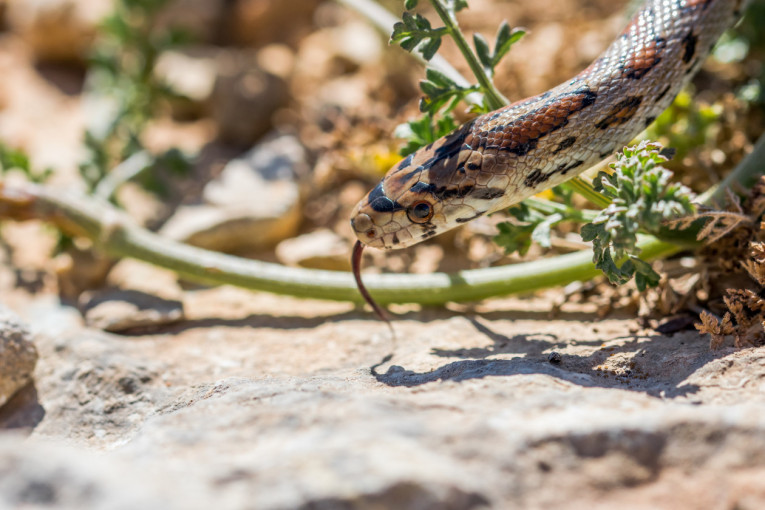
Indonesia is recorded as having the third-highest number of snake species in the world, with 376 species. The high number of species increases the risk of snakebites, and as of October 2025, 8,721 cases with 25 deaths have been reported.
Amid the crisis in antivenom availability, a breakthrough involving llama and alpaca antibodies has emerged, offering promising support for medical treatment. This innovation aligns with domestic research initiatives now advancing modern antivenom development and the characterization of local snake venom, thereby strengthening Indonesia’s readiness to address snakebite threats.
Lecturer at the UGM Faculty of Biology (Biology UGM), Donan Satria Yudha, explained that these research advancements demonstrate researchers’ ability to utilize organisms, including animals, as sources of health solutions.
He noted that antibodies derived from llamas and alpacas have been shown to be effective in supporting the recovery of venomous snakebite victims.
“The research findings show that snakebite accidents are no longer a neglected disease, as more researchers are now concerned and developing highly effective antivenom,” he said on Friday (Nov. 14).
However, Yudha stated that the development of antivenom serum in Indonesia remains limited.
Significant progress has been seen only over the past three years through research initiatives by BRIN, the Ministry of Health, and various universities.
Indonesia currently has only one polyvalent antivenom, underscoring the need for a product capable of treating bites from multiple venomous snake species.
At UGM, Yudha mentioned the existence of a Venom Research Group composed of lecturers from various faculties that has completed venom characterization (profiling venom) research on the Javan spitting cobra (Naja sputatrix).
“That research has been completed and will be continued with other venomous snake species,” he explained.
Another challenge in developing antivenom serum stems from Indonesia’s archipelagic geography.
Each region has different venomous snake species, making it difficult to determine a serum composition suitable for all areas.
In addition, snake farm facilities that have yet to meet international standards hinder the availability of stable venom supplies needed for research.
In managing venomous snakebite cases, Yudha emphasized the importance of immobilizing the affected area to limit movement.
He added that the pressure pad method can be applied as first aid in emergencies.
He noted that keeping the victim calm is also crucial to prevent the venom from spreading more rapidly through the body.
“After that, the victim should be taken to the hospital immediately for treatment,” he said.
The llama and alpaca antibody breakthrough, which can target 17 snake species, is considered a promising development for the research and health sectors.
Yudha hopes the innovation can be developed for mass production, particularly in countries with high snakebite mortality rates, including Indonesia.
“I hope this innovation can be mass-produced and accessible to our communities, especially farmers, field workers, and people working in forests,” he concluded.
Author: Cyntia Noviana
Editor: Triya Andriyani
Post-editor: Lintang Andwyna
Illustration: Freepik