


The long Eid al-Fitr holiday in 2026 is projected to mark the peak of domestic tourist movement. This surge is characterized by a significant increase in visits to local tourist destinations, creating opportunities for regional economic distribution. The movement of domestic tourists is expected to be felt in nearly all regions of Indonesia.
The Special Region of Yogyakarta remains a favorite destination for those traveling during the Eid homecoming period. Those entering Yogyakarta are not solely homecoming travelers but also tourists. A survey by the Ministry of Transportation estimates that 8.2 million people will travel in Yogyakarta during the 2026 Eid holiday period. This figure reflects a high level of mobility compared to the region’s population of only around 3.7–3.8 million people.
Dr. Destha Titi Raharjana, a researcher at the UGM Center for Tourism Studies, estimates that tourist visits to Yogyakarta will reach approximately 1.46 million, with Yogyakarta City and Sleman being the most visited areas.
“This year, there is an increase likely driven by toll road access that is getting closer to the city center, including the northern route via Tempel and the eastern route via Prambanan,” he said at UGM Campus on Tuesday (Mar. 17).

Destha predicts that the peak arrival flow will occur between three days before Eid, while the peak of tourist visits is expected around March 22, 2026. With the surge in tourist numbers, he highlighted environmental concerns and the importance of responsible tourism commitments. According to him, the influx of 8.2 million people will bring significant environmental burdens. Therefore, he urged destination managers and tourists to strengthen Yogyakarta’s commitment to responsible tourism.
“The nostalgia-driven euphoria in Yogyakarta should not leave behind waste problems that damage the city’s aesthetic image. It is important to consider the environmental impact of this visitor surge. We must ensure that the increase in tourist numbers does not result in a spike in waste volume in crowded areas,” he emphasized.
Destha acknowledged that Yogyakarta remains a major tourist destination during the Eid holiday. The region offers a wide range of alternative tourism options accessible to visitors. Improved transportation connectivity, particularly the Trans-Java Toll Road, has made access easier for those traveling by land. Several areas in Yogyakarta also offer culinary options at relatively affordable prices.
“Yogyakarta is known as an affordable tourist destination. It also holds countless memories for those who have studied or worked in the city. The Eid holiday is certainly a moment for nostalgia,” he explained.
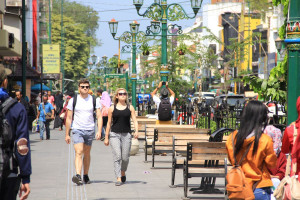
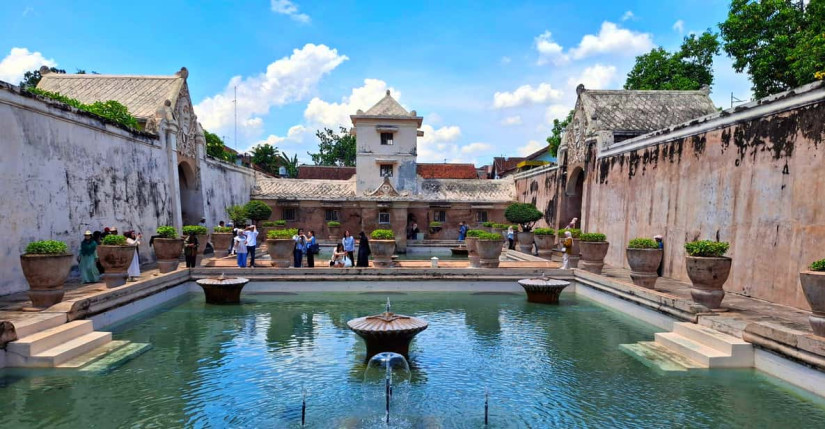
He added that several conventional attractions, such as Malioboro, the Zero Kilometer Point, the Tugu area and its surroundings, the Yogyakarta Palace, Tamansari, and several coastal areas in Bantul Regency, will remain crowded with visitors. In addition, some areas in Gunungkidul that have recently gained popularity for their Instagrammable attractions are also expected to attract tourists.
“Likewise, tourism villages with homestays, including those in Bantul, Sleman, and Kulon Progo, have the potential to attract visitors, whether for their attractions or village-based activity packages,” he said.
Despite the significant increase in tourist numbers in Yogyakarta, Destha believes this may not necessarily translate into high tourist spending. From an economic behavior perspective, he noted that tourists are likely to be more selective in their spending.
Given the current situation, he suggests that visitors may have relatively low purchasing power. Many may opt for free tourism activities, such as visiting public spaces, staying in budget hotels or homestays, and taking one-day trips.
“In essence, tourists this year appear to be more selective in spending, although some may still spend generously on food and beverages, as well as souvenirs,” he concluded.
Author: Agung Nugroho
Post-editor: Jasmine Ferdian
Photos: GetYourGuide & Travel Kompas