


Deep vein thrombosis (DVT) is a condition characterized by the formation of blood clots in deep veins, often developing without clinical recognition. In its early stages, this condition often presents with no distinctive symptoms, leading to delayed diagnosis until complications arise. In many healthcare facilities, DVT cases show patients experiencing shortness of breath or life-threatening pulmonary embolism. Limited awareness of the early signs of DVT contributes to high complication rates across various age groups.
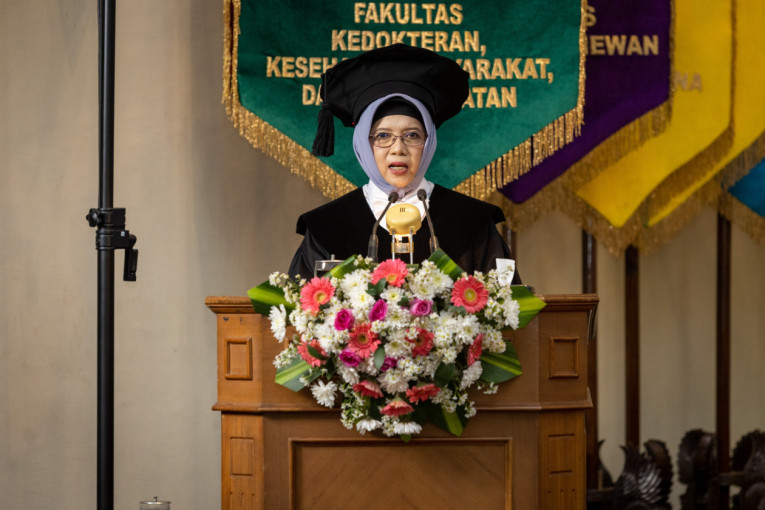
“Pulmonary embolism is an extremely dangerous complication that leads to sudden death, often referred to as a silent killer,” explained Professor Usi Sukorini from the Faculty of Medicine, Public Health, and Nursing (FK-KMK UGM), during her inaugural address as a Professor in Clinical Pathology and Laboratory Medicine, held on Tuesday (Jan. 27) at the UGM Senate Hall.
In her speech “Laboratory Examinations: The Key to Unraveling the Mystery of Deep Vein Thrombosis in Indonesia,” Professor Sukorini highlighted the major challenge posed by thrombotic diseases that are frequently detected too late.
This issue has wide-ranging implications, not only clinically but also socially and within the national healthcare system.
According to Professor Sukorini, the incidence of DVT in Indonesia is still estimated to be very high, although comprehensive data remain limited. This phenomenon reflects an information gap between clinical practice and public awareness of thrombotic diseases.
She explained that many patients and healthcare workers have yet to fully recognize the importance of early identification of risk factors and initial signs of DVT. Moreover, this condition often occurs in patients with a history of immobilization, post-surgical procedures, or blood-clotting disorders.
“Most DVT cases in Indonesia are discovered incidentally or only diagnosed after complications such as pulmonary embolism have developed,” said Professor Sukorini.

Furthermore, DVT risk factors are multifactorial and can be influenced by both genetic and environmental conditions. Patients undergoing intensive hospital care or experiencing prolonged activity limitations face a higher risk of developing DVT.
Professor Sukorini emphasized that, given the complexity of these risk factors, a comprehensive clinical approach is essential for identifying and preventing DVT.
“Venous thromboembolism is largely a preventable disease if its risk factors are recognized early,” she asserted.
Professor Sukorini noted that the impact of DVT extends beyond the patient’s clinical condition, affecting broader socioeconomic aspects. Patients who experience DVT and its complications often face long-term healthcare costs and activity limitations that reduce their quality of life.
This situation inevitably affects the productivity of patients’ families and communities. Limited public education regarding this disease further compounds the challenges of effective prevention.
“The impact of DVT is substantial, not only medically but also economically, psychologically, and socially,” Professor Sukorini stated.
She also expressed concern that public awareness of DVT remains relatively low compared to other cardiovascular diseases, such as heart attacks or strokes. Many individuals underestimate early symptoms and are reluctant to seek medical consultation at an early stage.
In fact, early recognition of DVT signs can significantly reduce the risk of fatal complications. Public education and cross-sector collaboration within the healthcare system are, therefore, key to prevention efforts.
“Many patients do not recognize early symptoms of DVT, such as swelling or pain in the legs, resulting in diagnoses that often come too late,” she explained.
The inaugural address delivered by Professor Sukorini demonstrated that DVT is an urgent health challenge in Indonesia, yet early prevention and laboratory testing can alter the course of the disease.
The roles of healthcare professionals, academics, and stakeholders are crucial in enhancing awareness and early detection. Through research and health education, UGM remains committed to strengthening the national healthcare system.
“This condition, which has wide-ranging impacts, can in fact be prevented and effectively managed through early detection and appropriate preventive strategies,” she concluded.
Rector of UGM, Professor Ova Emilia, stated that Professor Usi Sukorini is one of 559 active professors at UGM. Within FK-KMK UGM, she is among 74 active professors out of a total of 104 professors at the faculty.
Author: Triya Andriyani
Post-editor: Jasmine Ferdian
Photographer: Donnie Trisfian