


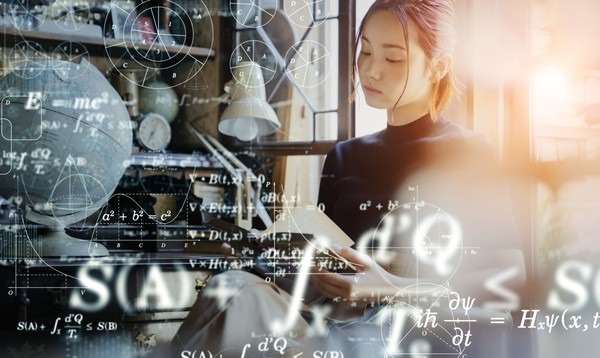
The fields of science, technology, engineering, and mathematics (STEM) remain widely viewed as male-dominated. In 2020, UNESCO, citing the International Labour Organization, reported that only 37 percent of Indonesian women work in STEM sectors. This contrasts with the health and education fields, where women hold a dominant presence. These figures highlight a significant gender gap that persists across education and career pathways.
UGM anthropologist, Dr. Suzie Handajani, stated that such stereotypes reflect a form of social construction that can, in fact, be changed.
“If gender is created by humans, then humans can change it,” Dr. Handajani said on Wednesday (Nov. 12).
She linked this issue to historical patterns in which women’s contributions to scientific knowledge have often been overshadowed by men. In reality, many crucial discoveries were made by women, including Katalin Karikó, the scientist behind the development of the mRNA COVID-19 vaccine, one of the most significant breakthroughs in modern medicine.
Dr. Handajani further highlighted Kartini’s historical strategy of establishing schools for women as a means of strengthening growth opportunities for minority female groups. She noted research showing that women tend to perform better academically when learning in all-female environments.
Women’s communities today, she said, must continue to uplift one another. She pointed to organizations such as WISE (Women in Science and Engineering), which serve as gathering spaces for women in science.
“These communities are not about isolating themselves, but about strategically building strength. It is not about being sexist, but about providing a space where women can share their experiences and support one another,” she explained.
Beyond community support, Dr. Handajani emphasized the potential of social media to counter stereotypes. Rather than being a cause of declining interest among women in STEM, she sees social media as a space for empowerment.
This platform enables creative expression, making the lesser-known aspects of STEM fields more visible. She envisioned creative channels such as “girls in chemical engineering” or “student moms in STEM” that showcase daily life, humor, and the realities women face in these disciplines.
In this way, she said, future female students may feel a sense of emotional connection and be less intimidated about pursuing careers in fields still dominated by men.
“They won’t see it as something to fear at the beginning, because through social media, they might feel like they already have peers there,” Dr. Handajani added.
Beyond media as a source of inspiration, she also referred to the novel and film “Lessons in Chemistry”, which tells the story of a woman scientist navigating the field of chemistry. She noted that works like these underscore that the struggles faced by women in STEM are not confined to Indonesia, but are experienced globally.
Representation in the media, she emphasized, is crucial for helping future women scientists find role models and realize that their aspirations are achievable.
“They need female role models. From there, they might gain the motivation to see that these challenges are experienced by many people across countries,” she said.
Dr. Handajani concluded with a message to the younger generation, especially women who may be uncertain about their career paths.
She stated that having many options should not be seen as confusing, but empowering. Moreover, domestic activities are increasingly intertwined with STEM fields; for example, kitchen work involves chemistry and physics.
“Most technologies are designed for women. So women should also be among those creating them,” she said.
Author: Hanifah
Editor: Gusti Grehenson
Post-editor: Rajendra Arya
Illustration: Detik.com