


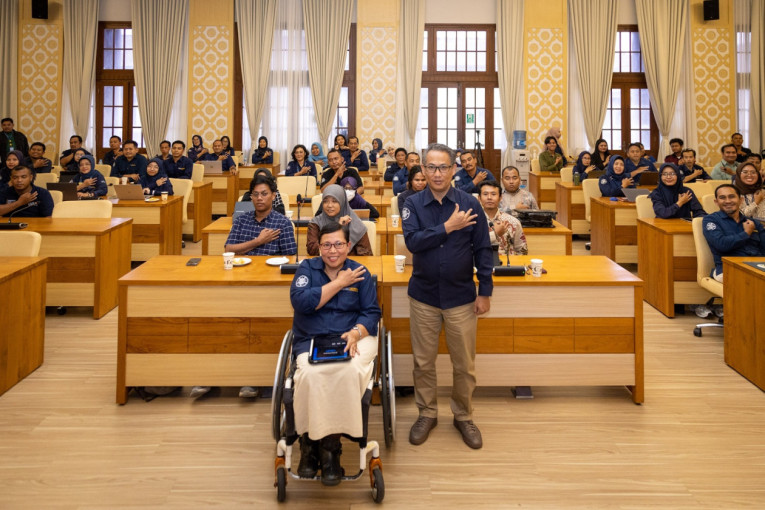
Universitas Gadjah Mada (UGM) continues to reinforce its commitment to becoming an inclusive campus for all members of its academic community, including persons with disabilities. To build a society that is inclusive and accessible for everyone, UGM’s academic community must understand and support persons with disabilities on campus. Such understanding and support can be demonstrated through greater empathy and awareness of appropriate etiquette when assisting.
“Understanding, knowledge, sensitivity, and skills are absolutely necessary. We are expected to be able to interact with and serve persons with disabilities so that we can deliver inclusive services,” said Dr. Wuri Handayani, together with the UGM Disability Services Unit Team while speaking at the “Disability Awareness Training: Creating an Equal and Inclusive Environment”, held in Multimedia Room 1, 3rd Floor, UGM Central Office, on Wednesday (Nov. 19).
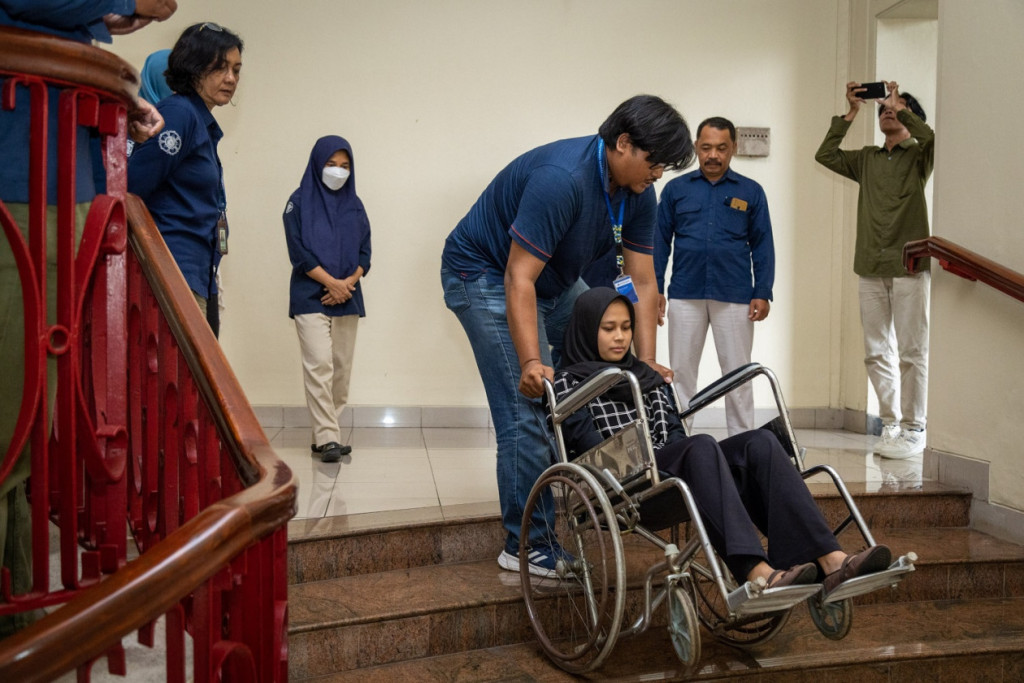
Delivering the training material, Dr. Handayani invited participants to read Law No. 8 of 2016 as a fundamental reference to understand the status of persons with disabilities. The law defines persons with disabilities as individuals who experience long-term physical, intellectual, mental, and/or sensory limitations.
They are identified as persons with disabilities because, in interacting with their environment, they encounter barriers that prevent them from participating fully and effectively on an equal basis with others.
Dr. Handayani explained that the conditions experienced by persons with disabilities today are highly diverse. They are grouped into four main categories: physical, sensory, mental, and intellectual disabilities.
The high number of persons with disabilities is attributed to both visible and invisible disabilities. In several countries, such as the United Kingdom, chronic illnesses such as cancer or diabetes are also classified as disabilities.
“Many people are also unaware that conditions such as stroke, autism, ADHD, and neurodivergence fall within the disability spectrum,” she added.
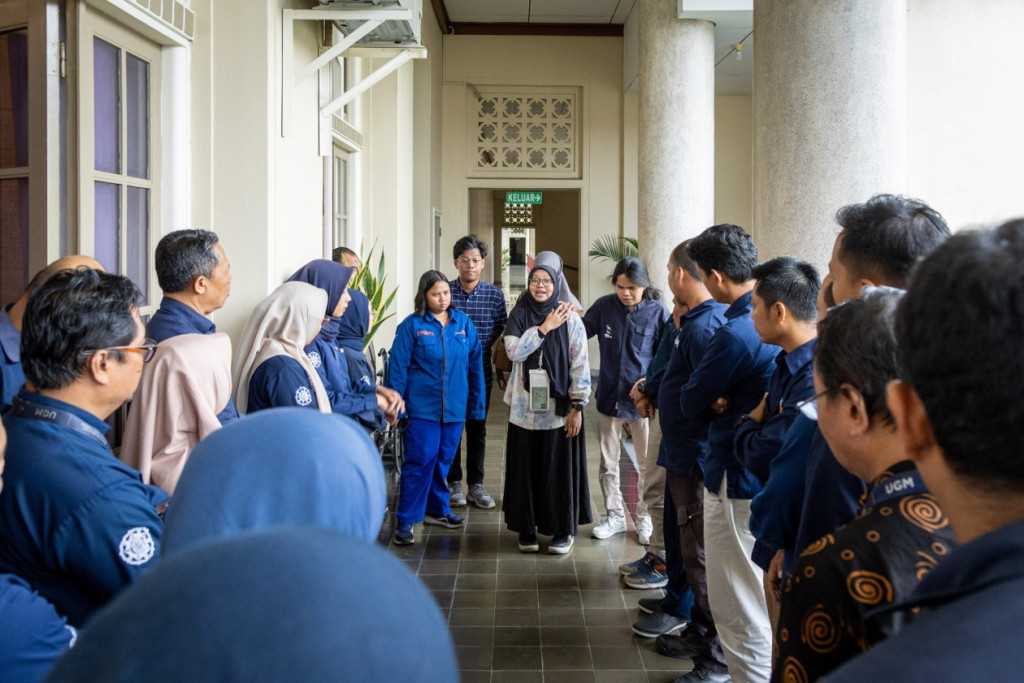
Therefore, Dr. Handayani stated that the organization of the “Disability Awareness Training: Creating an Equal and Inclusive Environment” serves as a reminder that diversity is an inherent part of campus life that must be harmonized.
“Through improved education and awareness, UGM is expected to continue building an environment that is welcoming to everyone, while ensuring that campus services become increasingly inclusive, grounded in equality, and oriented toward fulfilling the rights of every individual,” she emphasized.
For the University Secretary, Dr. Andi Sandi Antonius Tabusassa Tonralipu, disability service training has long been a part of daily service practices at UGM. However, he acknowledged that this particular training focuses on deepening understanding of the best ways to serve and interact with friends with disabilities.
“This is about how we treat everyone on an equal footing. Therefore, I would also like to appreciate all work units that continue to improve infrastructure and services, even though we recognize that not all campus facilities are yet perfect,” Dr. Tonralipu said.
Author: Kezia Dwina Nathania
Editor: Agung Nugroho
Post-editor: Rajendra Arya
Photographer: Donnie Trisfian