


A lecturer at the Department of History, Faculty of Cultural Sciences, Universitas Gadjah Mada (FIB UGM), Professor Agus Suwignyo, was invited as a guest professor at Royal Holloway, University of London (RHUL) from Jan. 28 to Feb. 19, 2026. RHUL is among the top 50 universities in the United Kingdom and is ranked among the world’s top 400 universities based on the Times Higher Education World University Rankings 2026.
During his three-week stay in the United Kingdom, Professor Agus conducted academic and research activities, including teaching and collaborating with Dr. Simone Gigliotti, a colleague from the Department of History at RHUL, on research and publications. He also had the opportunity to deliver lectures at two institutions, RHUL and the Royal Asiatic Society, discussing the history of environmental education in Indonesia. The materials he presented were drawn from his research conducted over the past three years.
Professor Agus said that the wide range of environmental issues in Indonesia has given rise to diverse models of environmental education. Based on his identification, there have been 462 environmental cases recorded over a 74-year period from 1950 to 2024.
These cases are classified into six forms of education: ghost stories, folktales, and myths; religious rituals and ceremonies; reflections and public opinions about disasters; movements, activism, and reforestation programs; community leadership and action initiatives; and cultural performances and literary works.
“Various forms of environmental education emerge from environmental issues that develop within society. Therefore, each program has different target audiences,” he said in a statement sent to reporters on Monday (Mar. 9).
According to Professor Agus, Indonesia faces very serious environmental challenges due to constantly shifting environmental politics.
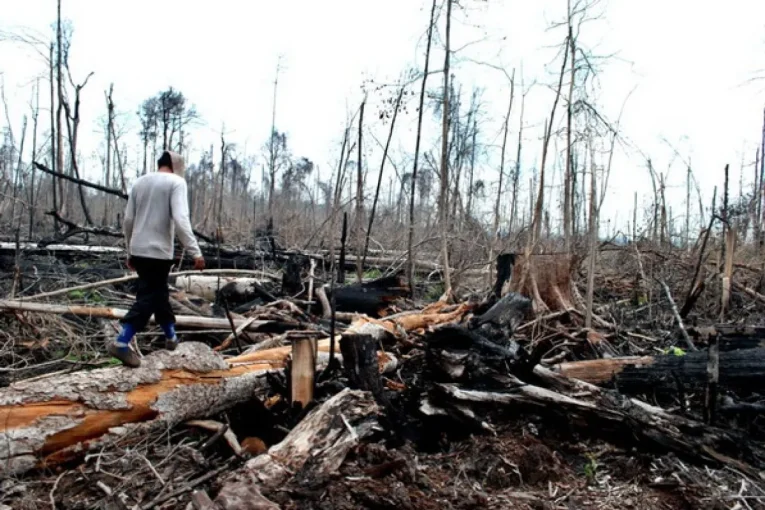
“The main sources of environmental problems in Indonesia are deforestation and poor waste management,” he said.
For Professor Agus, the development of environmental problems in the past has also influenced the variety of environmental education models. Along with changing times and technological advancements, the influence of some of these educational forms on environmental awareness has declined. He emphasized the importance of developing environmentally contextualized, current-era relevant, and socially targeted environmental education.
“The government can build the synergy by strengthening community-based environmental education initiatives that already exist within society,” he stressed.
Author: Jesi
Editor: Gusti Grehenson
Post-editor: Jasmine Ferdian
Photo: Antara