


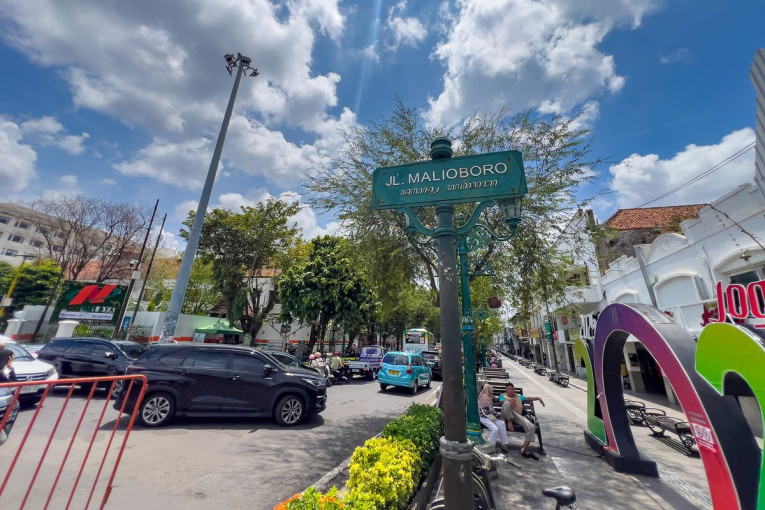
Yogyakarta was once again crowded with tourists during the Christmas and New Year holidays, with visitor numbers reaching millions within a short period. Tourist flows were visible across the city center, cultural destinations, and residential areas next to tourist sites. While tourism activity provides a significant economic boost, it also introduces new pressures on urban life. This situation turns the year-end holiday period into a real test for a tourism city long known for its hospitality and inclusivity.
UGM sociologist Dr. Arie Sujito stated that the surge in tourists reflects Yogyakarta’s growing appeal as a national tourism destination. Rapid economic activity was felt across the trade, service, and small-business sectors that rely on tourism.
At the same time, however, the density of visitors brings considerable social consequences for communities living around tourist areas.
“This space is often seen as a positive opportunity, but the challenges are real, ranging from traffic congestion and increasingly dense social interactions to environmental risks that must be addressed collectively,” he said on Wednesday (Dec. 31).
The impact of overcrowding is felt most strongly by residents who must carry out daily activities amid the surge in tourist mobility. Congested roads and longer travel times become recurring experiences during every holiday season. This condition creates discomfort, particularly for communities living in densely populated areas and those who depend on daily mobility.
“For residents themselves, this density makes going out uncomfortable because traffic congestion appears at almost every point,” Dr. Sujito explained.
Pressure from overcrowding also affects public spaces that serve as meeting points for residents and visitors alike. Open spaces increasingly lose their function when they are simultaneously filled with tourism-related activities. This situation is further exacerbated by waste management issues, which are a serious consequence of the growing population in urban areas.
“The capacity to manage waste and to build a culture of maintaining environmental cleanliness is imperative, because tourism should not be viewed solely from the perspective of economic revenue,” he said.
From an economic standpoint, Dr. Sujito acknowledged that the benefits of tourism are widely felt, yet their distribution requires careful attention. Tourism activity does stimulate micro, small, and medium enterprises (MSMEs), homestays, and other service sectors, but the potential for inequality remains.
When profits are concentrated among large capital owners, social tensions may emerge at the local level.
“Large businesses should help empower local entrepreneurs so that benefits are more evenly distributed and do not trigger social jealousy,” Dr. Sujito emphasized.
According to him, the role of government is crucial in maintaining a balance between tourism growth and residents’ quality of life. Urban planning needs to treat tourism density as a medium- to long-term issue rather than merely a seasonal phenomenon. Cooperation between the city and surrounding regencies is considered essential to more equitably manage spatial planning and mobility.
“Policy design at the provincial level and cross-regional collaboration are needed so that the city can develop with an environmentally friendly and humane vision,” he noted.
If tourism surges, as during the Christmas–New Year holidays, and such surges recur, Dr. Sujito warned of the importance of anticipating social risks early. Tensions between residents and visitors may arise when density is poorly managed.
Maintaining urban comfort requires collective discipline and shared concern for living spaces.
“A comfortable, safe, and humane Yogyakarta is a shared responsibility so that the city’s civility can be preserved,” he concluded.
Author: Triya Andriyani
Post-editor: Rajendra Arya
Photograph: Kompas