



Universitas Gadjah Mada (UGM), in collaboration with the University of Nottingham, United Kingdom, conducted a survey involving 59 lecturers with disabilities from 26 public and private universities across Indonesia.
The survey findings reveal that nearly all campuses are still not disability-friendly for lecturers with disabilities. Many of the campuses where they work remain far from inclusive. Various campus facilities still feature steep staircases without elevators, narrow restrooms, and multi-story buildings that are inaccessible to wheelchair users.
There are also stories of visually impaired lecturers who were unable to complete administrative forms or performance reports because screen readers could not read the applications. In addition, lecturers with hearing impairments reported feeling alienated during departmental meetings because they could not understand the discussions, gradually leading them to withdraw.
Chair of the UGM Disability Services Unit (ULD UGM) and Head of the Research Team, Dr. Wuri Handayani, stated that the survey found many lecturers with disabilities experience excessive anxiety, fluctuating moods, and cognitive fatigue.
“This condition is not due to a lack of motivation, but because their energy is drained by having to overcome environmental barriers even before they begin teaching,” said Dr. Handayani at UGM on Tuesday (Feb. 10).
According to Dr. Handayani, the lack of disability-friendly campus environments significantly affects productivity and academic career progression. Many lecturers with disabilities experience reduced self-confidence and feel left behind compared to colleagues whose bodies are considered “normal.”
“In the end, they become afraid to aspire to higher academic positions and hesitate to pursue doctoral studies,” she said.
She further explained that non-inclusive campus environments create obstacles for lecturers in meeting the demands of teaching, research, and community service. In the classroom, for example, lecturers with mobility or speech impairments often experience severe anxiety when facing large classes.
Sudden changes in teaching schedules can also force lecturers with disabilities to completely rearrange transportation and assistance plans that were carefully prepared in advance. The situation becomes even more challenging when they are required to attend out-of-town conferences. Events that should serve as platforms to showcase academic work can instead turn into logistical nightmares.
“They have to think hard and ask: How will the transportation work? Is the accommodation wheelchair-accessible? Who will assist? These questions often lead them to withdraw. Not to mention research grant applications with extremely complex and frequently inaccessible forms. As a result, many brilliant ideas are buried simply because of rigid bureaucracy,” Dr. Handayani explained.
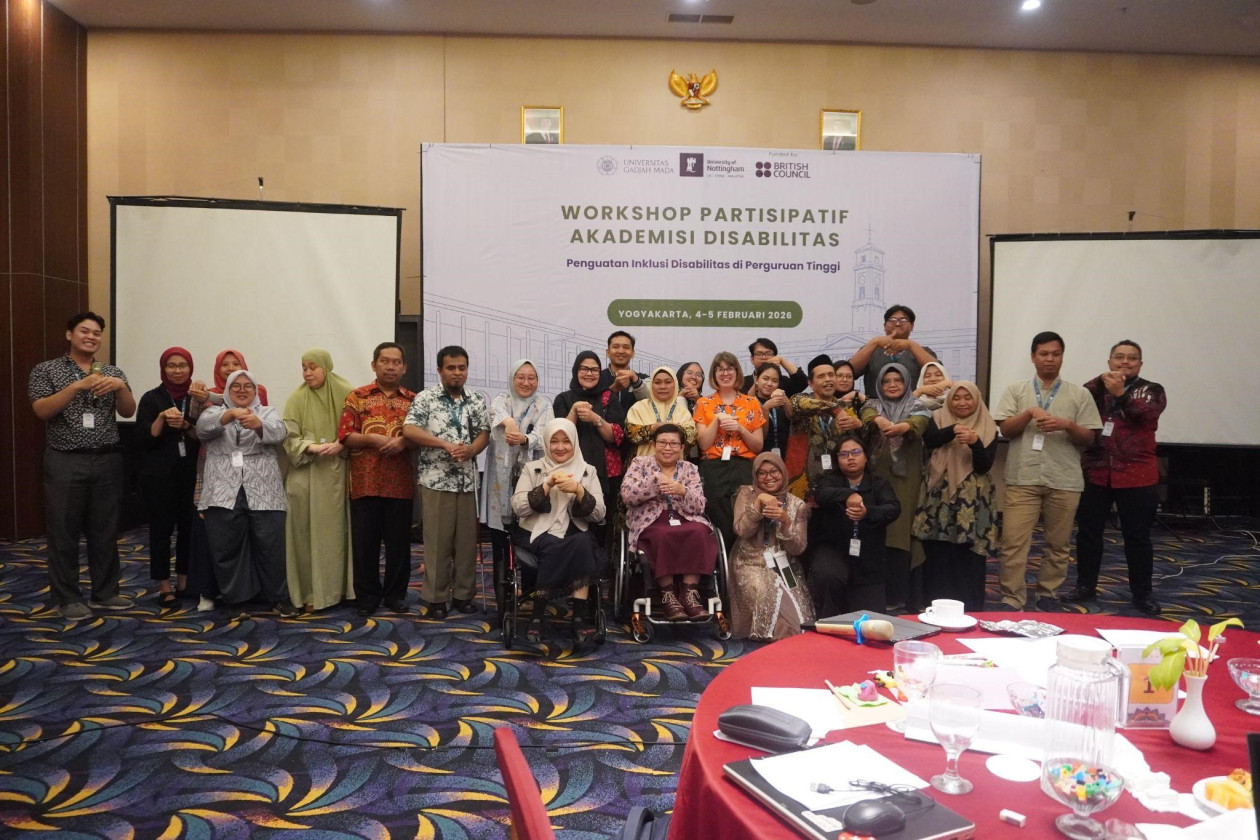
She added that the survey findings were discussed in a strategic forum funded by the British Council through the Going Global Partnership 2025 scheme, held at Hotel Tara, Yogyakarta, over two days on Feb. 4 to 5, 2026.
Under the program titled “Shining a Light on Unheard Voices of Disabled Researchers (SHINE)”, Universitas Gadjah Mada collaborated with the University of Nottingham to organize the forum, which served as a platform to uncover hidden realities regarding the barriers faced by lecturers with disabilities in higher education institutions.
At the conclusion of the forum, 16 lecturers with disabilities agreed to establish a collective advocacy organization, the Indonesian Association of Lecturers with Disabilities (Asosiasi Dosen Disabilitas Indonesia/ADDI). The numerous barriers they experience formed a strong basis for building networks and forming an association.
“It is hoped that through this association, they can further encourage inclusive policies at both government and campus levels and ensure the provision of reasonable accommodations,” she added.
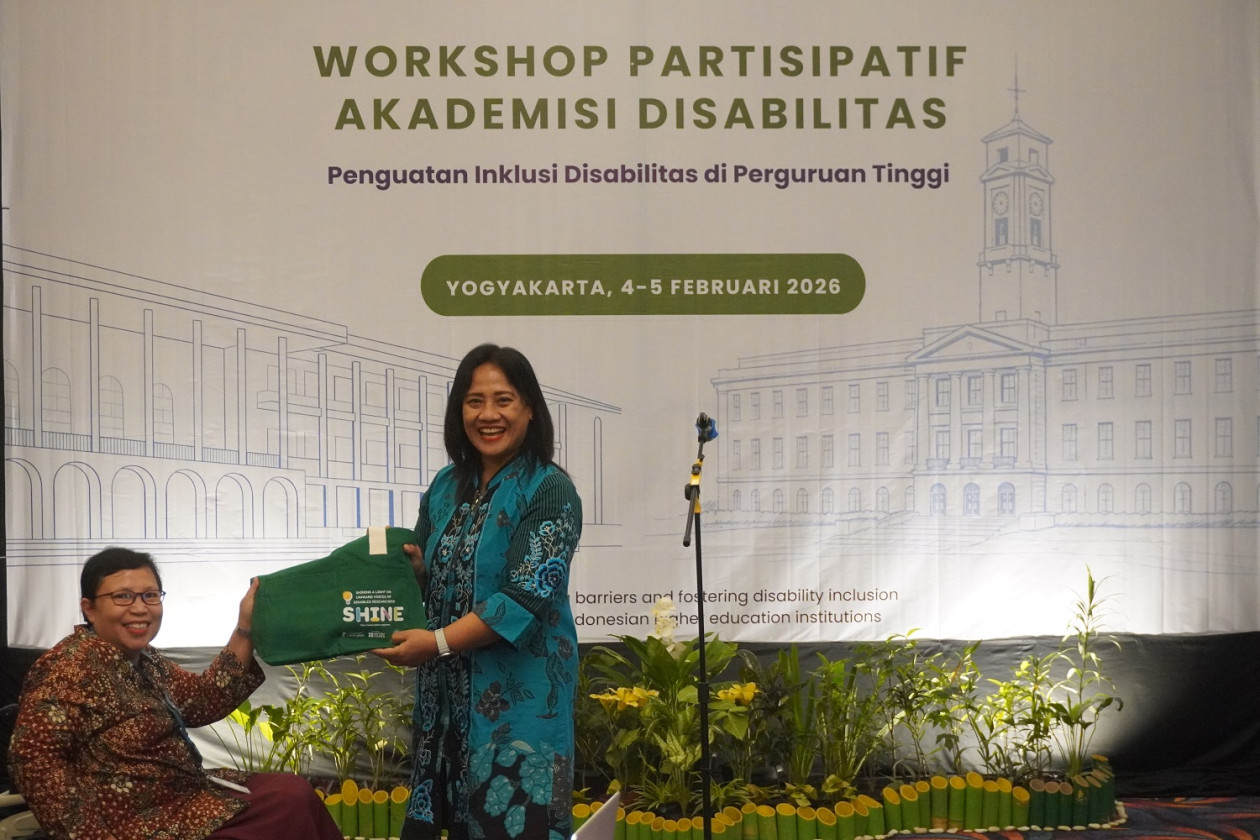
UGM Vice Rector for Education and Teaching, Professor Wening Udasmoro, welcomed the establishment of ADDI. Present to open the forum, she reaffirmed the institution’s commitment to ensuring that inclusivity does not stop at slogans alone and emphasized the need for concrete actions by universities, including improvements to facilities and accessibility audits at every faculty.
“All of this is intended to ensure a barrier-free learning environment for both students and lecturers. This is not only about physical infrastructure but also about strengthening inter-university networks, particularly among lecturers, who are pillars of the academic community. I sincerely hope that the recommendations from this research and workshop will not remain mere documents on a desk, but instead serve as reflections leading to comprehensive change across universities throughout Indonesia,” Professor Udasmoro concluded.
Author: Agung Nugroho
Post-editor: Rajendra Arya