


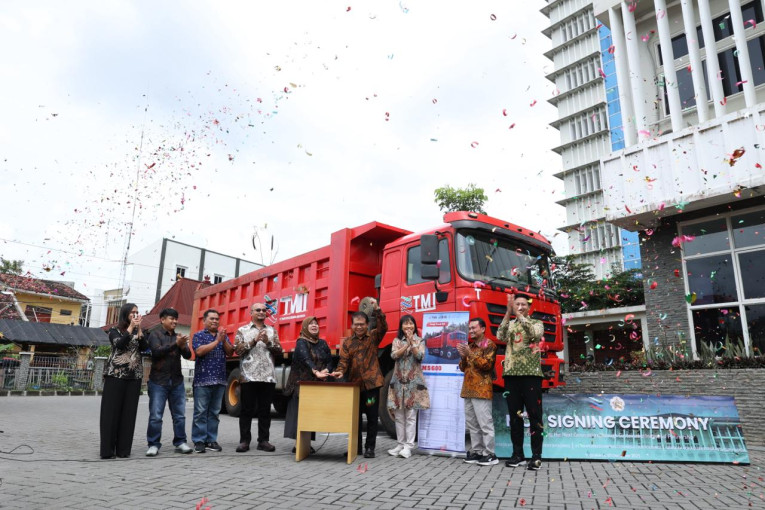
The Vocational College of Universitas Gadjah Mada (SV UGM) has officially established a strategic partnership with PT Tempopress International Delivery (TID). The collaboration was formalized through the signing of a memorandum of understanding and a cooperation agreement by the Dean of SV UGM, Professor Agus Maryono, and the CEO of PT TID, Rennie Wihardani, at the Teaching Industry Learning Center (TILC) Building on Tuesday (Dec. 9).
The event concluded with a ceremonial handover of a Shacman F3000 dump truck, symbolized by the CEO of PT TID presenting the vehicle key to the Dean of SV UGM. This agreement marks an initial step toward strengthening vocational education’s contribution to Indonesia’s industrial development.
Professor Maryono stated that through this collaboration, students will gain benefits from access to industrial facilities, internship opportunities, and exposure to professional work environments that support competency development. This is expected to produce high-quality graduates who are well prepared to meet industry demands.
“The collaboration with PT Tempopress International Delivery is a strategic step to strengthen experiential learning for our students,” he said.
He also expressed his appreciation for the grant from PT TID, which included a Shacman F3000 dump truck unit. The facility will support applied education activities and student research at SV UGM.
“The donated dump truck unit will open up broader and more relevant practical learning opportunities, enabling students to directly understand industry standards,” he added.
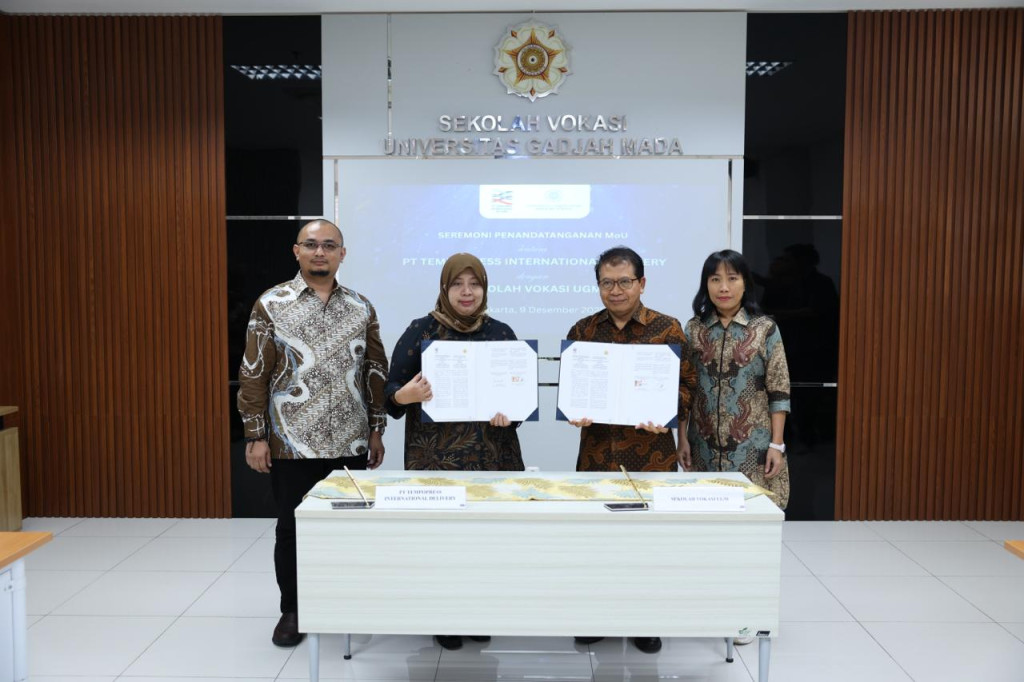
PT TID CEO Rennie Wihardani also expressed pride and satisfaction at being warmly welcomed by SV UGM. She highlighted that graduates of UGM’s applied bachelor’s programs demonstrate a high level of quality across various aspects. She also conveyed high hopes for the continuation of this collaboration.
“We hope that this partnership will lead to future research processes that can be carried out together,” she said.
In response to this expectation, Professor Maryono explained that two follow-up actions can be taken to implement the agreement.
First, encouraging research conducted by lecturers and students based on real challenges faced by the industrial sector, and second, developing community service initiatives by integrating corporate social responsibility (CSR) programs to ensure the sustainability of the collaboration between both parties.
Author: Jesi
Editor: Gusti Grehenson
Post-editor: Rajendra Arya
Photographer: Firsto Adi