


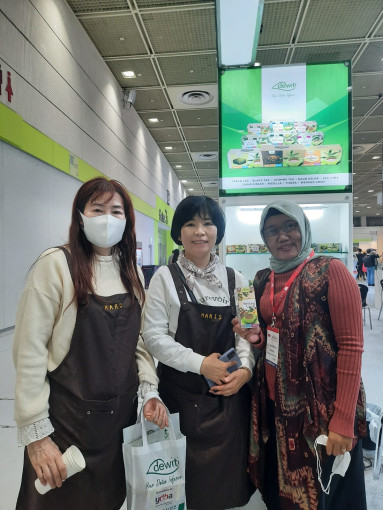
A business journey can begin from something simple, this was the case for Herdiana Dewi Utari, owner of the Dewiti herbal tea business, who had been accustomed to selling since a student at the Faculty of Geography, Universitas Gadjah Mada (Geography UGM), and continued after marriage. While managing her role as a homemaker, she continued to develop her herbal tea venture. In addition to supporting her family’s finances, her passion for entrepreneurship grew naturally, enabling her to create herbal products that now reached national and even international markets.
“It all began from concern for the needs of homemakers. That was the starting point of the business idea,” she said during an interview at the UGM campus on Friday (Feb. 20).
Herdiana Dewi Utari, an alumna of the Population and Manpower Study Program, Geography UGM, class of 1991, is the owner of CV Dewi Makmur, a micro, small, and medium enterprise (MSME) that produces a variety of processed herbal teas under the DEWITI brand.
Herdiana acknowledged that her entrepreneurial spirit was not born in a business classroom but stemmed from care and the courage to identify market opportunities.
At the beginning of her herbal tea business, Herdiana was motivated by observing children’s habits of consuming colorful soft drinks containing artificial flavors, sweeteners, and preservatives.
From these observations emerged her business idea, coinciding with the growing popularity of beverages made from roselle flowers. She began experimenting with various roselle-based products for her family’s consumption, including roselle tea, syrup, jam, and candied roselle.
“I was happy to see the children’s positive response, and that became an important turning point. Roselle products are favored because of their refreshing taste, bright red color, and sweetness derived from real sugar,” she explained.
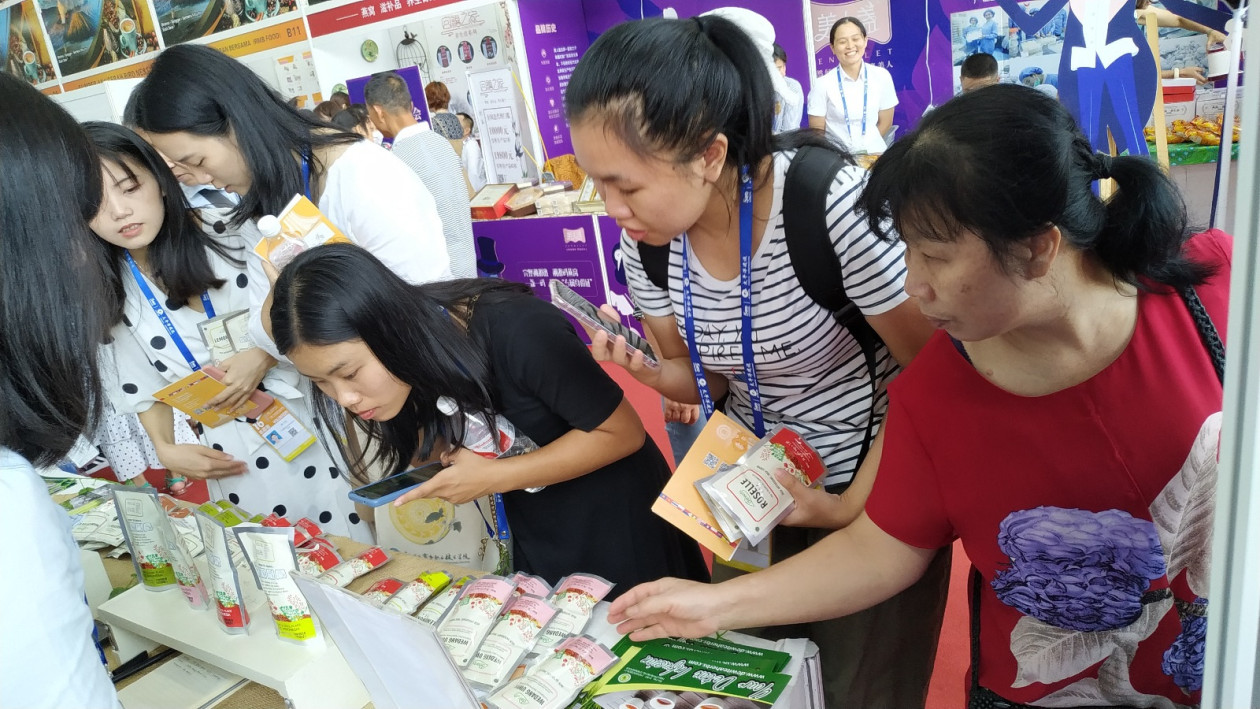
Reading various literature on the benefits of roselle further strengthened Herdiana’s determination to develop this herbal product. It reinforced her belief that herbal products held broad market potential, prompting her to take more serious and structured steps.
Initially, she built the business from home, choosing herbal beverages not only to meet her family’s needs but also because she believed the product was viable for professional marketing.
Herdiana recounted that CV Dewi Makmur began operating in June 2008. At that time, production was still carried out manually and focused on a single product, roselle tea. As market demand grew, the business developed rapidly, and in 2010 she established the DEWITI trademark. To strengthen the business’s legal standing, she formalized it as a limited partnership (CV).
In the business world, this step is an important phase in professionalization, as legality is not merely a formality but the foundation for market expansion, certification, and strengthening consumer trust. DEWITI products continued to expand.
The company now produces nine types of herbal products, including Roselle Tea, Mangosteen Peel Tea, Soursop Leaf Tea, Senna Leaf Tea, Angkak, Wedang Uwuh, Ant Nest Tea, Moringa Leaf Tea, and Lemongrass Tea/Lemongrass Ginger Tea.
“These various variants demonstrate that CV Dewi Makmur is capable of identifying market needs while developing product diversification based on local herbal resources,” she noted.
With gratitude, Herdiana shared that one of CV Dewi Makmur’s significant achievements was its contribution as a pioneer of herbal tea bags in Yogyakarta. She explained that in 2008, producers of herbal tea bags were still very limited.
During those years, CV Dewi Makmur was one of only two producers in Yogyakarta manufacturing herbal tea in tea bag form and was recorded as the first producer to market herbal tea bags to modern retail outlets and souvenir shops.
“At a time when similar competitors were dominated by products from Jakarta and East Java, CV Dewi Makmur was able to fill the market space in Yogyakarta with quality local products. This market penetration strategy shows that the strength of MSMEs does not always depend on capital scale but rather on the ability to read momentum accurately, innovate products, and courageously open new distribution channels,” she explained.
The journey was not always smooth. CV Dewi Makmur faced significant challenges during the COVID-19 pandemic in 2020. Although herbal products briefly experienced a surge in popularity, market conditions during the pandemic were not automatically favorable.
At the onset of the pandemic, CV Dewi Makmur experienced overstock due to the closure of modern retail stores and souvenir shops. Products that were routinely produced went unsold as market perceptions shifted.
“People became more familiar with herbal products associated with the term ‘empon-empon corona,’ leading to changes in demand trends,” she added.
CV Dewi Makmur then responded adaptively and swiftly. Observing market demand, the company began producing spice blends with distinctive compositions, marketed under the name Wedang Jangkep. Rather than merely following trends, the product was developed based on extensive literature studies.
“Wedang Jangkep, with its spice composition, has actually been known since our ancestors’ time and offers benefits in boosting the body’s immunity,” she said.
Herdiana acknowledged that this ability to adapt became a key indicator of MSME resilience, being able to read crises, respond with innovation, and realign production according to changes in consumer behavior. In product development, CV Dewi Makmur also places strong emphasis on legality, certification, and quality standards.
DEWITI products have obtained MUI certification, health standards certification from the local health office, and UKOT (Small-Scale Traditional Medicine Enterprise) certification. These achievements demonstrate that CV Dewi Makmur does not rely solely on taste quality or herbal popularity but also builds credibility through official certification pathways.
Beyond the DEWITI brand, CV Dewi Makmur also provides toll manufacturing services for other tea brands. Services include comprehensive processes, from raw material provision and tea bag production to packaging in aluminum foil, inner boxes, and carton boxes, ready for shipment.
The company also sells various dried spices and offers educational health tourism visits, reinforcing its role not only as a producer but also as a platform for public education.
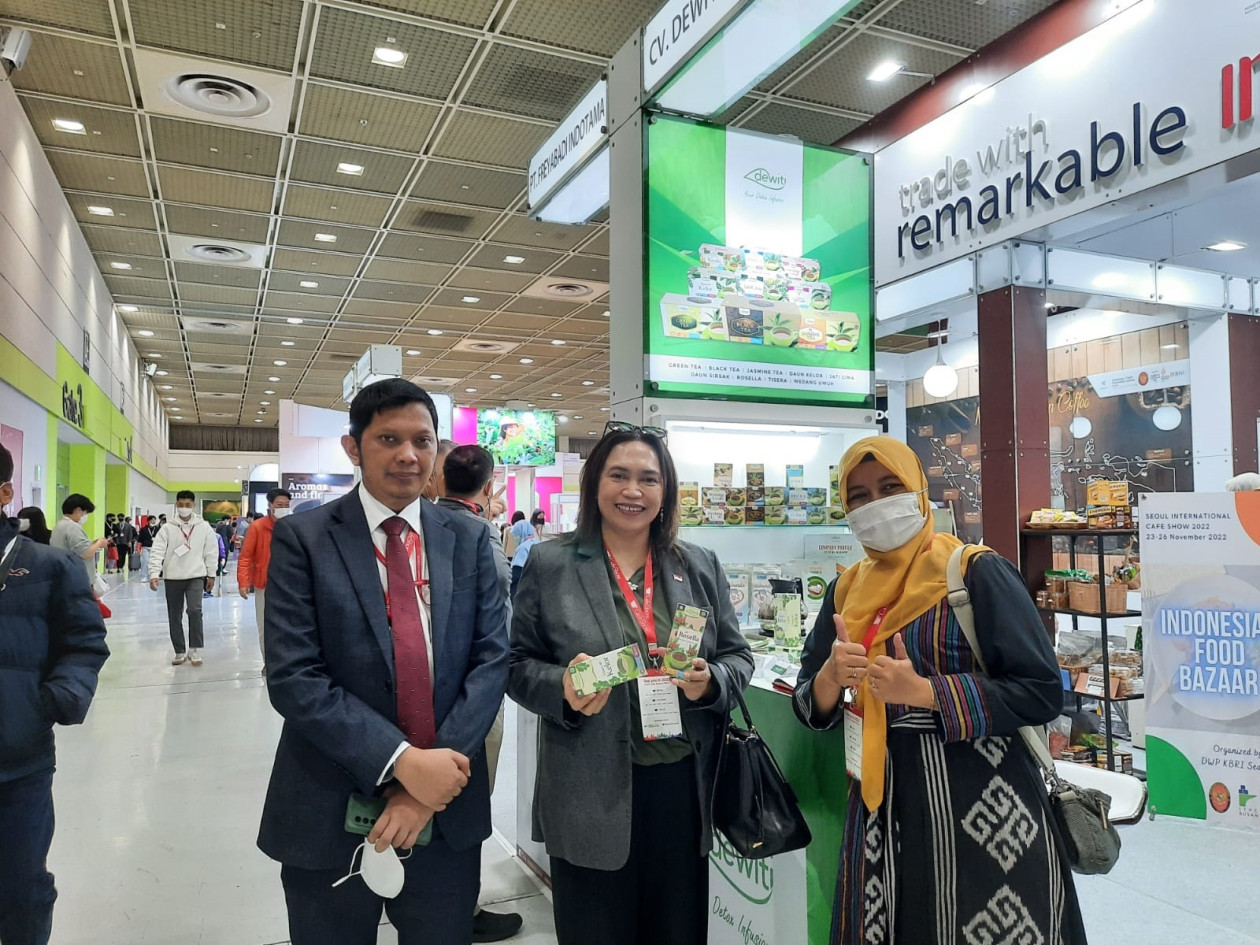
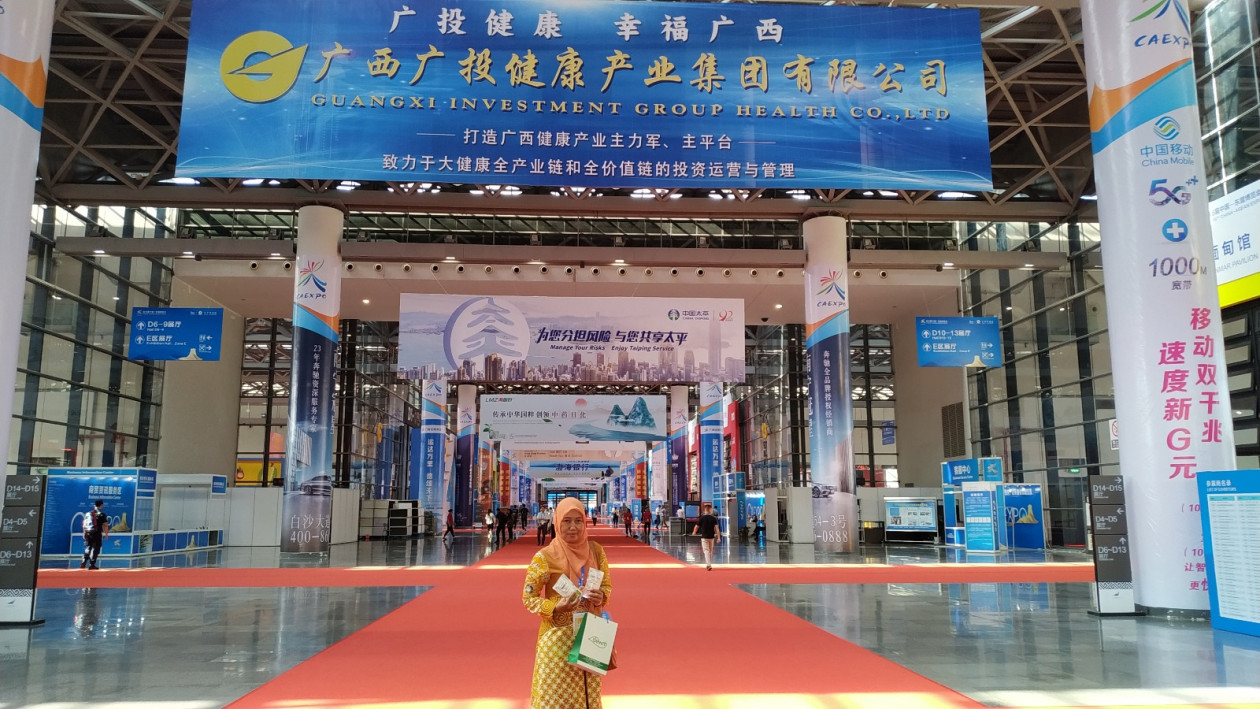
From Yogyakarta, DEWITI products have expanded to various regions across Indonesia. Distribution now covers the Special Region of Yogyakarta, Jakarta, Central Java, West Java, East Java, Kalimantan, Ambon, and Bali. CV Dewi Makmur has also expanded internationally to countries such as Malaysia, South Korea, Japan, and Singapore.
The story of Herdiana Dewi Utari affirms that UGM alumni contribute not only through formal professional pathways but also through MSME-based entrepreneurship with broad impact. Starting from care for her family, growing through perseverance, CV Dewi Makmur proves that MSMEs can evolve into professional, innovative, and competitive business entities.
“This journey also shows that MSMEs are not a fallback option but a strategic choice for alumni to create tangible work, generate economic opportunities, and elevate local potential into high-value products,” she concluded.
Author: Agung Nugroho
Post-editor: Jasmine Ferdian