


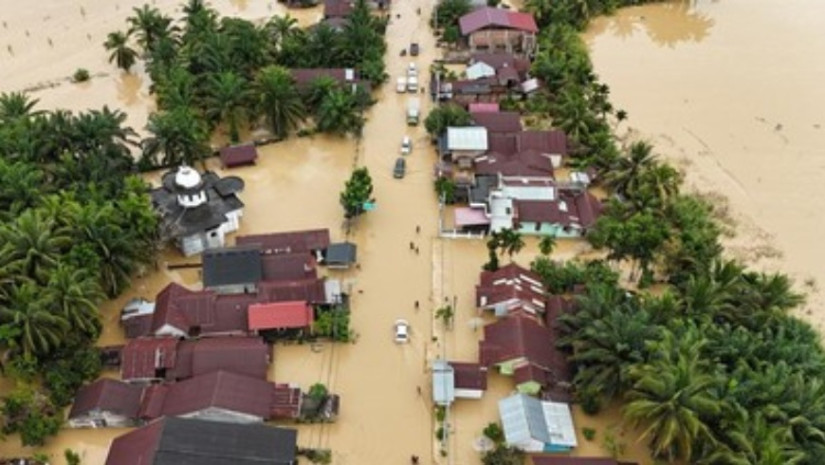
Floods and landslides struck Aceh Province in mid-November 2025. This hydrometeorological disaster affected 18 districts and cities, spreading across 226 districts and 3,310 villages. Hundreds of people were reported dead or missing, and tens of thousands were displaced.
According to the Aceh Disaster Management Agency’s website, from Dec. 18 to 2, 2025, a total of 156 people died and 181 remained missing in Aceh. Victims were reported in Bener Meriah, Central Aceh, Pidie Jaya, Bireuen, Southeast Aceh, North Aceh, East Aceh, Lhokseumawe, Gayo Lues, Subulussalam, and Nagan Raya, with numbers expected to rise as search efforts continue.
Conditions in several affected areas were dire, with some regions in critical condition due to disrupted logistical aid and health services caused by damaged transportation routes and communication networks. The Aceh Provincial Health Office activated the Health Emergency Operation Center (HEOC) to coordinate health services in affected regions.
In this role, the Health Office, as the lead for the Health Cluster/HEOC, established integrated coordination with other clusters under a unified command system for the Aceh Emergency Response.
“Unfortunately, HEOC operations cannot yet run optimally due to limited access to health services, communication system failures, and fuel shortages. We also received information that many hospitals and community health centers were severely affected, some unable to operate at all, and this situation is worsened by the fact that many health workers are themselves disaster victims,” said Wahyu Kartiko Tomo on Tuesday (Dec. 9), reporting from Aceh.
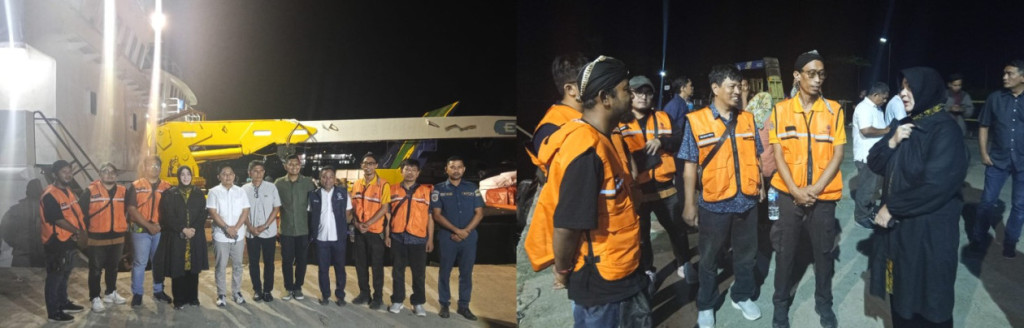
Wahyu Kartiko Tomo serves as the Head of the TCK-EMT for the UGM AHS Team. The team comprises the Health Disaster Management Division of PKMK and the Disaster Working Group of the Faculty of Medicine, Public Health, and Nursing (FK–KMK UGM), in collaboration with the UGM AHS Team and local capacity from Teuku Umar University.
In Aceh, the team provided both medical services and management support, while also sharing information throughout the hydrometeorological disaster response. The team departed on Wednesday (Dec. 3) aboard a cargo vessel at around 20:00 WIB.
The first group arrived at the hospital at approximately 10:00 WIB and coordinated with the hospital director, the Head of Medical Services, the Head of the Emergency Department, the Head of Inpatient Care, and emergency staff at dr. Muchtar Hasbie Hospital, a Type D Pratama hospital with 28 beds.
Medical personnel deployed included six general practitioners, 53 nurses, 30 midwives, one dentist, two dental nurses, two environmental health officers, one public health officer, one radiographer, one physiotherapist, two laboratory analysts, three medical record officers, one biomedical technician, two pharmacists, two pharmacist assistants, and one nutritionist.
“The total number is approximately 116 personnel, and fewer than 30 percent of all hospital staff are currently able to work and support hospital operations,” Wahyu Kartiko Tomo reported.
The head explained that only part of the hospital is currently operational, with limited services. General practitioners work in rotating shifts, and the hospital operates from 08:00 to 16:00.
Two general practitioners are assigned per shift, one in the outpatient clinic and one in the emergency department. For emergency and outpatient nursing services, at least one nurse must be on duty during operational hours.
“In North Aceh, hospitals normally operate five days a week. Before the disaster, they served an average of 40 to 70 patients daily. After reopening services on Dec. 1, 2025, the most common cases treated have been skin infections, acute respiratory infections, and digestive disorders,” he said.
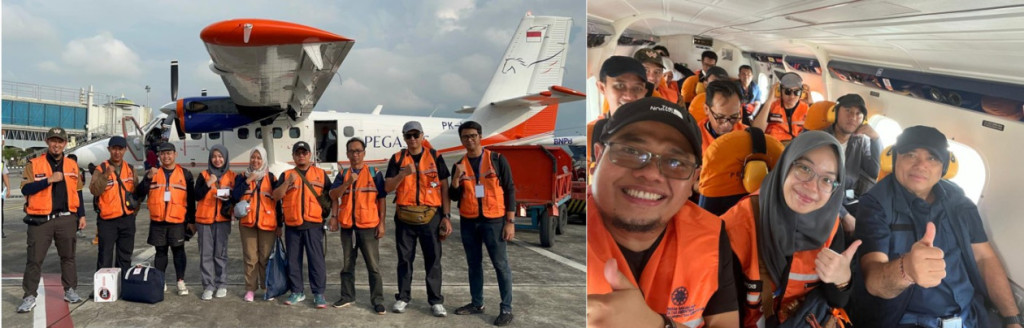
He further explained that during deployment, the UGM AHS Team stayed at the hospital. They were divided into two groups: one providing hospital-based services and the other conducting mobile health services.
The mobile team was composed of internal medicine specialists, pediatricians, and orthopedic specialists. They provided services in Langkahan District, North Aceh Regency, located about 40 kilometers from dr. Muchtar Hasbie Hospital.
“The team received direct support from the First Lady of Aceh,” he added.
In Langkahan District, the team provided medical examinations for affected residents. In addition to poor communication signals, the condition of communities in the area was deeply concerning, and they required routine medical services.
During their service, Tomo reported that one patient, a two-month-old baby with mild pneumonia, required referral to the hospital. The team immediately coordinated with the hospital to prepare a ward for the infant, two accompanying mothers, and a six-year-old child.
“Further medical actions at dr. Muchtar Hasbie Hospital included surgical and trauma care, 86 outpatient consultations, and monitoring for several communicable diseases such as acute respiratory infections, skin infections, and diarrhea, as well as non-communicable diseases like dyspepsia, cephalgia, arthralgia, and six trauma cases,” he said.
Author: Agung Nugroho
Post-editor: Salma