


Universitas Gadjah Mada (UGM) is accelerating the development of a safe, healthy, and inclusive campus food ecosystem through the Introduction on Halal Certification for Campus Canteens, held at the BRI Auditorium of the UGM Faculty of Economics and Business (FEB UGM) on Wednesday (Nov. 19).
This initiative marks an important step in supporting the implementation of Law No. 33 of 2014 on Halal Product Assurance (JPH), ahead of the national deadline on 17 October 2026, when all food business operators will be required to hold halal certification.
The event brought together cross-unit collaboration on campus, involving the UGM Halal Inspection Agency (LPH), UGM Halal Center, faculty canteen managers, campus MSME operators, as well as the team from the Doctoral Program in Islamic Economics and the Halal Industry (PD PIIH) at the UGM Graduate School (SPs UGM).
Head of the PD PIIH Program, Dr. Reni Rosari, emphasized that the certification effort goes beyond regulatory compliance and serves as an ethical transformation in public services.
“If all canteens within UGM succeed in obtaining halal certification, we can make history as the first university in the world to achieve this while strengthening public trust and demonstrating our ethical commitment to safe and inclusive food services,” said Dr. Rosari.

The introduction featured two key speakers. Professor Lily Arsanti Lestari, Head of the UGM Halal Inspection Agency, presented the halal certification process and the role of the inspection body within the education sector.
Meanwhile, Dr. Nanung Danar Dono, Deputy Chair of the UGM Halal Center, delivered technical material on halal kitchen standards, equipment separation, ingredient validity, and the importance of traceability.
One of the main highlights of the event was the launch of the UGM Canteen Halal Certification Community Service Program, initiated by the PD PIIH Program.
This program integrates technical training, administrative assistance, the use of the SIHALAL BPJPH application, and the establishment of a Halal Learning Circle based on Participatory Action Research (PAR). These efforts are designed to accelerate certification across all campus tenants.
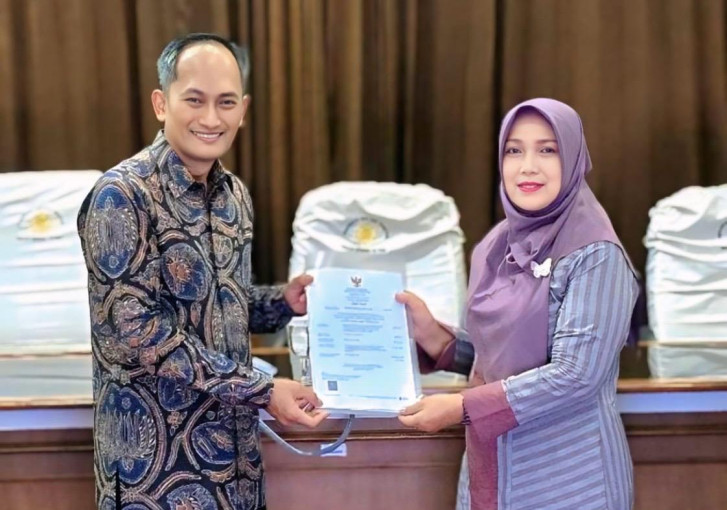
As an institutional form of support, UGM Vice-Rector for Planning, Assets, and Information Systems, Dr. Arief Setiawan Budi Nugroho, attended the event to present halal certificates to two canteen tenants from FEB UGM and the Faculty of Biology (Biology UGM) that had passed the audit process.
“This program is part of the transformation of public services at UGM. Halal certification represents an institutional responsibility to ensure that the campus remains a healthy, dignified, and integrity-driven environment,” he said.
With cross-unit commitment and collaborative efforts, UGM is taking strategic steps toward building a halal-certified campus food ecosystem.
This initiative is expected to set a global precedent that universities educate not only through curriculum but also through ethical practices embedded in everyday services.
Author: Alena
Editor: Triya Andriyani
Post-editor: Lintang Andwyna