


The threat of zoonoses (diseases transmitted from animals to humans) remains a global health concern requiring a rapid and integrated response. Strengthening surveillance systems in high-risk regions, public education, and research on disease control and treatment are urgent priorities to prevent potential outbreaks early.
Responding to these challenges, the Faculty of Veterinary Medicine, Universitas Gadjah Mada (FKH UGM), in collaboration with the Asia Pacific Consortium for Veterinary Epidemiology (APCOVE), has taken a strategic role in enhancing field epidemiology capacity.
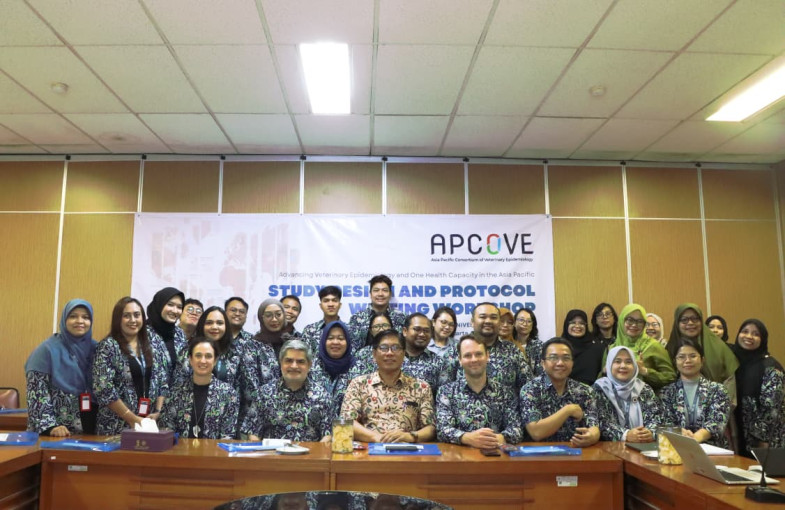
As one of the country partners, FKH UGM organized the APCOVE Study Design Workshop and Field Epidemiology Training from Nov. 17 to 21, 2025. The program was designed to strengthen veterinarians’ ability across the Asia-Pacific region to develop epidemiological research tailored to field needs.
The workshop was attended by 20 selected participants from diverse backgrounds. They were selected through a competitive process from 600 applicants based on completion of the APCOVE Applied Field Epidemiology Online Training and evaluation of their project proposals.
At FKH UGM, participants presented their proposals for direct review by international experts, including Professor Navneet Dhand (University of Sydney), Professor Mieghan Bruce, and Dr. Andrew Larkins (Murdoch University).
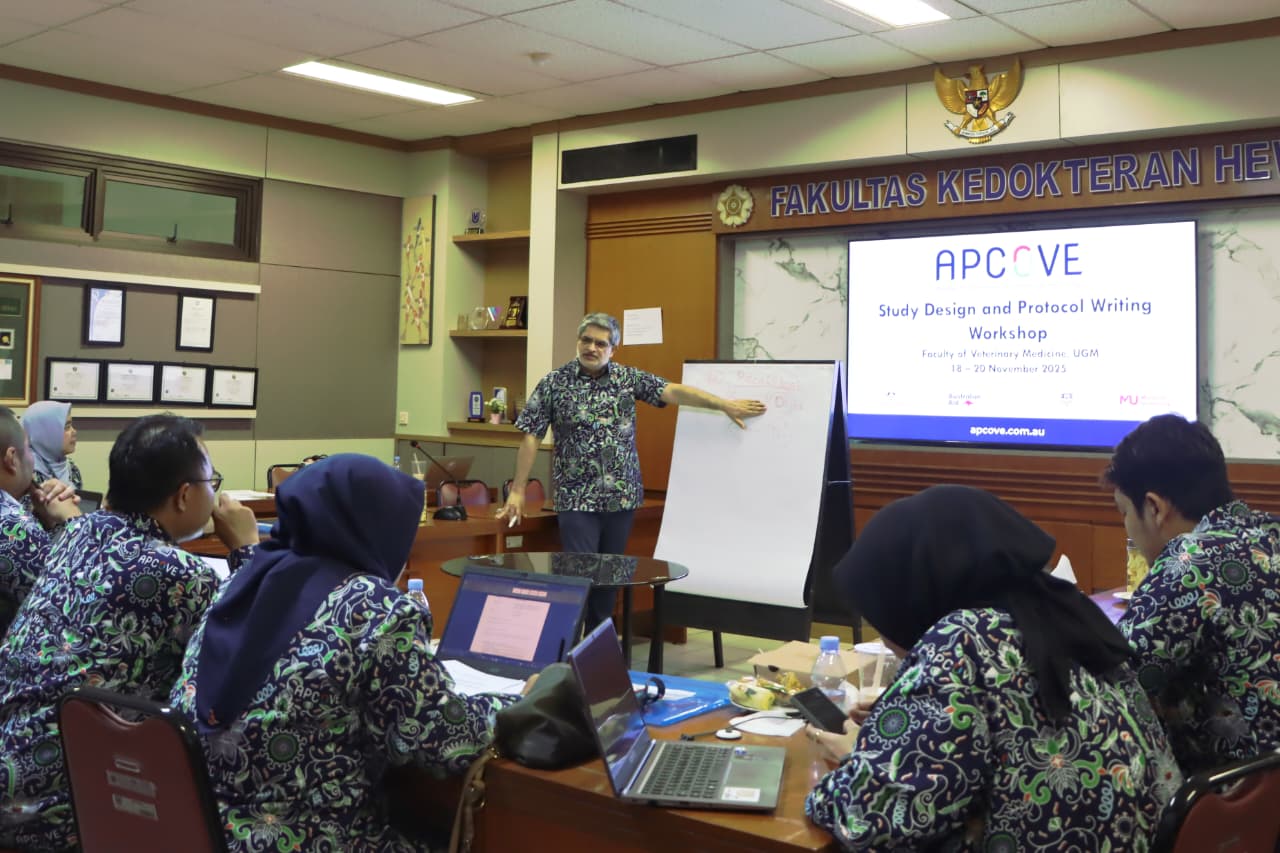
The Director of Animal Health at the Ministry of Agriculture of the Republic of Indonesia, Dr. Hendra Wibawa, who attended the opening session, stated that the workshop has strong relevance to national programs aimed at improving human safety through animal disease control. He emphasized three key focus areas for guiding participant projects.
“First, we aim to strengthen the characterization of participants’ research designs so their plans become more measurable. Second, we seek to align their projects with national priorities,” he explained on Monday (Nov. 17).
Furthermore, Dr. Wibawa underscored the importance of adopting the One Health approach in every epidemiological study.
“Participants must also demonstrate cross-sectoral impacts and consider the broader implications for public health, animal health, and environmental sustainability,” he added.
Vice Dean for Research, Community Service, Cooperation, and Alumni Affairs at FKH UGM, Professor Aris Haryanto, expressed his appreciation for the workshop. According to Professor Haryanto, APCOVE provides an important platform for improving the quality of research and evidence-based policy development in veterinary health.
“Beyond the technical aspects, this workshop also serves as a platform for strengthening collaboration between professionals and institutions,” he said.

The workshop served as a forum for participants to present research projects addressing critical issues in animal health.
Akram Sumambang presented one such project from Pontianak, which examined rabies risk analysis in West Kalimantan Province during the 2015–2025 period.
He explained that the research stemmed from the emergence of human rabies cases in Ketapang and Melawi Regencies in 2014, only one month after the issuance of Minister of Agriculture Decree No. 881, which declared West Kalimantan a rabies-free province.
“Upon further observation, additional cases were found. In the 2024-2025 period, 112 regencies and 1 city reported rabies cases. This is highly alarming,” he added.
A similar level of urgency was highlighted by one participant from the Lampung Veterinary Center, Moh. Mutoyib, through a project titled “Epidemiological Investigation of African Swine Fever (ASF) Outbreak and Risk Factors Among Smallholder Pig Farms, East Lampung Regency”.
He noted the limited availability of data on ASF outbreak investigations, despite the region’s high risk of transmission.
Author/Photographer: Aldi Firmansyah
Editor: Triya Andriyani
Post-editor: Rajendra Arya