


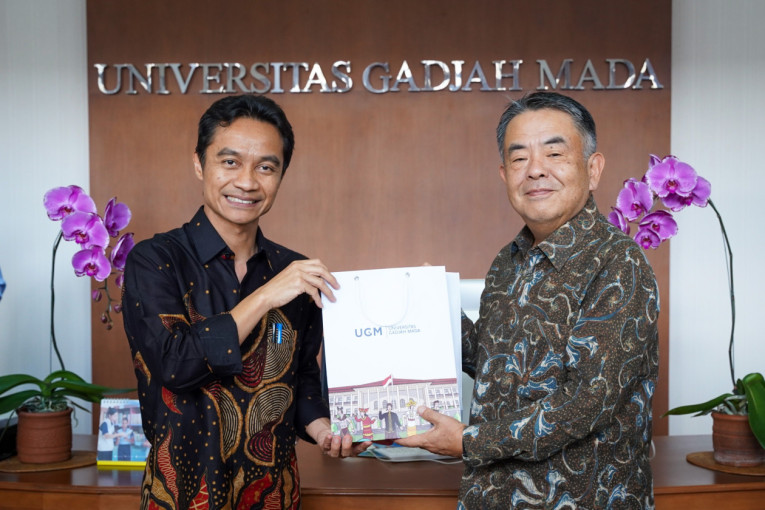
Universitas Gadjah Mada (UGM) and Hitachi Asia Indonesia have agreed to strengthen cross-disciplinary research and innovation collaboration to deliver outputs relevant to industry and society. The commitment was conveyed during a meeting between UGM Vice Rector for Research, Business Development, and Partnerships, Dr. Danang Sri Hadmoko, and President Director of Hitachi Asia Indonesia, Mr. Koji Hachiya, on Tuesday (Feb. 3), at the Rector’s Guest Room, UGM Central Office.
Dr. Danang Sri Hadmoko stated that cooperation between UGM and Hitachi has been established since 1985. However, in this meeting, both parties emphasized the importance of research collaboration focused on tangible impact.
He noted that the synergy between universities and industry needs to be directed toward concrete solutions that benefit the wider community. Such collaboration is seen as strengthening the academic contribution to addressing global challenges while also developing young talent.
According to him, the long-standing track record of cooperation provides a strong foundation for expanding strategic partnerships.
“We want to strengthen collaboration that delivers real impact through joint research, talent development, and student engagement within the industrial ecosystem,” he said.
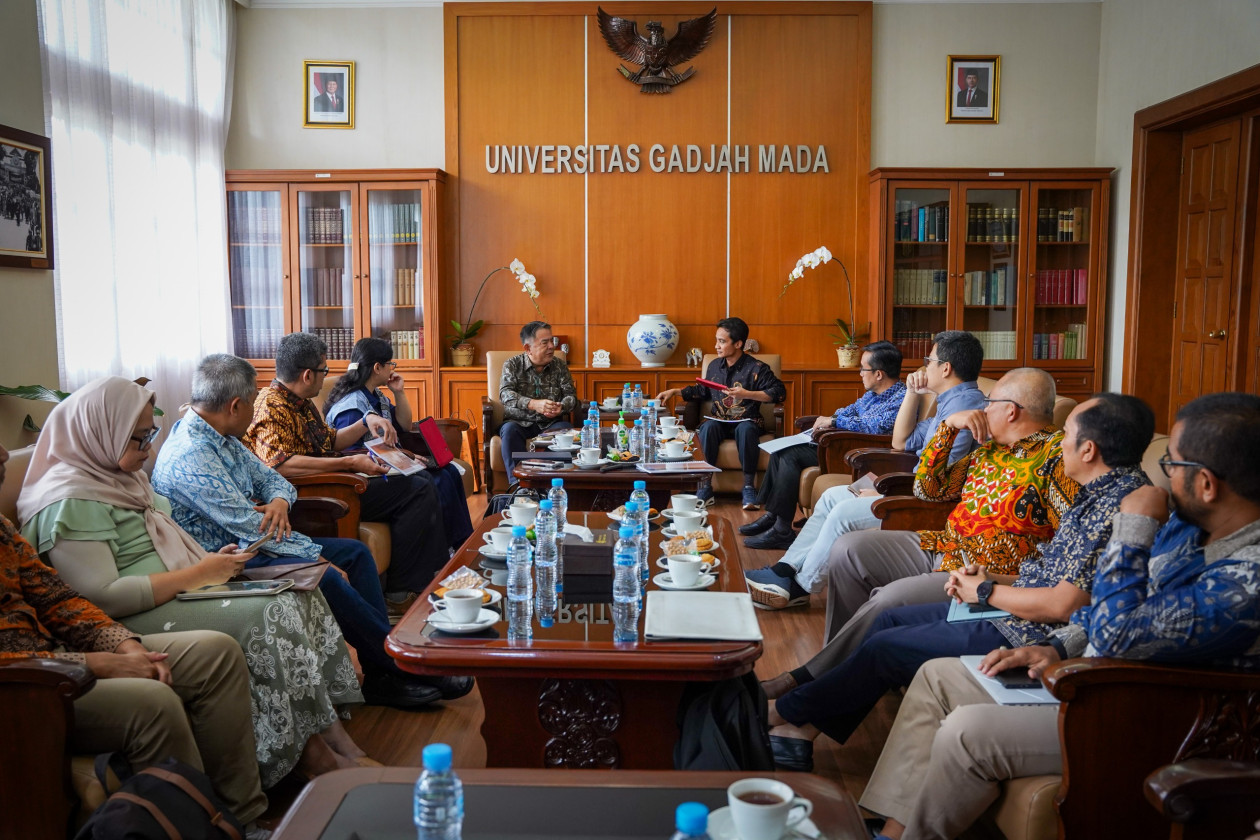
President Director of Hitachi Asia Indonesia, Mr. Koji Hachiya, welcomed the potential collaboration with UGM, particularly in the development of future technologies. He highlighted the utilization of artificial intelligence (AI) as one of Hitachi’s key business development priorities.
According to him, the greatest challenge lies in the availability of human resources with competencies aligned with industry needs. Collaboration with higher education institutions is, therefore,e considered essential in addressing this challenge.
“We see significant opportunities to work with UGM, particularly in AI development and in preparing talent that aligns with industry needs,” Hachiya remarked.
Meanwhile, UGM Director of Research Professor Mirwan Ushada outlined UGM’s research landscape that underpins its potential collaboration with global industries. Professor Ushada explained that UGM is developing several priority research areas, including food security, digital transformation, energy transition, climate change, and socio-cultural resilience.
These research initiatives are designed to address real-world challenges and evolve through direct interaction with industry partners. This approach positions the university as a research and development partner.
“We design our research to respond to real-world needs and to grow through close collaboration with industry,” Professor Ushada said.
Furthermore, Professor Ushada explained that UGM has extensive experience in establishing international research collaborations. Various cooperation schemes have been implemented with industry partners and global institutions, including those from Japan.
These achievements are reflected in the contributions of UGM researchers to various international innovation awards supported by Hitachi. This track record demonstrates UGM’s capacity as an industry-relevant research hub.
“This experience strengthens UGM’s position as an R&D partner for industries seeking to develop innovative solutions,” he added.
According to Professor Ushada, the meeting opened opportunities to expand cross-disciplinary collaboration within UGM. Potential cooperation may be developed through joint research, the preparation of international proposals, and the utilization of global networks.
This synergy is expected to strengthen research’s contribution to the sustainable development agenda. UGM, he continued, is ready to promote structured and long-term collaboration.
“We look forward to more focused and sustainable collaboration with Hitachi in the future,” Professor Ushada said.
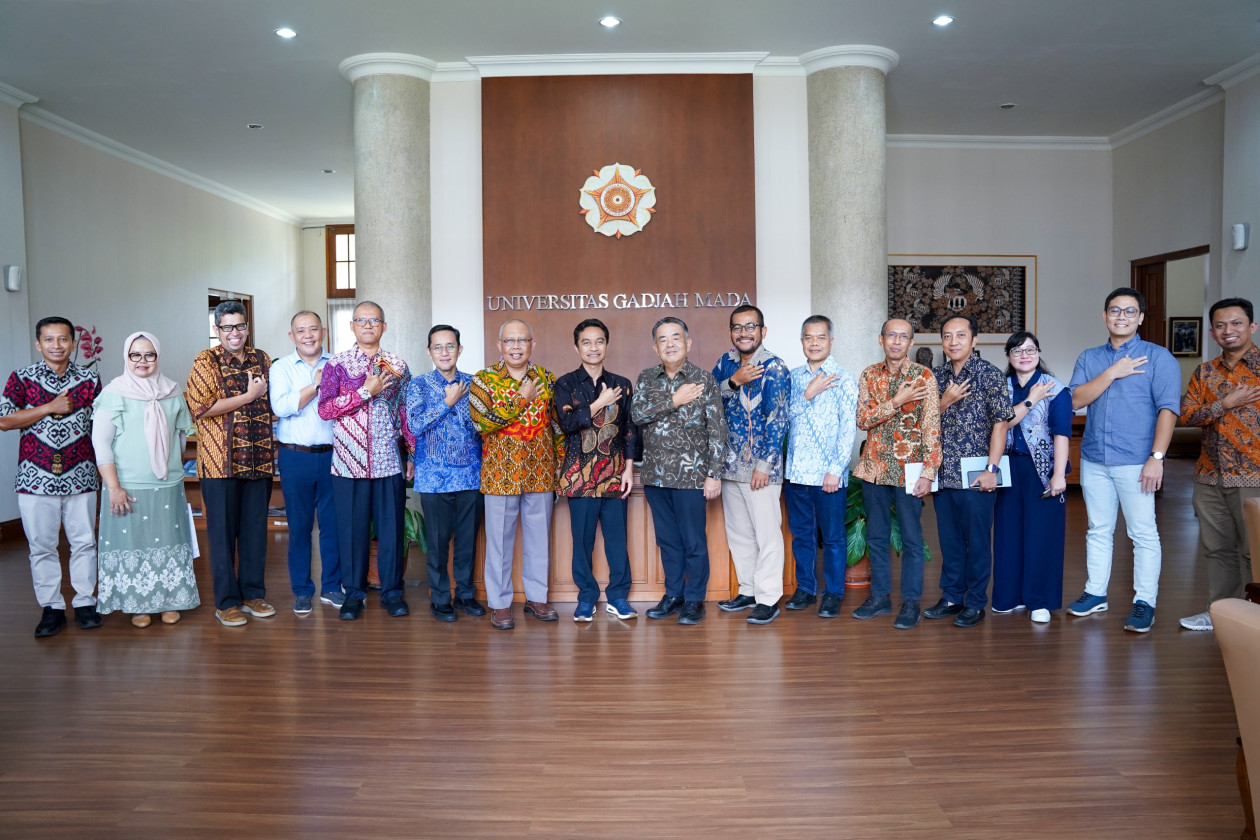
Secretary of the Directorate of Partnerships and Global Relations at UGM, Professor Wiratni Budhijanto, highlighted the opportunity to utilize community service programs as part of the collaboration.
She explained that UGM runs the Community Service Program (KKN-PPM), which involves thousands of students and is implemented across various regions in Indonesia each year. This scheme is considered relevant to supporting corporate social responsibility (CSR) programs. Such collaboration could connect industrial innovation with community needs.
“UGM’s KKN-PPM program can become a strategic partner for Hitachi’s CSR initiatives, as our students are accustomed to working directly with communities,” she said.
The meeting reaffirmed UGM’s role as a strategic industry partner in research and innovation. The strong relationship established provides a solid foundation for future collaboration.
Synergy between academia and industry is expected to generate solutions relevant to global challenges while strengthening contributions to research and community service. With a foundation of trust already in place, the partnership between UGM and Hitachi is expected to grow even stronger.
Author: Triya Andriyani
Post-editor: Jasmine Ferdian
Photographer: Donnie Trisfian