


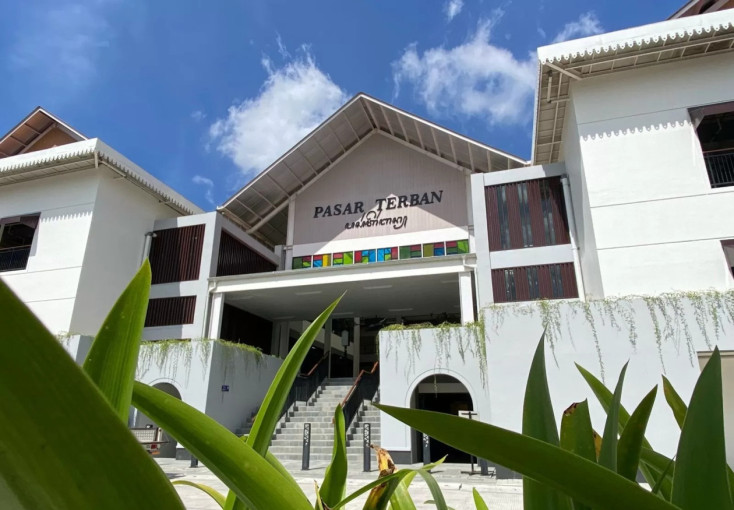
Universitas Gadjah Mada (UGM), in collaboration with the Yogyakarta City Government, is implementing a human-centered spatial arrangement as part of the revitalization of Terban Market, located on C. Simanjuntak Street, Gondokusuman, Yogyakarta City. This traditional market revitalization program aims to optimize transaction spaces for traders and buyers by improving packaging management and adopting technology, while ensuring that poultry slaughtering procedures at the Chicken Slaughterhouse (RPA) are truly halal, healthy, and hygienic.
Yogyakarta Mayor Hasto Wardoyo emphasized that Terban Market is not merely a place for economic transactions but also represents the pulse of community life, particularly as a center of trade.
“One of the special features of this market is the presence of an RPA, so the public does not need to worry about the halal status of chicken slaughtering,” he said in a press release issued on Monday (Jan. 12).
According to Mayor Wardoyo, Terban Market’s proximity to UGM will facilitate collaboration in utilizing the market as a space for developing people-based business complexity, while also serving as a laboratory for students and lecturers.
“We hope Terban Market can become teaching material or research material that can be developed together with UGM,” he said.
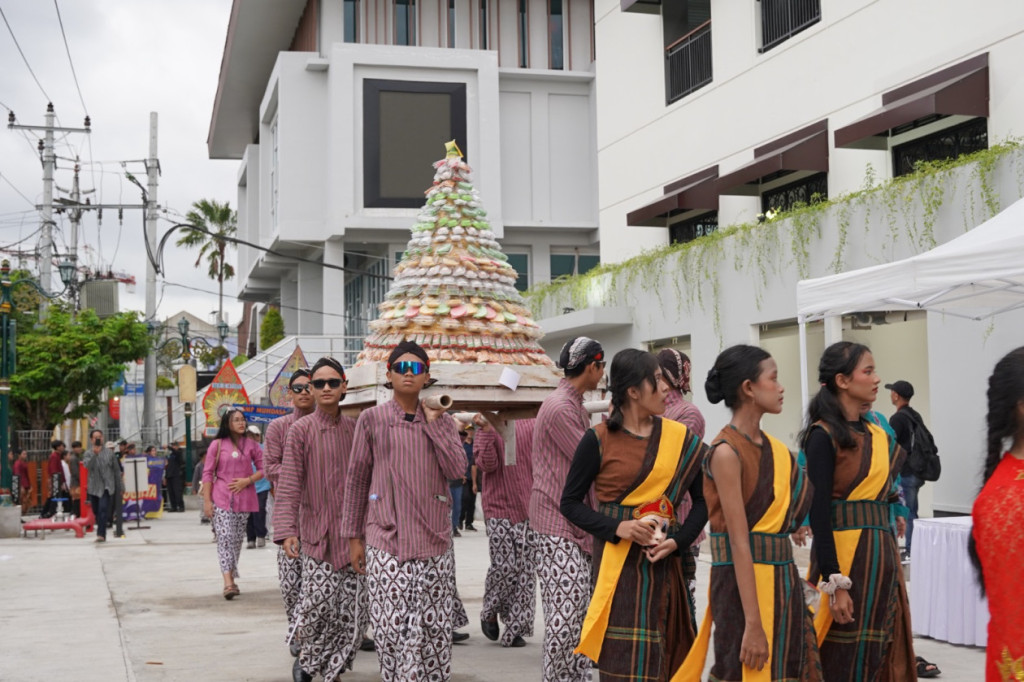
On the operational opening day of Terban Market, Saturday (Jan. 10), UGM and the Yogyakarta City Government organized a cultural parade and a wayang purwa performance.
The cultural parade was attended by approximately 300 participants, including students from several schools around Terban, residents, and street vendors who would set up in the market.
Meanwhile, the puppeteer in the wayang performance was a 2025 student from the Faculty of Cultural Sciences (FIB UGM), Ki Harlindar Mukti Prakoso.
During the wayang performance, UGM Vice Rector for Student Affairs, Community Service, and Alumni, Dr. Arie Sujito, stated that collaboration is the key capability communities must possess to collectively solve problems amid economic crises.
Terban Market serves as tangible evidence of the beginning of collaborative efforts among communities, local governments, and institutions.
“Hopefully, the city government will continue to facilitate all of this, and I am confident that UGM remains open to collaboration,” he said.
Dr. Sujito also invited the public to view markets not only as places to earn a livelihood, but also as spaces for cultural interaction and arenas of democracy.
In this context, communities are encouraged to reflect on maintaining cleanliness, fostering harmony among traders, and achieving shared welfare and empowerment. The wayang performance symbolized economic activity as an integral part of cultural practice.
“My message is that Terban Market must be managed properly. There should be no disorder or discriminatory practices,” he added.

To conclude the event, the Head of Gondokusuman District, Guritno, expressed his hope that, with UGM’s assistance, the entire academic community and students can share knowledge with market traders by leveraging information technology to develop a more modern Terban Market.
“The presence of the newly revitalized Terban Market has made the areas around UGM and Terban more orderly, thereby enhancing comfort for the community,” he said.
The revitalization of Terban Market began in 2024 and was completed at the end of 2025, with full operations resuming on Jan. 10, 2026. The revitalization included improvements to infrastructure, safety, and comfort facilities such as CCTV surveillance, as well as enhanced drainage and sanitation systems.
These upgrades were implemented to support the safety and comfort of both traders and market visitors.
Author: Jesi
Editor: Gusti Grehenson
Post-editor: Salma
Photographs: beritajogja and Jesi