


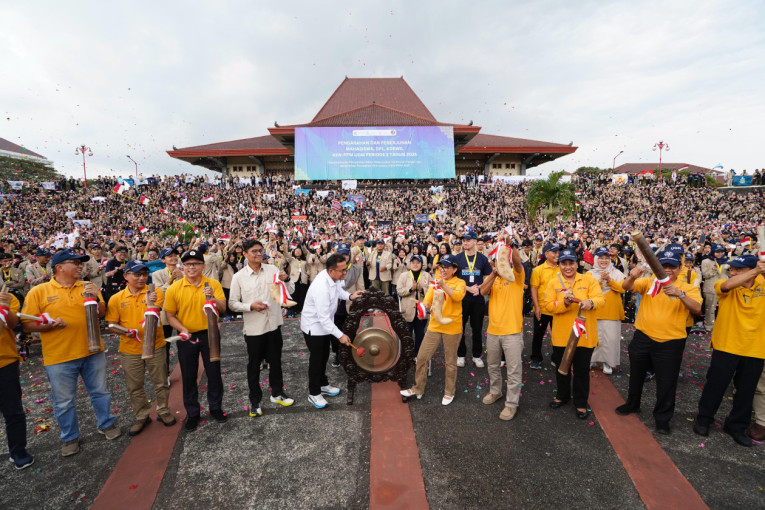
A total of 8,038 Universitas Gadjah Mada (UGM) students participating in the Community Service Program (KKN-PPM) will be deployed across 287 units in 35 provinces, 122 regencies/cities, and 236 districts in Indonesia from June 20 until mid-August 2025. This deployment serves as a form of community service and a graduation requirement for undergraduate students.
UGM Rector, Professor Ova Emilia, emphasized that the KKN-PPM program plays a vital role as a driver of change at the grassroots level.
Students are present in villages to support communities in designing contextual, sustainable solutions.
“The new orientation of the KKN-PPM UGM program should not only focus on student involvement in community empowerment but must also prioritize more strategic themes,” Rector Emilia stated in her address at Pancasila Field on Friday, Jun. 20, 2025.
According to her, the active involvement of UGM students in the program not only enhances village food security but also instills social awareness and sustainable leadership among the younger generation.
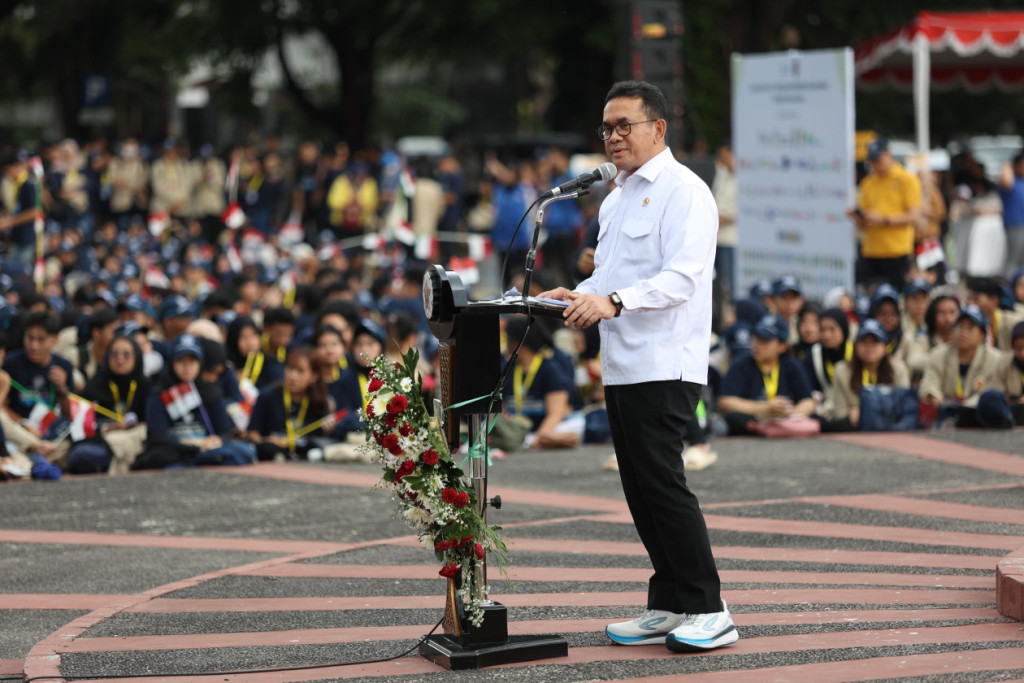
Minister of Trade of the Republic of Indonesia, Dr. Budi Santoso, expressed appreciation for UGM’s continued commitment to the KKN program and its contribution to regional development.
On the occasion, the minister highlighted that several KKN-PPM UGM themes align with the government’s agenda to promote export-ready Micro, Small, and Medium Enterprises (MSMEs).
“There’s a lot that can be done to empower MSMEs. We have a program that helps MSMEs export, and students can assist by identifying which local businesses have export potential,” he stated.
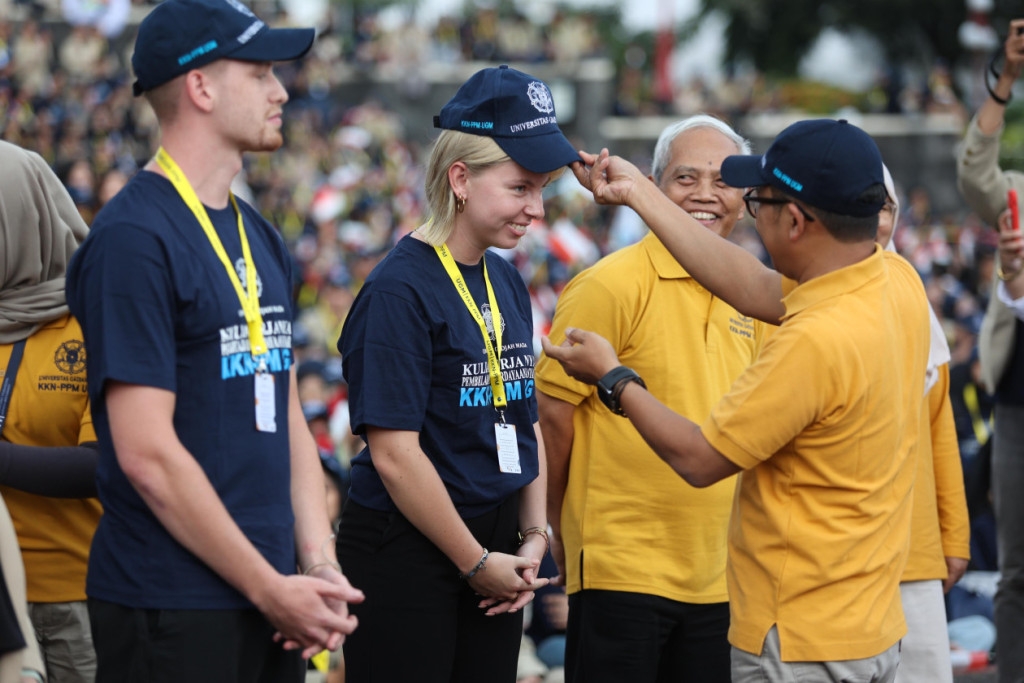
Vice-Rector for Student Affairs, Community Service, and Alumni, Dr. Arie Sudjito, said that the number of participants in this year’s KKN-PPM is the largest in the program’s history.
This period carries the theme “Community Empowerment to Achieve Food Security in the Face of Climate Change through KKN-PPM UGM,” aiming to support regional food production and village-level community development.
Food security has become a critical issue amid the growing threat of climate change.
Villages, as the primary food-producing areas, face serious challenges, including extreme weather, declining land productivity, and vulnerability to natural disasters.
Climate change directly affects agricultural cycles, water availability, and planting patterns, threatening the sustainability of food supply chains.
“Strengthening the capacity of local farmers, diversifying commodities, and adopting environmentally friendly technologies are strategic steps to meet these challenges,” he said.
The farthest deployment areas for this KKN-PPM period are in Central Papua and Riau provinces.
Kania Irianty, leader of the Mendaka Mimika Team, will serve in Atuka Village, Mimika Regency, Central Papua.
One of their flagship programs is the Onaki Festival, designed to foster appreciation and strengthen community ties with the Mimika residents for welcoming the student-led community service.
The team also focuses on empowering women as key players in the local MSME sector.
Meanwhile, the Bentala Melayu Team expressed their enthusiasm before heading to Kampung Dalam and Kampung Rempak in Siak Regency.
Team leader Ricky Kurniawan noted the challenges of bringing community service to the area. They secured funding support from the Directorate of Community Service and Bakti BCA.
Field Supervisor, Dr. Sailal Arimi, expressed pride in the students’ dedication to serving the Siak community.
“It’s certainly not an easy journey. Our program focuses on developing the Dayun tourist village through digital platforms. The local government aspires to make Siak a center of Indonesian cultural heritage,” he explained.
Since its inception in 1951, KKN-PPM UGM has continuously strengthened its commitment to community service through collaborations with industry and local governments.
For this period, UGM collaborates with 39 partner organizations and industries, as well as 34 local governments.
These partnerships extend beyond government bodies to include regional universities that share the same vision of community engagement.
This initiative reflects UGM’s concrete contribution to society and serves as a bridge for cross-sector collaboration to support national progress.
Author: Tasya
Editor: Gusti Grehenson
Post-editor: Lintang Andwyna
Photographer: Firsto