


Public concern over the climate crisis continues to grow, particularly as Indonesia remains dependent on unstable, costly fossil fuels. This pressure is compounded by the fact that the country, which has the world’s second-largest geothermal potential, has yet to fully capitalize on this energy opportunity.
Amid these concerns, support for accelerating the clean energy transition is growing among academics, industry players, and policymakers alike. This has fostered hope that geothermal energy can serve as a strategic solution in delivering safe, stable, and sustainable energy for Indonesia’s future.
Universitas Gadjah Mada (UGM) once again reaffirmed its commitment to supporting the clean energy transition and achieving global sustainable development goals, particularly on affordable and clean energy.
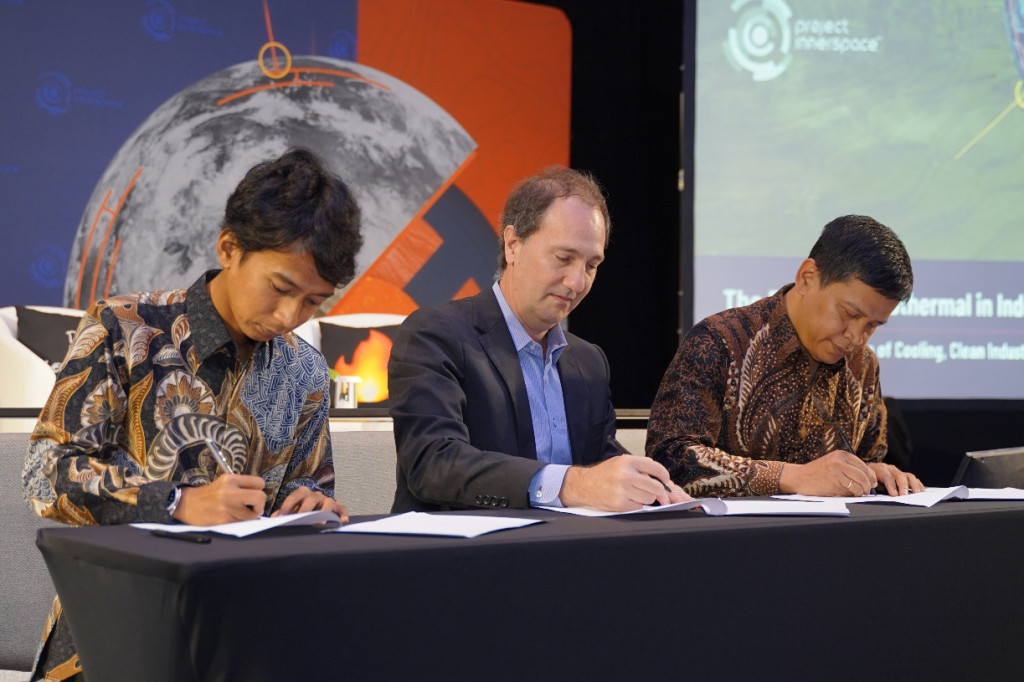
UGM’s commitment was further strengthened through the signing of a Memorandum of Understanding (MoU) with InnerSpace and Geoenergis at the Morrissey Hotel, Jakarta, on December 2 to 3, 2025.
“Through this collaboration, the three institutions will implement the direct use of geothermal energy, particularly for thermal-gradient-based building cooling systems (space cooling), which is expected to become an innovation model for cities in Indonesia,” said Professor Selo, Dean of the UGM Faculty of Engineering (FT UGM), in a statement released to the media on Friday (Dec. 5).
The MoU was signed by the Dean of FT UGM, Professor Selo, together with the Vice Dean for Research, Community Service, and Collaboration, Professor Ali Awaludin. The agreement was also signed by Drew Nelson, a representative of InnerSpace, and Daniel W. Adityatama, representing Geoenergis.
Through this collaboration, Professor Selo said, it is expected to be a strategic step in promoting geothermal energy as one of Indonesia’s New and Renewable Energy sources for industrial, urban, and community needs.
UGM reaffirmed its role as a research university committed to the clean energy transition, national energy resilience, and the application of science and technology to support sustainability.
“UGM hopes that its contribution can accelerate the emergence of a new era of abundant energy that is safe, clean, and resilient to future challenges facing Indonesia,” he said.
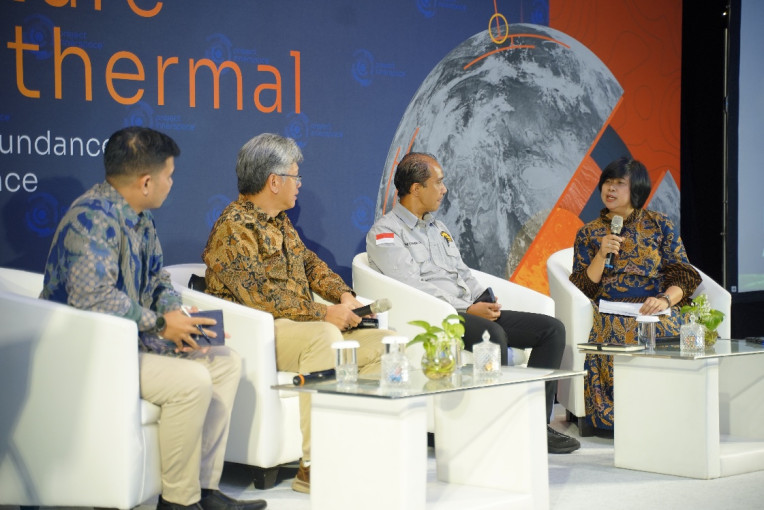
Alongside the signing of the collaboration, the book “The Future of Geothermal: Unlocking Energy Abundance, Security, and Resilience” was also launched. Through its Geothermal Research Center (GRC), UGM served as one of the key contributors to the book.
The UGM writing team, consisting of Dr. Pri Utami, Dr. Kartika Palupi Savitri, and Dr. Yan Restu Freski, together with the GRC analyst team, contributed to Chapter 3, which examines the potential of geothermal resources across Indonesia’s geological settings and dynamics, as well as prospects for geothermal technology innovation to support the transition toward clean energy and a low-carbon economy.
Jackson Grimes, Director of Global Engagement at InnerSpace, explained that there are significant opportunities to use geothermal energy for clean cooling and industrial process heating, beyond its role as a sustainable energy source.
UGM Geological Engineering lecturer Dr. Pri Utami stated that the analysis in the book underscores the vast potential of next-generation geothermal energy in Indonesia, estimated at 2,160 gigawatts.
“This figure represents a major opportunity for decarbonization and strengthening sustainable energy resilience,” she said.
Furthermore, Dr. Utami added that direct utilization, such as building cooling systems and industrial heat supply, could drive major transformation in the national economic landscape.
Citing the International Energy Agency (IEA), she noted that Indonesia has the world’s second-largest geothermal potential.
This potential is expected to be developed as a substitute for imported fossil fuels, contributing to the expansion of renewable energy while also creating hundreds of thousands of new jobs during implementation.
Author: Cyntia Noviana
Editor: Gusti Grehenson
Post-editor: Rajendra Arya
Photographs: Dr. Pri Utami