



The phenomenon of polyworking has attracted growing attention as more flexible work arrangements become increasingly common and more people earn income from multiple sources. In the literature, polyworking refers to individuals who engage in multiple income-generating jobs simultaneously. In Indonesia, however, the phenomenon is not yet measured specifically in labor statistics, so it must be understood through data on workers with secondary jobs.
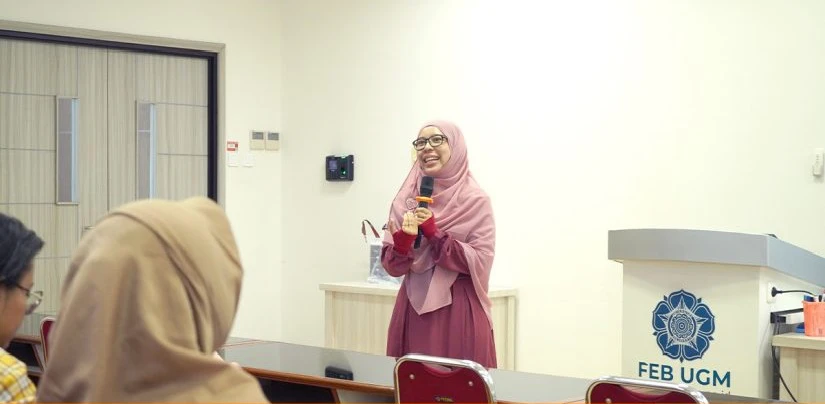
Dr. Qisha Quarina, a lecturer in the Department of Economics at the Faculty of Economics and Business at Universitas Gadjah Mada (FEB UGM), explained that the phenomenon should be understood within the context of Indonesia’s labor market. According to Dr. Qisha, holding more than one job is not a new phenomenon in the country. Indonesia’s National Labor Force Survey (Sakernas) has long distinguished between primary and secondary employment, although it does not explicitly use the term polyworking. Therefore, workers with multiple income sources should be understood in terms of their job characteristics and the objectives behind their employment.
“If we define polyworking as having a primary job alongside a secondary job, then it is certainly not a phenomenon unique to Generation Z. The important question is the context in which it occurs,” she said on Tuesday (July 7).
An analysis of the August 2024 Sakernas data shows that approximately 19.29 million workers, or 13.34 percent of Indonesia’s total workforce, held secondary jobs. The findings also indicate that workers with additional jobs are predominantly in the 45–54 age group (25.83 percent), followed by those aged 55 and above (25.66 percent) and those aged 35–44 (25.40 percent). Workers aged 15–24 accounted for only 4.95 percent, while those aged 25–34 represented 18.17 percent.
“Looking at the broader picture, this is clearly not limited to any particular generation,” she explained.
From the perspective of labor economics, taking on additional work is a rational choice aimed at improving individual well-being. Dr. Qisha explained that every worker faces a trade-off between working hours, leisure time, and other non-work activities. When people are willing to sacrifice leisure time for an additional job, they generally have an economic objective in mind.
“From a rational perspective, when someone takes on a side job in addition to their main occupation, it indicates that their primary job alone is not sufficient to meet their desired standard of living,” she said.
The Sakernas data also show that the vast majority of secondary jobs are concentrated in the informal sector. Around 86.79 percent of secondary jobs are informal, while only 13.21 percent are formal. Even among workers whose primary employment is in the formal sector, approximately 78 percent of their secondary jobs remain informal. According to Dr. Quarina, this is one reason why the growing number of workers with additional jobs should be understood as a labor market response, rather than automatically interpreted as reducing formal employment opportunities for new job seekers.
She added that experience gained from holding multiple jobs can be an advantage when it aligns with the competencies employers seek. Conversely, a work history consisting of many short-term positions may be viewed negatively by employers, particularly those seeking long-term employees. Such assessments depend on the relevance of the work experience, the duration of employment, and the organization’s needs.
“There are two sides to consider: whether it enhances a CV or instead serves as a signal regarding the worker’s motivation,” she said.
Dr. Qisha believes that remaining actively engaged in the labor market contributes positively to human capital development. Individuals who continue working can strengthen their skills and adapt to evolving labor market demands more effectively than those who remain unemployed for extended periods. In her view, maintaining labor market participation is essential because skills that are not continuously used risk deteriorating.
“As long as someone remains actively engaged in the labor market, that is better than becoming disengaged. By continuing to work, they continue exercising their human capital,” she said.
For university students and recent graduates entering the workforce, Dr. Qisha advised that they should not simply take on multiple jobs but also develop effective time-management skills and a strong sense of professional commitment. Understanding workers’ rights, including social security protection for freelance workers, should also become a priority from the beginning of one’s career. According to her, workplace flexibility must be accompanied by the ability to manage professional responsibilities.
“Commitment is important. At the same time, understand your rights as a worker, because freelance workers are often unaware of the protections to which they are entitled,” she concluded.
Author: Triya Andriyani
Post-Editor: Priyanandaningrat
Photo: Magnific and Documentation of FEB UGM