


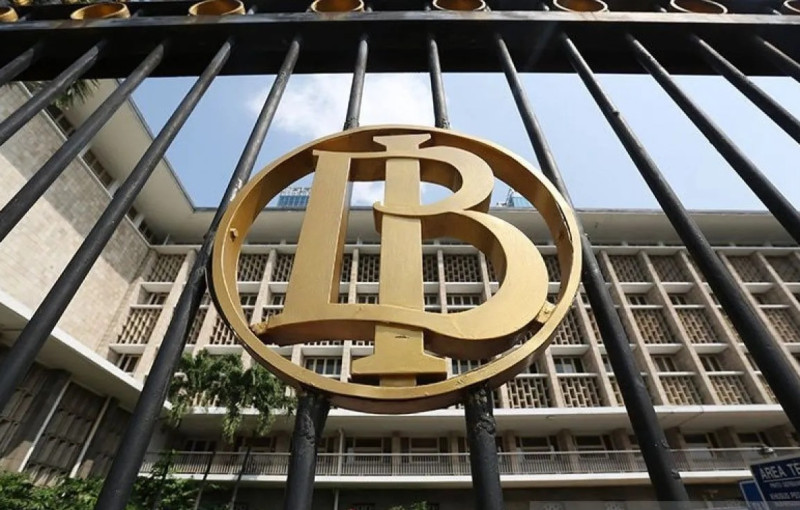
Indonesia’s Balance of Payments (BoP) recorded a deficit for three consecutive quarters throughout 2025, from Q1 to Q3. This deficit indicates a weakening of the country’s domestic external resilience. Based on the BoP report by Bank Indonesia (BI), the financial account deficit over the nine months was driven by low inflows of foreign capital.
Lecturer at the Faculty of Economics and Business, Universitas Gadjah Mada (FEB UGM), Dr. Rijadh Djatu Winardi, emphasized that the situation does not reflect a domestic structural problem but rather underscores market reactions to heightened global uncertainty.
Even so, he noted that persistent deficits should serve as a warning to safeguard domestic economic stability.
“Repeated deficits signal the need to strengthen investor confidence and maintain stability in the domestic economy,” he said on Tuesday (Dec. 2).
Dr. Winardi explained that several external factors contributed to the deficit, including rising global oil prices, which expanded Indonesia’s oil and gas trade deficit due to higher import costs.
Another determining factor was capital outflows from the bond market, which significantly deepened the financial and capital account deficit.
Nevertheless, long-term investor confidence in Indonesia’s economic outlook remains intact, as reflected in consistently substantial Foreign Direct Investment (FDI) inflows.
However, the volume of short-term capital outflows has been considerably larger, becoming the main driver behind Indonesia’s negative overall BoP position.
“The deficit is fueled by substantial foreign capital outflows from bonds and equities, which have widened the financial account deficit,” he added.
Dr. Winardi further outlined several measures needed to prevent the BoP deficit from continuing.
First, Indonesia must strengthen its current account by improving the competitiveness of goods and services exports and intensifying tourism development to narrow the deficit in services and primary income.
Second, attracting more FDI is essential to address vulnerabilities in the capital and financial accounts. At the same time, deeper domestic financial markets are needed to provide larger internal financing sources, thereby reducing dependence on foreign capital.
Finally, authorities must maintain exchange rate stability and ensure adequate foreign reserves as a buffer against sudden capital outflows.
According to Dr. Winardi, these measures must be aligned with more consistent fiscal and monetary policies to strengthen global market confidence.
“These steps must be supported by closer and more consistent coordination between fiscal and monetary authorities to build market confidence and improve Indonesia’s risk perception in the eyes of global investors, ultimately helping to contain capital outflows,” he concluded.
Author: Jesi
Editor: Gusti Grehenson
Post-editor: Rajendra Arya
Illustration: Antaranews.com