


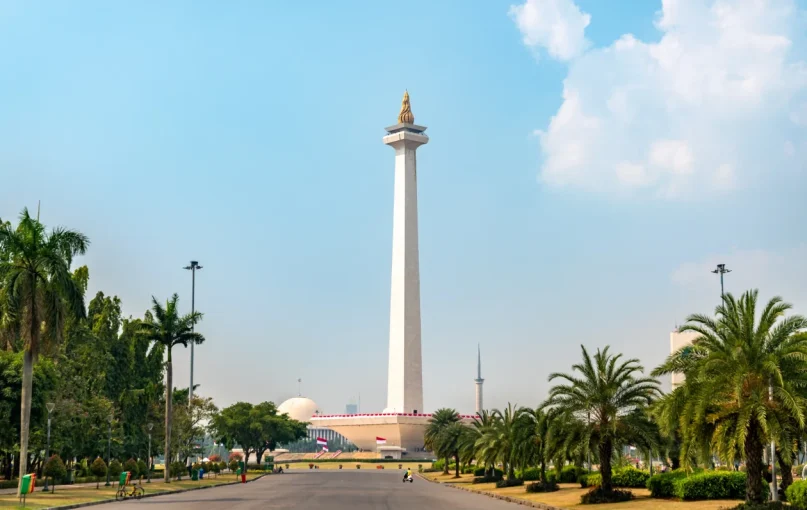
Several cities in Indonesia are home to heritage or historic buildings, ranging from relics of the Dutch colonial era to structures built in the early years following independence. The beauty of these urban heritage buildings cannot be separated from the role of architects, whose design contributions are commemorated every March 18 as Indonesia’s Architecture Day.
In the Special Region of Yogyakarta, notable historic landmarks include Tugu Pal Putih, Benteng Vredeburg, Panggung Krapyak, the UGM Central Building, and other heritage sites. Meanwhile, in Jakarta, iconic landmarks include Monumen Nasional, Gereja Katedral Jakarta, Istana Merdeka, and Masjid Istiqlal.
These heritage buildings are preserved to maintain their historical value, aesthetic appeal, and unique design characteristics. They represent the work of architects whose innovations imbue each structure with meaning, from individual buildings to monumental sites that define urban icons.
An architecture observer and Professor of Urban and Regional Planning at UGM’s Faculty of Engineering (FT UGM), Professor Bakti Setiawan, emphasized that the preservation of historic buildings serves several important purposes. He explained that heritage buildings help document history as cities develop.
“This ensures they are recorded, as buildings are part of the documented witnesses of the historical development of cities and their communities,” said Professor Bakti on Tuesday (Mar. 31).
According to him, the preservation of heritage buildings and monumental sites goes beyond documentation alone. He noted that cultural heritage buildings also play a role in shaping a city’s identity.
“It is also about building narratives of each city’s characteristics to attract external interest,” he explained.
In addition, heritage buildings hold significant economic potential. Professor Bakti noted that preservation efforts can encourage their use as tourism assets and for other economic activities.
“Whether for educational tourism, historical tourism, and so forth. They can even become economic assets for their owners if managed properly,” he added.
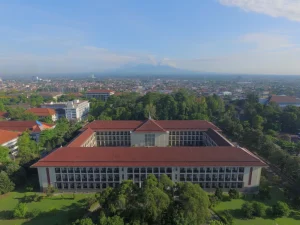
Professor Bakti further elaborated that the concept of preservation is closely linked to the definition of cultural heritage as regulated under Indonesia’s Cultural Heritage Law. He explained that cultural heritage encompasses not only buildings but also objects, structures such as monuments, sites such as open spaces containing buried artifacts or historical value, and even designated heritage areas. This highlights the broad scope of architecture in the appreciation of heritage.
Meanwhile, a prominent issue in architecture is the push to promote the use of local materials. Responding to this discourse, Professor Bakti noted positive aspects, particularly regarding localization. He also believes that using local materials can be more environmentally friendly while supporting the preservation of traditional architecture.
“I have not yet seen research findings, but logically, local materials tend to have a lower carbon footprint compared to imported materials or those produced through industrial processes,” he said.
However, he cautioned that such an approach cannot be applied uniformly across Indonesia. According to him, each region has distinct local materials, requiring architectural approaches to be adapted to local contexts. He noted that not all regions have clay as a raw material, while others tend to use materials such as thatch or similar resources.
Furthermore, in the context of Architecture Day, Professor Bakti stressed that the health and comfort of living spaces are equally important considerations. He shared his experience using local roof tiles, which, in practice, provide better lighting and ventilation for occupants.
In closing, he reiterated the fundamental role of architecture in human life through the simple principle, “Better Space, Better Living.” In this message, he emphasized that good architecture is judged not only by visual aesthetics but also by its ability to improve the quality of life.
“The primary task of architects is to bridge the creation of good and healthy living spaces,” he concluded.
Author: Hanifah
Editor: Gusti Grehenson
Post-editor: Jasmine Ferdian
Photo: Ministry of Tourism and UGM Public Relations