


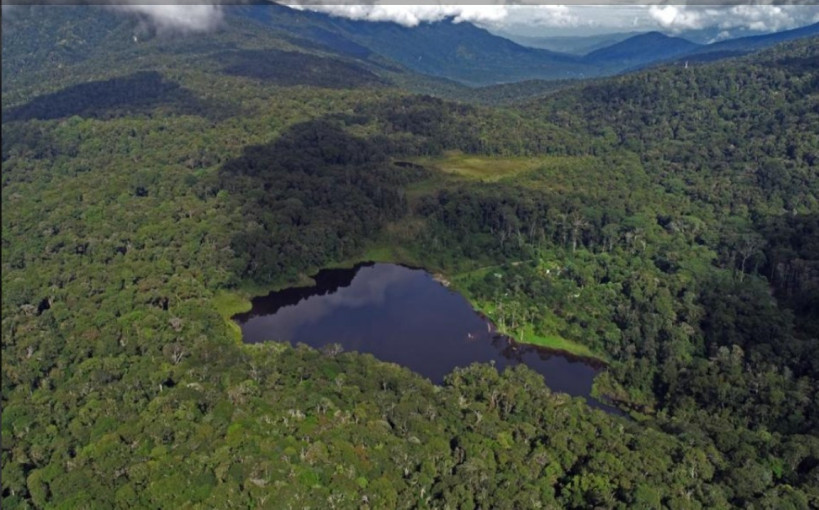
The commemoration of World Forest Day on March 21 should not merely serve as a ceremonial occasion for tree planting or environmental campaigns, but also as a moment for reflection on the increasingly pressured state of forests across the globe. Amid the escalating global climate crisis, forests are regarded as one of the most crucial elements in maintaining the Earth’s ecological balance. In this context, forests function not only as habitats for biodiversity but also as natural carbon sinks that play a vital role in mitigating climate change.
When examining Indonesia’s current condition, forestry issues hold significant importance. As a country with vast tropical forests, Indonesia faces environmental challenges, development, economic growth, and the welfare of nearby communities.
However, amid growing development pressures, forests often face a dilemma that sparks controversy. On one hand, development requires space and land for infrastructure and economic activities. On the other hand, massive land clearing threatens the sustainability of forest ecosystems, which provide long-term ecological functions.
A lecturer at the Faculty of Forestry, Universitas Gadjah Mada (Forestry UGM), Dr. Hatma Suryatmojo, fondly known as Mayong, assessed that Indonesia’s forests are currently under considerable pressure, particularly due to the growing demand for land for development. He explained that administratively, around 65 percent of Indonesia’s land area is still categorized as forest, while the rest is designated for other uses. However, this status does not fully guarantee forest preservation, as various development projects continue to require extensive land.
“The current condition of forests is actually not good because the threat of land conversion is quite high,” he said on Friday (Mar. 27).
According to Mayong, development is an unavoidable necessity for a country undergoing progressive growth. Infrastructure such as toll roads, dams, and other public facilities requires large-scale land, often intersecting with forest areas.
“When a country undertakes development, it inevitably requires land. Frequently, the available land is forest area, so both the extent and biodiversity of forests can be threatened,” he explained.
In addition to land conversion, debates over deforestation figures frequently arise in Indonesia’s forestry discourse. Mayong noted that discrepancies between government data and international institutions often stem from differing definitions of what constitutes a forest. Some parties define deforestation as the conversion of forest cover into non-forest areas, while others also include forest areas that are administratively classified as forest but have already lost their vegetation cover.
“Definitions of deforestation vary, which leads to different figures,” he said.
He further cited that the Indonesian government estimates forest areas at around 120 million hectares, while international institutions such as the Food and Agriculture Organization (FAO) report smaller figures, as they only account for areas with actual forest cover. These differing perspectives ultimately influence how the public understands deforestation rates.
Nevertheless, regardless of these differences, Mayong emphasized that forest cover loss remains a serious issue that must be addressed systematically.
Regarding forest restoration, he explained that government rehabilitation efforts are ongoing, but the pace of recovery has not yet fully offset the rate of forest loss. This is because natural forest regeneration takes a long time, whereas forest loss can occur much more rapidly.
“The rate of forest loss is usually faster than the rate of regrowth,” he said.
In addition to time constraints, limited replanting capacity also presents challenges. The government does not always have sufficient resources to reforest all deforested areas. Therefore, policies are increasingly focused on engaging non-government actors, including the private sector and communities, in forest management and restoration efforts.
Mayong added that one approach involves developing industrial plantation forests managed by companies. Meanwhile, the government also implements social forestry programs that grant communities the right to manage forest areas.
“Through social forestry, communities are allowed to utilize forest products but also bear the responsibility to help rehabilitate these areas,” he explained.
He emphasized that such approaches are essential, as the government cannot maintain forest areas on its own. Beyond policy issues, Mayong also highlighted the importance of utilizing technology in land management.
According to him, low land productivity often drives communities to clear new land in forest areas. He cited shifting-cultivation practices that are still traditionally practiced in regions such as Kalimantan. Without technological support, agricultural yields remain low, prompting communities to continuously seek new land to sustain their livelihoods.
“If technology is properly utilized, land productivity can increase, reducing the need to open new forest areas,” he said.
From a social perspective, the role of indigenous communities is also crucial in preserving forests. Many customary forests remain relatively well preserved because they are used only to meet daily needs. Mayong observed that this non-intensive utilization pattern has contributed to the survival of these forests.
“Indigenous communities typically use forests only as needed, which helps maintain their sustainability,” he said.
Beyond serving as a source of livelihood, forests also play a key role in climate change mitigation. Forest vegetation can absorb large amounts of greenhouse gases, helping reduce atmospheric carbon concentrations. Mayong stressed that without healthy forests, global efforts to reduce emissions would become far more difficult.
“If forest areas continue to shrink while emissions rise, climate change will accelerate,” he said.
Amid increasing tree-planting campaigns, he also reminded that successful forest rehabilitation depends not only on the number of trees planted but also on post-planting maintenance.
“Planting is not enough; it must be followed by proper care and monitoring,” he explained.
On the occasion of World Forest Day, Mayong emphasized the need to strengthen public education on the importance of forests. With greater awareness, community participation in forest conservation is expected to increase.
“If people understand the importance of forests, it will be easier to involve them in protecting them,” he said.
He also addressed the issue of companies often being accused of large-scale forest clearing. According to him, it is important to distinguish between legal and illegal activities within forest areas. In recent years, he added, the government has established the Forest Area Control Task Force (PKH) to reclaim illegally used forest land.
Mayong appreciated this initiative but noted that a major challenge remains regarding how reclaimed areas will be managed in the future.
“After these areas are taken back, the question is whether they will be rehabilitated or not,” he concluded.
Author: Zabrina Kumara
Editor: Gusti Grehenson
Post-editor: Jasmine Ferdian
Photo: Ministry of Environment and Forestry (KLHK)