


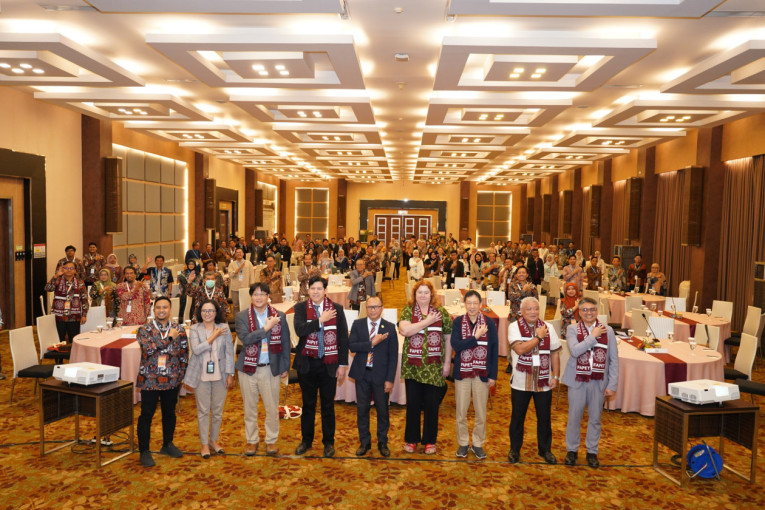
The Faculty of Animal Science, Universitas Gadjah Mada (Animal Science UGM) hosted the 11th International Seminar on Tropical Animal Production (ISTAP XI) on November 7 to 9, 2025, at the Eastparc Hotel Yogyakarta. Held biennially, the event featured a series of seminars, plenary sessions, and field trips designed to strengthen academic networks across countries. This year, the seminar brought together 89 presenters from five countries and seven keynote speakers representing Japan, the Philippines, Malaysia, Taiwan, Australia, the Czech Republic, and Indonesia.
The theme “Building a Smart Livestock Ecosystem and Environment: Synergy Among Stakeholders and Sustainable Animal Practices” was selected in response to the growing role of technology in the livestock and agricultural sectors.
The theme underscored the importance of innovations that enhance livestock productivity while preserving environmental balance. Through this international forum, participants and speakers were encouraged to foster collaboration and exchange insights on recent research developments.
The Dean of Animal Science UGM, Professor Budi Guntoro, stated that the nexus between livestock productivity and environmental impact was a central issue in the ISTAP XI discussions.
He noted that rising demand for animal-based products requires solutions to reduce the sector’s environmental footprint, including greenhouse gas emissions, land use, and water consumption.
“This seminar provides a forum for researchers, industry professionals, and those interested in halal food production, sustainable livestock productivity, and environmental responsibility to share practical insights for addressing global challenges,” he said.
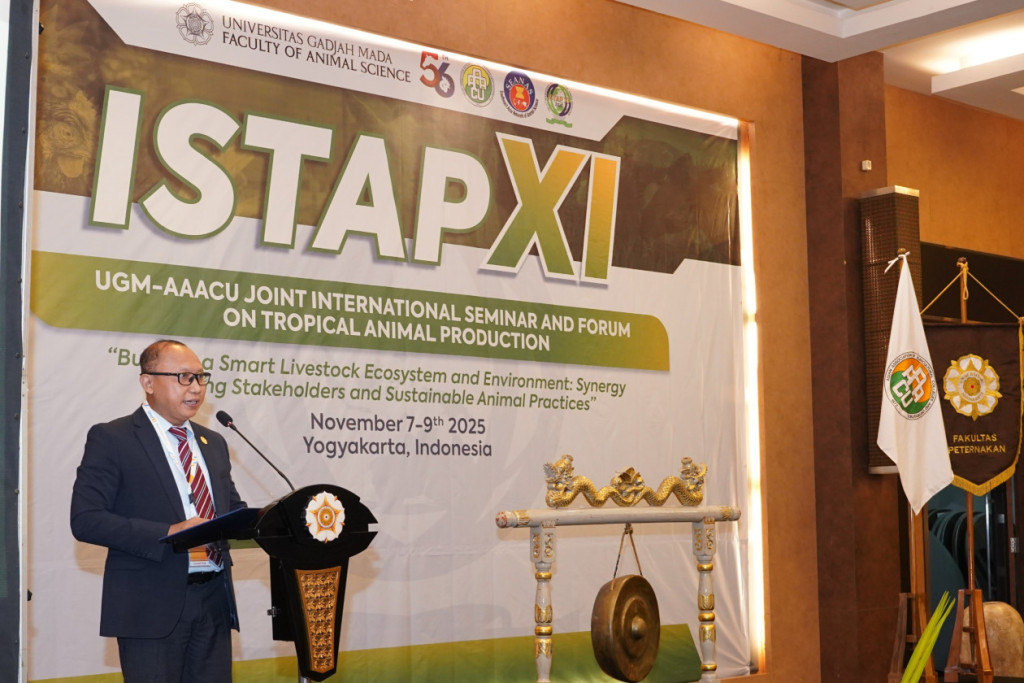
Similar views were expressed by the Director of Partnerships and Global Relations at UGM, Professor Puji Astuti, who emphasized the importance of international collaboration that responds to societal needs. She hoped that discussions during the three-day event would open pathways for broader research cooperation.
“I hope the discussions over the next three days will inspire new collaborations and strengthen our shared commitment to building global resilience, particularly food security, while laying the foundation for a peaceful and sustainable world,” she stated.
On the first day, Plenary Session I featured three speakers presenting research findings from their respective institutions. Dr. L. Emilio Morales of the University of New England discussed strategies to increase agribusiness profitability, enabling farmers to achieve higher income.
He highlighted the importance of product differentiation, technology-based service innovation, and social media as a marketing tool.
“Social media is not used solely for sales, but also as a platform to promote and provide comprehensive information about the product,” he explained.
One example he presented was quinoa, which has been successfully positioned as a distinctive product compared with common staple foods such as rice, potatoes, and pasta. The product has gained wide acceptance as a nutritious alternative due to its nutritional advantages, flavor, and ease of preparation.
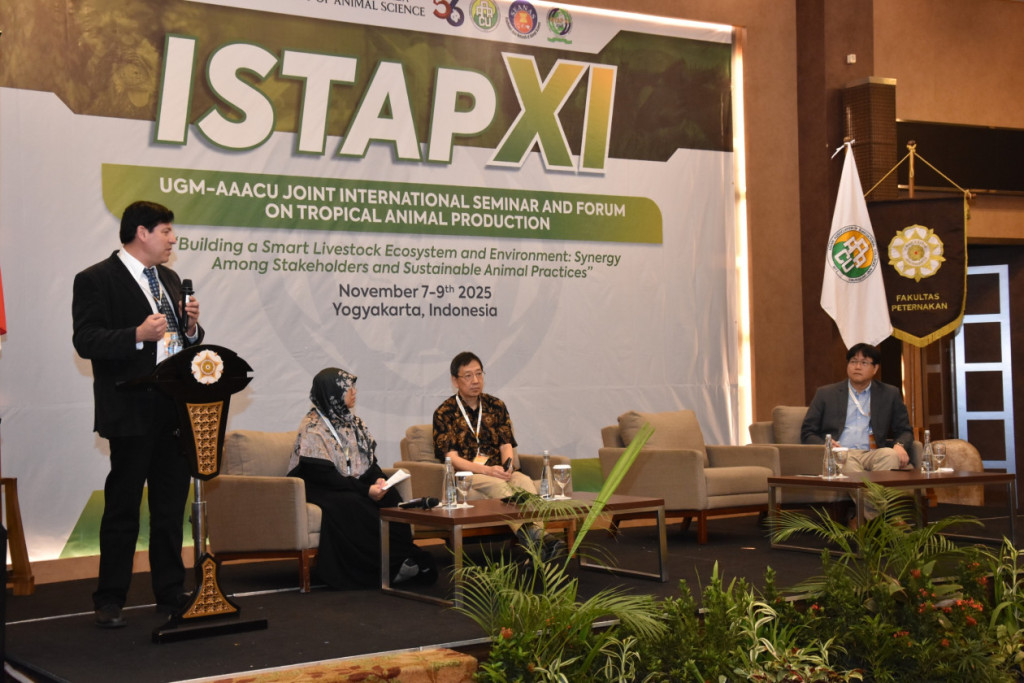
The second speaker, Dr. Hsin-I Chiang of National Chung Hsing University, Taiwan, discussed the use of technology in smart agriculture to improve livestock health and productivity.
She emphasized that current challenges in livestock production relate to animal vulnerability to disease and environmental stress. One solution developed is an activity-monitoring device that can more accurately detect animal health conditions.
“The system begins with data collection by sensors, followed by AI-driven decision-making, and concluding with appropriate solutions,” she explained.
Professor Satoru Tsuchikawa of Nagoya University closed the session with a presentation on spectroscopy technology for developing smart agricultural ecosystems.
Japan has integrated Near InfraRed (NIR), Hyperspectral Imaging (HSI), and artificial intelligence to enhance production efficiency. He provided an example of NIR use in orange sorting to rapidly classify sugar content.
“Spectroscopy will serve as a universal bridge between physical and digital intelligence to achieve harmony with nature. Integrating NIR reliability with AI and deep learning enables fast, non-destructive, and intelligent recognition from farms to factories,” he said.
Concluding the first day’s events, the Chair of ISTAP XI, Tian Jihadhan Wankar, expressed hope that the forum would mark the beginning of new collaborations among participants. He encouraged all researchers to continue sharing their work and expanding scientific networks in the future.
“We hope this event will continue the tradition of sharing research findings in the coming years and broaden networks for connection and collaboration,” he stated.
Author: Jesi Pratiwi
Editor: Triya Andriyani
Post-editor: Rajendra Arya
Photographs: Animal Science UGM